ONEE: State spent MAD 17 billion to hold electricity tariffs as losses deepen
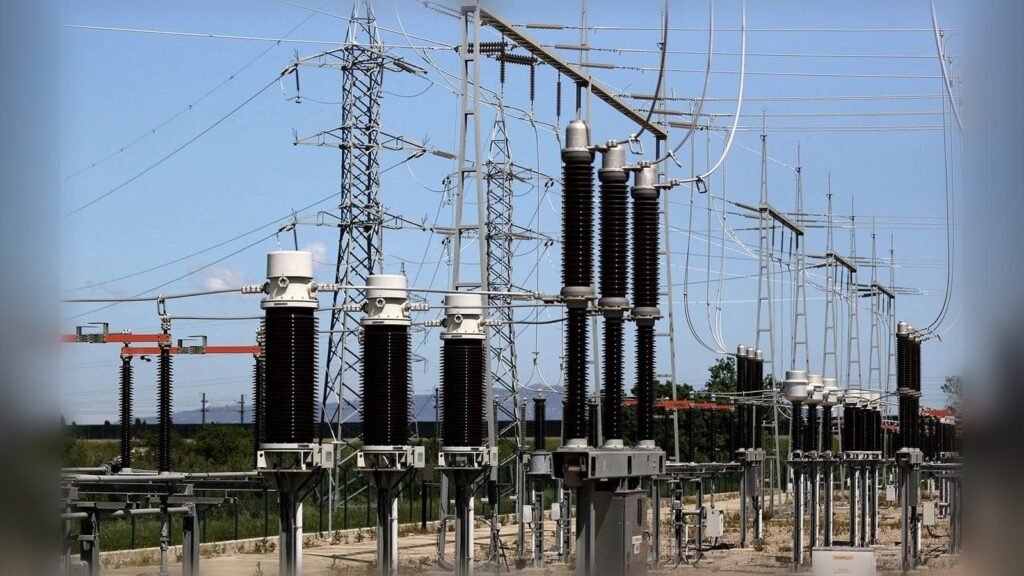
ONEE losses could reach MAD 8.63 billion in 2026 after the State paid MAD 17 billion to keep power tariffs stable, a 2027 Finance Bill report shows.
Source: Middle East Online
Holding electricity prices steady for Moroccan households and businesses has cost the State MAD 17 billion between 2022 and 2025. ONEE’s losses, meanwhile, are forecast to exceed MAD 8.6 billion this year. The figures appear in the economic and financial report attached to the 2027 Finance Bill.
That sum went to the National Office of Electricity and Drinking Water (ONEE) over four years. According to the report, it allowed the utility to absorb higher costs for imported energy inputs without passing them on to end consumers. Tariffs stayed unchanged for every category of customer despite turbulence on global energy markets.
The same document notes that the support protected household purchasing power and helped sustain economic activity. In return, it placed an extra burden on public finances at a time when social sectors and public investment need more funding and budget balances must remain sustainable.
Net loss forecast at MAD 8.625 billion
A separate report on public establishments and enterprises, also attached to the Finance Bill, shows ONEE posted a net loss of MAD 6.963 billion in 2025, down from MAD 7.286 billion in 2024, an improvement of MAD 323 million. Forecasts for 2026 put the year-end deficit at MAD 8.625 billion, driven by a heavier fuel bill and rising financial charges.
Turnover fell 2.5% to MAD 41.466 billion last year. The report links the drop to ONEE’s gradual exit from distribution after the regional multiservice companies began operating, and to narrower margins on electricity sales. The operating deficit widened from MAD 4.246 billion to MAD 5.252 billion, a deterioration of MAD 1.006 billion tied to fuel costs.
Interim accounts to the end of June 2026 show turnover of MAD 19.111 billion, an operating deficit of MAD 571 million and a net loss of MAD 986 million. Losses are expected to grow further in the second half of the year.
Financing debt rose by MAD 1.236 billion to MAD 55.930 billion at the end of 2025, compared with MAD 54.694 billion a year earlier. The report attributes this mainly to a MAD 5 billion bond issued by the electricity branch. ONEE expects its debt to fall by 17% to MAD 46.569 billion by the end of 2026.
Investment reached MAD 7.363 billion in 2025, or 68% of the initial budget of MAD 10.875 billion. For 2026, ONEE forecasts a 28% rise to MAD 9.423 billion, with turnover holding at around MAD 41.145 billion.
The finance documents also point to continued exposure to external price swings. Energy imports rose 32.6% by the end of August 2026, and the World Bank energy price index climbed 26% over the first eight months of the year. Brent crude averaged about $104 a barrel in the second quarter, dropped to $83 in July, then rose again to $91 in August.
Restructuring and joint-stock status
All twelve regional multiservice companies were operating by 2025. ONEE’s distribution activities were transferred to them from November 1 of that year. The State is also preparing to convert the utility into a joint-stock company.
On November 3, 2025, the State, the National Agency for the Strategic Management of State Holdings, ONEE and the Moroccan Agency for Sustainable Energy (MASEN) signed an agreement, described in the report as one of the main pillars of the sector’s restructuring.
MAD 219.1 billion plan for 2026–2030
ONEE’s equipment plan for 2026–2030 totals MAD 219.1 billion, split between MAD 177 billion for electricity and MAD 42.1 billion for drinking water. The private sector is expected to fund 72% of the total.
On the power side, the plan includes 14.34 gigawatts of new renewable generation, new storage and flexibility facilities and a stronger transmission grid. It also aims to triple the Morocco–Spain interconnection from its current 700 megawatts and to develop the link with Mauritania.
For drinking water, the target is 2.68 million cubic metres a day of extra production capacity, including 2.16 million from seawater desalination, along with about 2,200 kilometres of water conveyance pipelines.
ONEE has scheduled investment of MAD 16.490 billion in 2027, MAD 20.862 billion in 2028 and MAD 18.602 billion in 2029. Over the same three years, it projects turnover of MAD 43.020 billion, MAD 44.002 billion and MAD 48.715 billion.