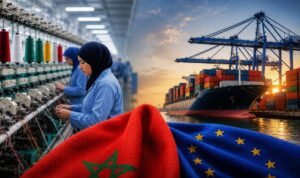
EIB allocates over €700 million for Morocco investment plans
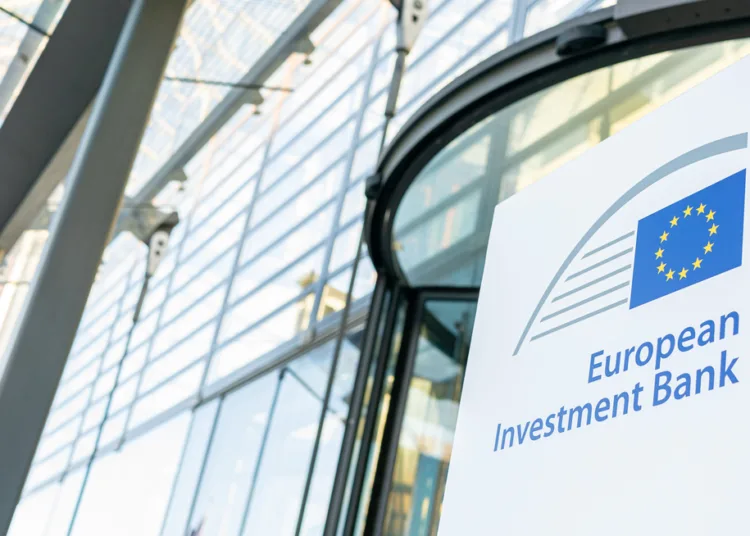
The European Investment Bank investment program in Morocco is set to exceed €700 million in 2026, according to EIB President Nadia Calviño, who announced the figure during a three day official visit to the country.
Speaking to Morocco’s state news agency MAP, Calviño said the visit marks her first trip to Morocco since taking office as president of the European Investment Bank. The visit runs from June 29 to July 1 and includes meetings with senior Moroccan officials as well as inspections of projects financed by the institution.
The announcement follows a strong year for the bank’s activities in the country. In February, the EIB reported signing €740 million in financing agreements for Morocco during 2025 through EIB Global, the institution’s branch responsible for operations outside the European Union. The amount represented the bank’s largest annual commitment to Morocco since 2012.
Calviño said cooperation between the two sides has accelerated significantly in recent years. According to the EIB, financing provided to Morocco has tripled over the past five years.
The bank has maintained operations in Morocco since 1979. Total commitments now exceed €12 billion across strategic sectors including energy, transport, education, and water infrastructure. Major projects supported by the institution include Tanger Med port, the Ouarzazate solar complex, the Euro-Mediterranean University of Fes, and the Medusa submarine fiber optic cable.
During the visit, Calviño is expected to hold discussions with Minister of Economy and Finance Nadia Fettah. The talks will review the results of existing cooperation and examine opportunities to expand the EIB’s role as the financial arm of the European Union in Morocco. The visit also coincides with the twentieth anniversary of the bank’s formal presence in the country.
The EIB president will also oversee the signing of two major transport projects backed by European Union guarantees. The operations are designed to improve the resilience and security of Morocco’s transport infrastructure while supporting adaptation to climate change.
Her itinerary includes a visit to a public school in Rabat, where students participating in the Morocco 88 initiative will perform a musical program. The EIB considers education and youth development a key pillar of its partnership with Morocco, particularly through support for girls’ education in rural areas.
Current cooperation priorities between Morocco and the European Union include resilient infrastructure, energy transition, industrial competitiveness, private sector development, and stronger economic integration with European markets.
A substantial share of recent EIB financing has been directed toward reconstruction efforts following the September 2023 earthquake. Earlier in June, the bank finalized a second €500 million recovery tranche for affected regions, bringing its total earthquake recovery commitment to €1 billion.
The funding, supported by the European Union’s FEDD+ guarantee mechanism, covers the reconstruction of roads, schools, and healthcare facilities built to higher seismic safety and energy efficiency standards. Implementation of these projects is scheduled to continue through 2030.
Looking ahead, Calviño said the EIB will assume the presidency of multilateral development banks in 2027. She added that the institution plans to promote cooperative development models based on mutual benefits, pointing to its partnership with Morocco as an example of trust, shared priorities, and measurable results.
Calviño said the visit reflects renewed momentum in relations between Morocco and the European Union, with the European Investment Bank playing a central role in advancing joint development objectives.