Casablanca: Pre-COP31 meeting calls for climate and financial justice
At a pre-COP31 meeting in Casablanca, AESVT-Maroc, AMCDD and partners set out five demands on climate finance and adaptation ahead of Antalya.
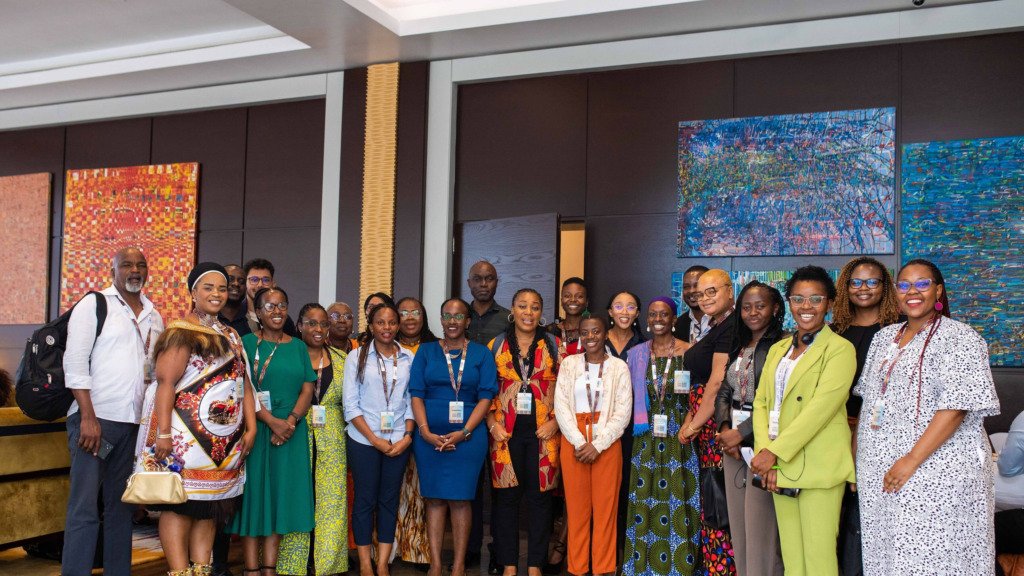
Photo: Center for Economic and Social Rights
Moroccan and African civil society groups met in Casablanca on Thursday, October 29, for a national pre-COP31 gathering, calling for climate and financial justice ahead of the UN climate conference in Antalya. The event was organised by Le7TV.
AESVT-Maroc, an association grouping teachers of life and earth sciences in Morocco, took part alongside the Alliance Marocaine pour le Climat et le Développement Durable (AMCDD) and the Pôle Jeunesse, working with PACJA and IMAL. The meeting was held at the Centre de Casablanca pour l’Éducation à l’Environnement and brought together institutional actors, scientific experts, civil society organisations and youth representatives from Morocco and across Africa.
Redirecting finance to climate action
Participants called for an immediate shift of money away from speculation and war toward climate action and the protection of life. They pointed to the trillions of dollars traded daily on financial markets, set against the lack of funding for drinking water, food security, basic health care and ecosystems.
Citing SIPRI figures, they put global military spending at a record $2,440 billion a year. Losses from failing to act on climate change could reach between $38,000 billion and $40,000 billion by 2050, they warned, the equivalent of 15 to 20% of world GDP.
Africa’s adaptation gap
Data from the African Development Bank (AfDB) presented at the meeting put Africa’s current losses at $50 billion to $100 billion a year, against adaptation needs of $277 billion annually, of which the continent receives only around $30 billion.
Fossil fuels still receive roughly $1,300 billion a year in direct support, participants said, nearly thirteen times what countries of the South get in climate aid. Referring to figures from Oxfam and the International Energy Agency (IEA), they noted that billionaires’ wealth has grown by an estimated $3,300 billion, or 34%, since 2020, while less than 15% of the $2,000 billion invested each year in clean energy is thought to reach developing countries and Africa, China excluded.
The groups also urged that women and young people be placed at the centre of climate governance, pointing out that close to 50% of the world’s youth will be African by 2050.
Five demands for Antalya
Five priorities were set out for COP31. The first calls for putting the Baku-Belém Roadmap into practice so as to mobilise $1,300 billion a year by 2035 through grants and concessional finance that does not burden vulnerable countries with more debt.
The second demand is to triple adaptation finance by 2035, closing a gap estimated at $310 billion to $365 billion a year. A third calls for activating the “Climate Implementation Bridge” mechanism to transfer renewable energy and storage technologies to the least developed countries.
A fourth demand seeks a binding, operational Just Transition framework involving young people, women and local authorities. The fifth calls for a rigorous second Global Stocktake and greater funding to prevent the health, social and ecological risks linked to climate change.