UN Security Council fails to renew MINURSO mandate after Russian veto
MINURSO’s mandate was not renewed after a Russian veto blocked the US draft; the Royal Cabinet calls it a step toward closing the Moroccan Sahara file.
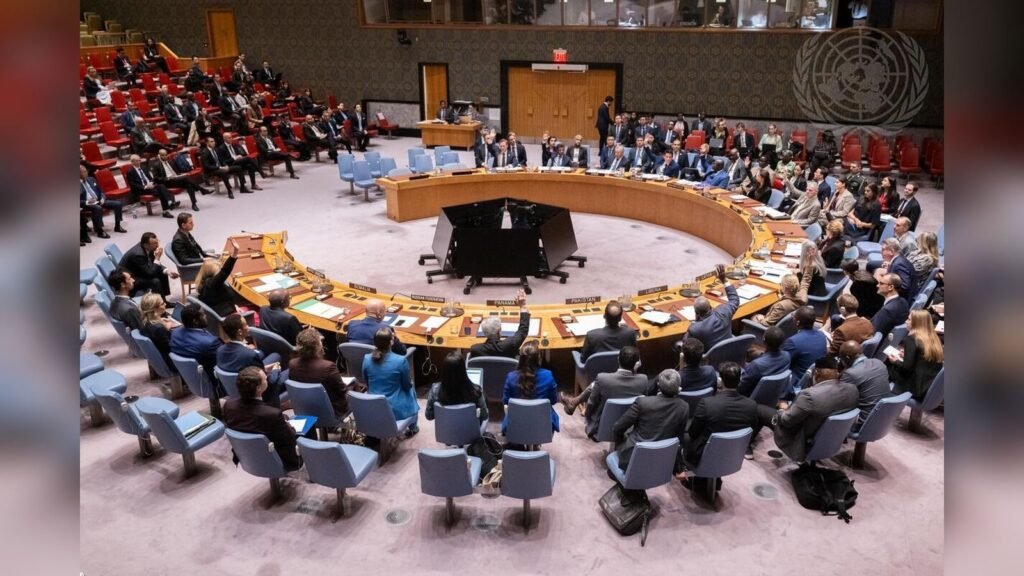
Photo: UN Photo/Manuel Elías
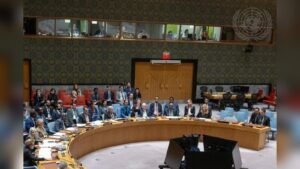
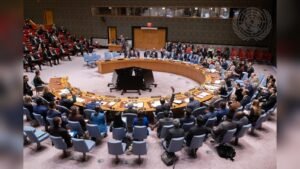
The UN Security Council failed on Friday, October 30, to renew the MINURSO mandate. Russia vetoed a US-drafted resolution, and Washington then voted down a rival Russian text that would have rolled the mission over for another year. MINURSO’s current mandate was due to expire on Saturday, October 31.
The US draft, contained in document S/2026/868, won 11 votes in favour. Russia, a permanent member, voted against it, while China, Pakistan and Somalia abstained. The Council president declared that the text had not been adopted because of the negative vote of a permanent member.
The Russian counter-proposal, document S/2026/870, would have extended the mission until October 31, 2027. It drew only three votes in favour, from China, Somalia and Russia. The United States voted against it and the other 11 members abstained, leaving it short of the required majority.
What Washington proposed
Speaking after the first vote, the US representative said Washington’s text had the backing of 11 Council members and would have moved what he called a 50-year frozen conflict toward an end. He regretted that the veto had been used to keep the letter “R”, for referendum, in the mission’s name, even though the UN had not been preparing for any referendum for decades.
He recalled that resolution 2797, adopted last year, made Morocco’s Autonomy Proposal the basis for negotiations and ordered a strategic review of the mission’s future mandate. Three high-level rounds of talks followed, he said, with the parties and observers at the table, covering self-government, political representation, security, resource sharing, constitutional protections, international guarantees and demobilisation.
The US delegation also pointed to UN data on the Tindouf camps in Algeria: nearly two-thirds of children under five suffer from anaemia, one-third are stunted, and only one in ten receives a minimum acceptable diet.
Waltz: a mission “fit for purpose”
US Ambassador Mike Waltz, explaining his vote against the Russian text, described the American draft as “a good faith attempt” to reshape a mission that, in his words, had not delivered its original purpose in 35 years. He said Washington, as penholder, had accepted multiple edits from several countries over successive rounds.
Waltz noted that MINURSO’s own website acknowledges its referendum preparations ended more than 20 years ago. He added that, according to the mission’s staff, it spends roughly 80 percent of its time resupplying itself, and that ground patrols east of the berm are restricted while overflights are denied.
“We cannot perpetuate a mission whose very name does not reflect the reality on the ground.”
He recalled that in 2002 then Secretary-General Kofi Annan had put the option of ending the mission before the Council, after 11 years and nearly half a billion dollars spent. Since the vote will lead to a drawdown, Waltz said, it should be orderly and stable, protect UN personnel and address legitimate security and humanitarian needs.
Regrets in Paris and London
France’s representative said MINURSO could help build trust and advance the political process, warning that “its abrupt closure would be exceedingly alarming in the context of resumed tensions”. The United Kingdom’s delegate voiced “immense disappointment” at Moscow’s decision, saying it undermined the Council’s work on the file, jeopardised the UN mission and risked setting back the political process.
Beijing and Moscow explain
China said it abstained because consultations on the US text had been insufficient. Its delegate argued that the mandate “should not be used to exert political pressure” and called for a political settlement.
Russia’s representative said the US text could have reversed the whole settlement process and warned against imposing one-sided solutions without painstaking talks with the other side. He called his vote “a life-saving veto, so to speak”, and presented Moscow’s own draft as “the last opportunity to extend the life of MINURSO”.
Royal Cabinet: a 35-year page turned
Issued on Friday night, the communiqué is the Kingdom’s latest official position following the Security Council meeting.
In a communiqué issued on Friday, the Royal Cabinet described the non-renewal as “an important development and a significant step towards the definitive closure of the Moroccan Sahara file at the United Nations”.
The communiqué noted that the development coincides with the celebration of Unity Day, decreed by His Majesty King Mohammed VI to mark a break in the handling of the file, from mere management to a deep transformation of its parameters.
According to the Royal Cabinet, the decision means the mission’s presence in the Kingdom’s southern provinces, including its personnel, vehicles, equipment and symbols, should end in the coming days. It called MINURSO a legacy of an outdated context that had long served to internationalise the regional dispute over Morocco’s legitimate recovery of its Saharan provinces.
The communiqué added that the non-renewal should end the Security Council’s seizure of the issue and remove it from the Council’s agenda. Periodic Council meetings on the Moroccan Sahara, the related reports of the UN Secretary-General and the briefings of his Personal Envoy would therefore no longer be justified.
The UN political process, which the Royal Cabinet said had been marked by the other parties’ procrastination and insistence on perpetuating the status quo, is thus suspended. Similar steps will soon be taken in other UN bodies, the statement said.
While welcoming the outcome, Morocco remains firmly attached to the ceasefire, in strict respect of its territorial integrity, national security and the peace of mind of its citizens, the communiqué stressed. It said the international momentum launched by His Majesty the King will continue at bilateral and regional levels, noting that more than two-thirds of UN member states, including permanent members of the Council, back autonomy under Moroccan sovereignty as the only framework for resolving the dispute.
Hilale answers Algeria
In the chamber, Algeria’s representative thanked Russia for its rollover draft and decried what he called the “failure of this Security Council”.
Morocco’s Ambassador to the UN, Omar Hilale, replied that the mission’s resolution had for years been adopted without the two parties taking the floor, and that “this tradition has been violated”. He asked why Algeria was giving the Council “lectures”, saying its statement had undermined the Council, the penholder and the countries that backed the text.
Hilale said the Tindouf camps are the only ones in the world where the host country hands its authority to a separatist group, and that their residents cannot move freely. “Let these people go back to Morocco. Let them go home,” he said, before thanking the United States and the countries that voted for its draft.
A mission created in 1991
MINURSO was established by Security Council resolution 690 in 1991, under settlement proposals that provided for a referendum which never took place. Morocco presented its autonomy initiative in 2007, envisaging self-government under Moroccan sovereignty as a basis for negotiations.
Washington said it would keep working with the Secretary-General on an orderly drawdown and with Personal Envoy Staffan de Mistura and the parties toward a negotiated settlement.