



Egyptian engineer tears up and drinks his diplomas over livestream earnings
Egyptian engineer Mahmoud Rustum tore up his degree and certificates, soaked them and drank them, protesting livestream earnings that dwarf expertise.
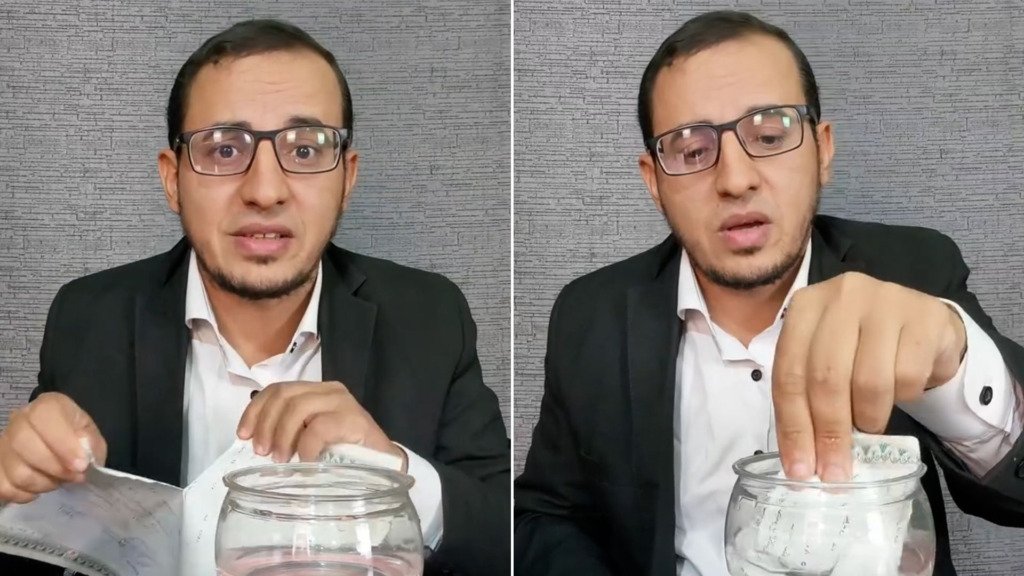
Photo: Mahmoud Rustum
An Egyptian engineer named Mahmoud Rustum tore up his graduation certificate and several professional diplomas during a livestream, soaked the pieces in water and drank them, in protest against the quick money some content creators make from live broadcasts. The video drew wide reaction on social media.
Rustum said he had spent 11 years studying, working and striving in engineering, only to see a single live broadcast lasting minutes bring in large sums. “Eleven years of learning and working, and in the end one 11-minute live by Shaker is worth all my effort,” he said, referring to what the content creator known as Shaker earned during a livestream.
Before tearing up the papers, he showed his followers examples of his work. These included engineering designs, permits for buildings and shops, settlement files, specialised courses and certificates in engineering software, and a book in which he gathered his experience.
He also described an engineering app he had spent several months developing, which uses artificial intelligence to help users estimate the cost of construction, finishing and concrete. Rustum said he had helped design around 130 mosques and public-service projects, and asked why people with professional expertise and products receive no support or recognition.
As his anger peaked, he dissolved parts of the documents in water and drank them, invoking the Egyptian expression “soak it and drink its water”, a symbolic way of saying his years of study no longer earned the appreciation they deserved.
Reactions were divided. Some users saw the gesture as a sign of frustration among professionals in scientific fields and warned that the gap could push young people to see fame and livestreaming as a faster route to money than study and work.
Others argued that each field has its own sources of income, criticised tearing up diplomas as a form of protest, and said the worth of knowledge is not measured by how much it pays or how fast.
 Assem Laalami Brings Twenty Years of Film and Studio Work to THE E.L Signature
 Family Code reform: Kenitra lawyer urges government to send bill to Parliament
 CAF Awards 2026: Hanane Ait El Haj leads Morocco’s nominations in four categories
 Waitrose Christmas ad: Keira Knightley in wedding gown in sequel teaser
 Rabat: Mansouri sets up interministerial committee to monitor prices



Comments (0)