
Five simple kitchen rules that help keep your family’s food safe at home
Food safety at home starts with five steps: keep clean, separate raw and cooked, cook well, safe temperatures and safe water, says WHO.
Illustrative image
Whether we shop at the weekly market or the corner grocer, most family meals are prepared at home, and small slips in the kitchen can turn food into a source of illness. According to the World Health Organization (WHO), roughly one in nine people worldwide falls ill each year from contaminated food, with young children, older people and pregnant women among the most vulnerable.
WHO recommends five keys to safer food at home. They are easy to follow and you can start with today’s meal.
Five steps that help reduce the risk of food poisoning
First: keep clean. Wash your hands before preparing food and after touching raw meat, and clean worktops, utensils and chopping boards regularly.
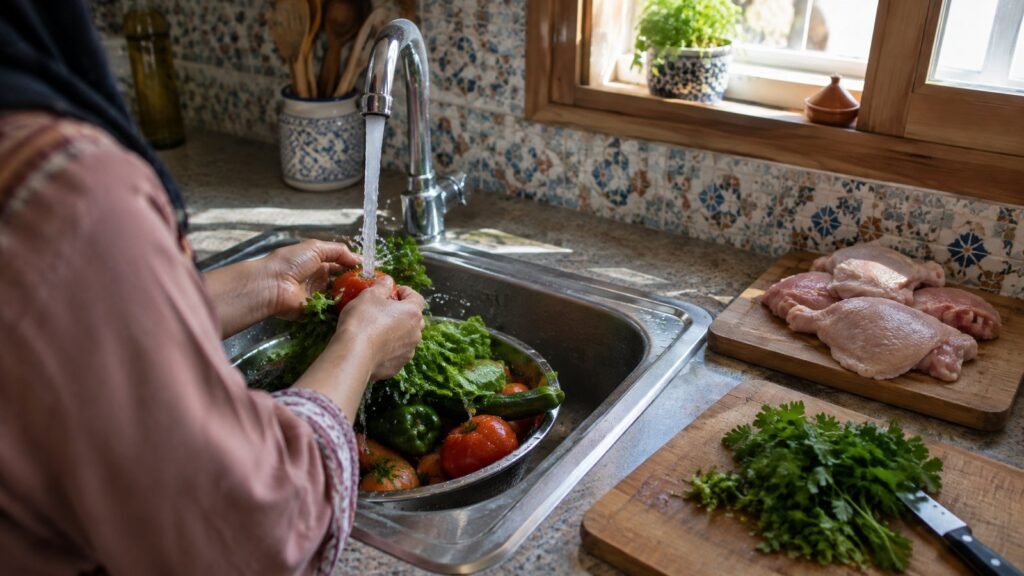
Second: separate raw and cooked. Keep one board and knife for raw poultry and meat, and never put cooked food or salad in a dish that held raw meat without washing it first.
Third: cook thoroughly. Make sure chicken, minced meat and seafood are cooked all the way through, and avoid raw milk that has not been boiled or pasteurised.
Fourth: keep food at safe temperatures. Do not leave leftover tagine or couscous out of the fridge for long. Some bacteria, such as listeria, can grow even when chilled, so do not store food for too long.
Fifth: use safe water and raw materials. Wash fruit and vegetables well in drinking water, choose fresh produce and throw away grains or peanuts that show signs of mould.
When to seek medical help
If you notice fever, repeated vomiting, heavy diarrhoea or severe stomach pain, especially in a young child, a pregnant woman or an older person, see a doctor, a pharmacist or the nearest health centre promptly, as dehydration can set in quickly.
Small kitchen habits protect the whole family. Make them part of your daily routine.