
Greater Paris: Bolt and Stellantis plan autonomous mobility trial from 2028
Stellantis, Bolt and the Métropole du Grand Paris plan an autonomous mobility trial from 2028, aiming for about 30 communes by 2030, Stellantis said.
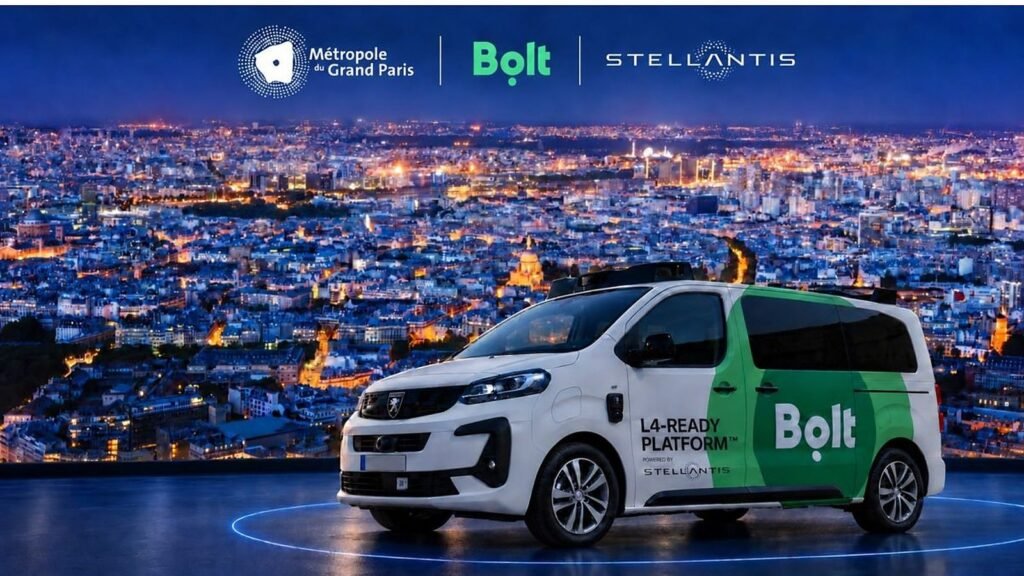
Photo: Stellantis
The Métropole du Grand Paris, ride-hailing company Bolt and carmaker Stellantis intend to test autonomous mobility services in the Greater Paris area from 2028, Stellantis said in a statement on Friday, October 23.
The pilot has been submitted to the European Commission’s Autonomous Drive Ambition Cities (ADACities) initiative. It would begin in up to five communes in the north-west of Greater Paris, with the partners aiming to extend coverage to around 30 communes by 2030. Commercial operation is targeted for that year, subject to the required authorisations.
Gaps in the transport network
Named the “Greater Paris Autonomous Driving Living Lab”, the partnership will examine how self-driving vehicles could complement existing public and private transport. The statement singled out first- and last-mile journeys, access to employment hubs, off-peak travel and service for major events.
The metropolis, which represents Paris and 129 surrounding communes, has 7.2 million inhabitants. According to the release, investments such as the Grand Paris Express are strengthening public transport links, but difficulties persist.
Division of roles
The Métropole du Grand Paris will coordinate with local authorities, provide the framework for real-world testing, identify use cases and oversee the evaluation. Bolt, through Bolt Autonomous Driving Solutions, will lead service integration and deployment planning. Stellantis will supply vehicles built on its L4-Ready platforms along with design, engineering, manufacturing and integration capabilities.
Pony.ai has been identified as a potential provider of the self-driving technology, with a solution based on the NVIDIA Hyperion platform and the Halos safety system.
Independent evaluation
The first phase will be assessed on operational safety, service quality and user acceptance, effects on mobility and integration with public transport, social and environmental impacts, and the economic conditions for any wider rollout. The initial deployment will undergo independent evaluation, and all services will be subject to safety, regulatory and data-protection requirements.
Patrick Ollier, President of the Métropole du Grand Paris, said the body had run more than 70 trials over ten years to meet local needs.
“Our conviction is simple: technological progress only makes sense when it brings concrete benefits to our citizens.”
Bolt founder and CEO Markus Villig said autonomous vehicles would only be worthwhile if they solve real transport problems, calling the project “a new concrete step” towards a commercial autonomous mobility service designed for Europe. Ned Curic, Stellantis’s Chief Engineering & Technology Officer, said driverless mobility should mean more choice and easier access to safe and reliable transport.