Watershed management drives Morocco’s push to protect dam capacity
Morocco is accelerating its watershed management strategy to safeguard water resources and reduce dam siltation, as senior government officials conducted a field visit to key hydraulic sites in Khémisset Province to assess ongoing restoration projects.
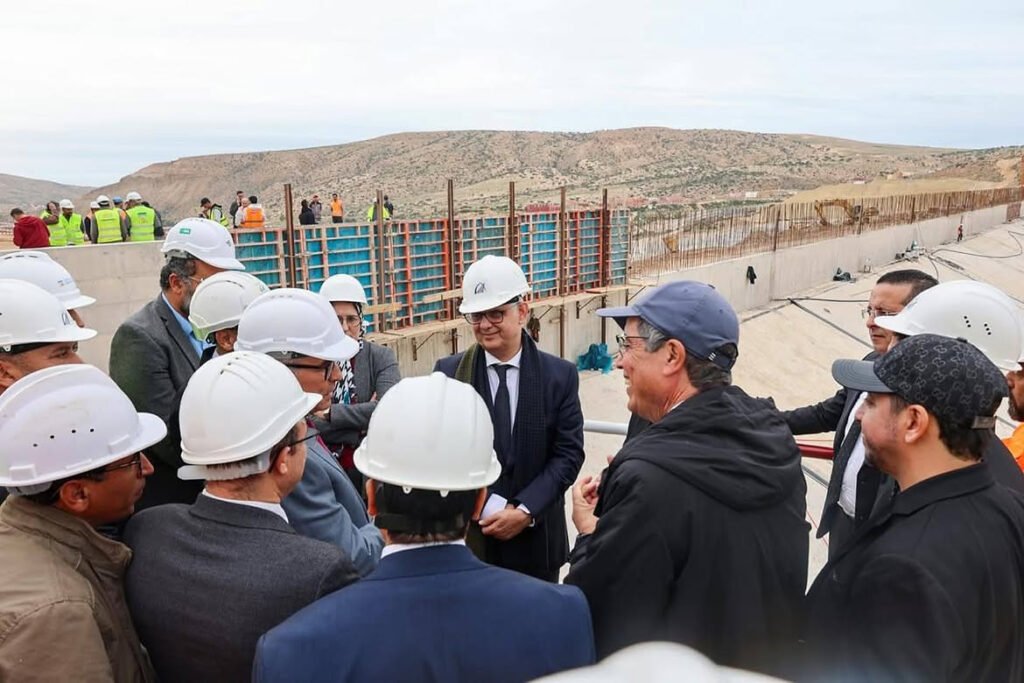
The visit brought together Minister of Equipment and Water Nizar Baraka, Minister of Agriculture, Maritime Fisheries, Rural Development and Water and Forests Ahmed El Bouari, and National Agency for Water and Forests Director General Abderrahim Houmy. The delegation inspected upstream areas of the Ouljet Essoltane and El Kansera dams in the Rabat-Salé-Kénitra region.
The mission formed part of the implementation of a partnership agreement between the National Agency for Water and Forests and the Ministry of Equipment and Water. The initiative seeks to coordinate efforts to protect water resources, combat soil erosion, reduce sediment accumulation in reservoirs, and restore forest ecosystems. It also aligns with Morocco’s “Forests of Morocco 2020-2030” national strategy.
Baraka said watershed restoration through reforestation remains a central tool for limiting sediment deposits that gradually reduce reservoir storage capacity. He noted that preserving dam performance is essential while supporting economic opportunities for communities living near these hydraulic structures.
The minister warned that reservoir siltation remains one of Morocco’s most significant water infrastructure challenges, reducing national storage capacity by around 57 million cubic meters every year. He added that construction is underway on 14 new dams as the country works to raise its overall storage capacity to 26 billion cubic meters.
Houmy said the visit reviewed projects completed under the national watershed management program, including reforestation initiatives and engineering works designed to protect water resources and soils. He said these projects contribute to ecosystem conservation while improving the sustainable management of natural resources.
According to the agency, Morocco currently has 33 river basins under development, covering nearly 8 million hectares. About 1.14 million hectares have already undergone watershed management measures.
Officials also reviewed national progress and future plans for watershed restoration, examined the current state of dam siltation across Morocco, and received a presentation on the Rabat-Salé-Kénitra regional watershed management program for the 2026-2030 period.
Technical briefings focused on restoration work within the Oued Beht watershed, including biological treatments such as reforestation, vegetation recovery, and forest ecosystem regeneration. The delegation also monitored mechanical interventions aimed at controlling mountain runoff and improving water and soil conservation.
Drone demonstrations provided an overview of ongoing construction works designed to stabilize drainage systems and strengthen watershed resilience. The integrated approach adopted by the National Agency for Water and Forests combines biological and engineering measures to improve watershed performance, enhance resilience to climate change, and protect Morocco’s strategic water resources.
The visit concluded with the signing of a grazing rights compensation agreement between the Khémisset Regional Directorate of the National Agency for Water and Forests and the Mabrouka Forest and Pastoral Association. The agreement aims to encourage participatory management of natural areas while supporting sustainable development and the long-term conservation of regional natural resources.