
Japan: bowing makes faces look more attractive, but not to Americans
A bow lifts attractiveness ratings among Japanese observers but barely moves Americans, a study led by Yamagata University’s Takayuki Osugi finds.
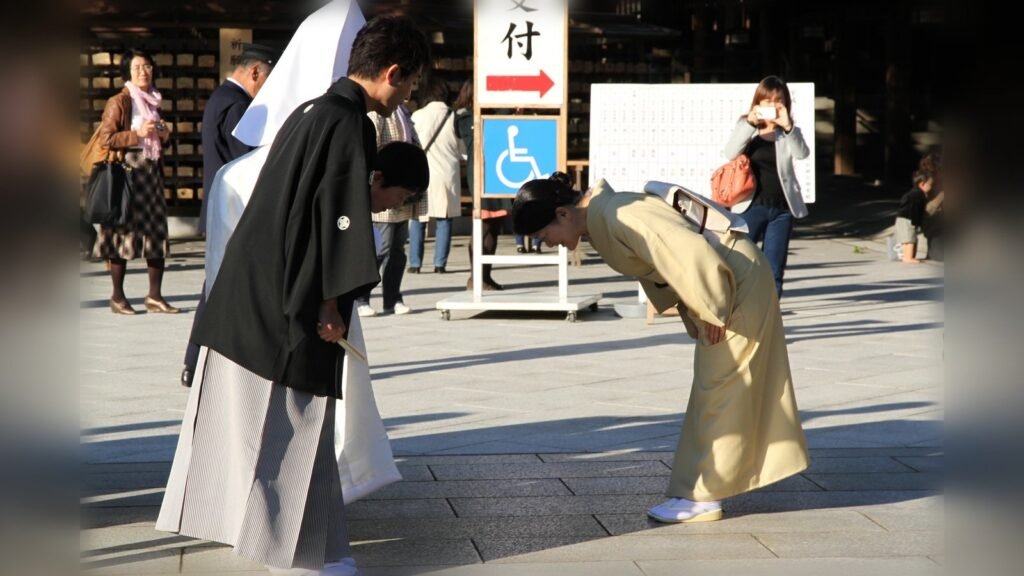
Source: Wikipedia
A bow makes a face look noticeably more attractive to observers in Japan, no matter the person’s racial appearance, while viewers in the United States barely react to the gesture. The finding comes from a study published in Japanese Psychological Research and led by Takayuki Osugi of Yamagata University.
Japanese participants rated computer-generated models higher when they bowed than when they stood still. Compared with static faces, scores on a 0-to-100 scale rose by about 6 to 12 points for a short bow and by 15 to 28 points for a 1.5-second long bow. Female European models, for example, went from 43.2 standing to 51.1 with a short bow and 59.0 with a long one.
American participants, shown the same videos, moved very little. Where differences reached statistical significance, they were typically below three points. The same female European models scored 56.5 static, 57.4 for a short bow and 56.9 for a long bow.
The researchers used 3D models with East Asian, European, South Asian and African appearances to separate cultural familiarity from same-group bias. Among Japanese raters, the effect did not depend on the model’s race. Follow-up tests found bowing also raised Japanese ratings for both more and less attractive faces.
The authors say the results point to learned etiquette rather than a universal submission signal. In Japan, the bow evokes politeness and non-threatening deference, a positive impression that carries over into aesthetic judgements through a halo effect.