Preventing burns at home: a safer kitchen and the right first aid steps
Preventing burns at home starts in the kitchen. Practical steps and correct first aid with cool water, based on World Health Organization advice.
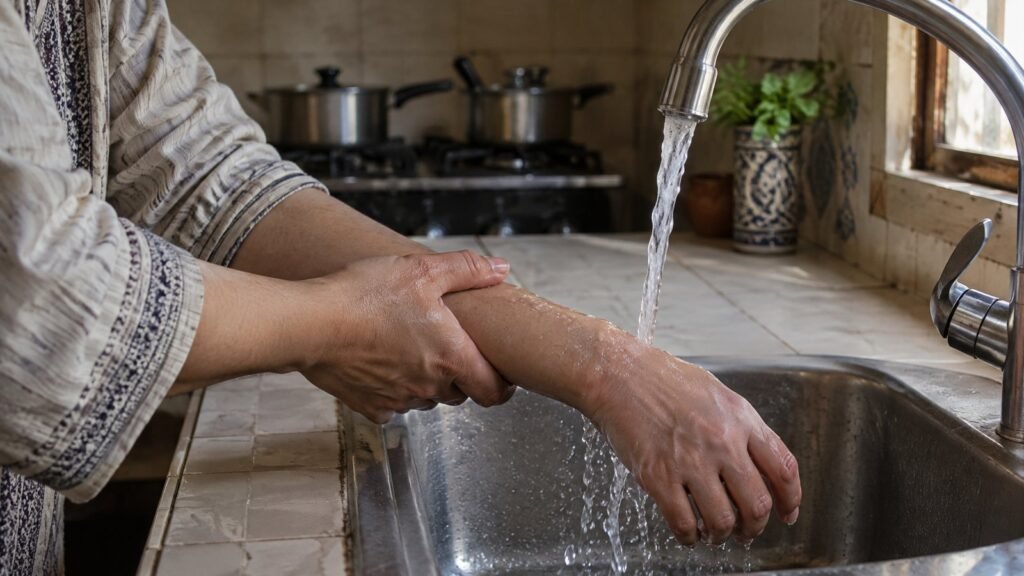
Illustrative image
Preventing burns at home: a safer kitchen and the right first aid steps
The kitchen is where family life happens: tea water boils, a tagine simmers, children wander in and out. It is also where most household burns occur, often from a spilled pot of hot liquid or an unstable stove.
According to the World Health Organization (WHO), burns cause an estimated 180,000 deaths every year worldwide, and they are largely preventable. These simple steps help reduce the risk and prepare you to react correctly.
Practical steps for a safer home
First: keep the stove stable and out of children’s reach, turn pot and teapot handles inward, and never leave young children alone in the kitchen while cooking.
Second: take proper safety measures with gas cylinders and electricity, keep flames low and contained, and never leave an open flame unattended.
Third: be careful with loose clothing and wide sleeves near the fire, as they can catch flame quickly.
Fourth: lower the temperature of your hot water heater if you can, never smoke in bed, and keep lighters and matches away from children.
Fifth: if a burn happens, stop the burning by removing clothing from the area, then cool it with cool tap water. Do not use ice, which deepens the injury, and avoid cooling for too long.
Sixth: do not put toothpaste, oil, turmeric or raw cotton on the burn, do not pop blisters, and wrap the person in a clean cloth.
When to seek medical help
If a burn is large or deep, caused by electricity or chemicals, or affects a child, go straight to the nearest health centre. For electrical burns, switch off the power before touching the person. Avoid applying any cream before a health professional has seen the injury.
A few moments of attention in the kitchen can spare your family a great deal of pain.