Morocco surpasses Spain in Renault vehicle production output
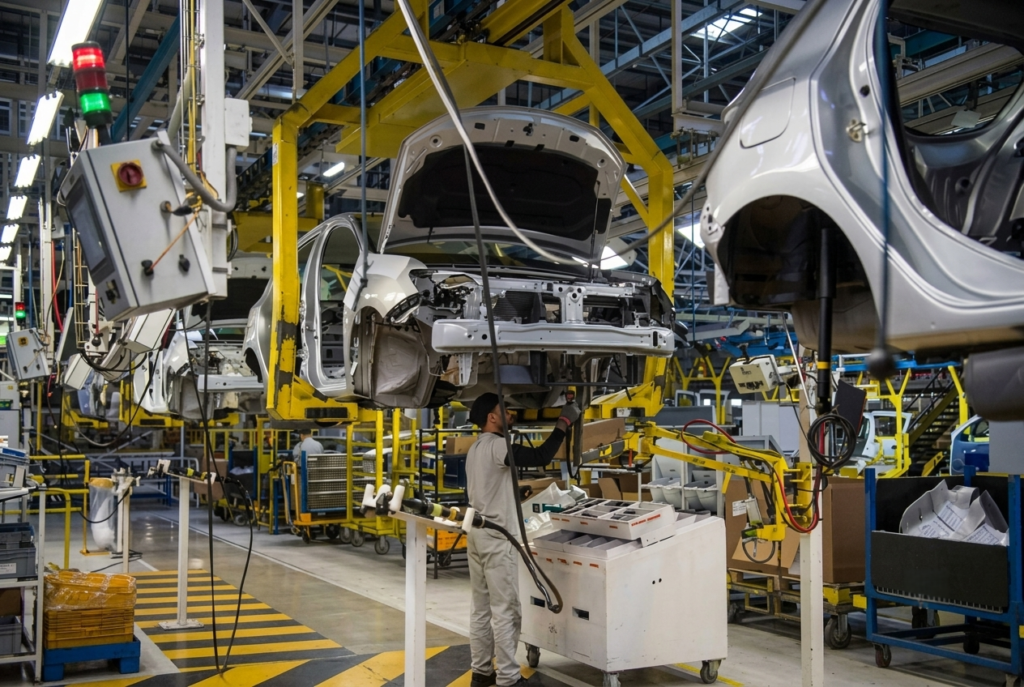
Morocco vehicle production reached a new milestone in 2025 as Renault Group manufactured more vehicles in the country than in Spain, highlighting Morocco’s growing importance within the global automotive industry.
According to figures cited by Motor16, Renault’s manufacturing plants in Tangier and Casablanca produced 394,000 vehicles during 2025, exceeding the output of the company’s factories in Spain. The achievement further strengthens Morocco’s position as Renault’s second-largest manufacturing base worldwide after France.
The increase reflects years of expansion across Morocco’s automotive sector, which has become one of the country’s leading industrial and export industries. Much of Renault’s success in Morocco has been driven by the popularity of Dacia models, particularly the Dacia Sandero, one of Europe’s top-selling vehicles. The Tangier facility also manufactures other models, including the Dacia Jogger and Dacia Logan.
Morocco’s automotive industry has attracted significant international investment beyond Renault. Stellantis operates a major production facility in Kenitra, where it manufactures vehicles such as the Peugeot 208 as well as electric models including the Citroën Ami, Opel Rocks-e, and Fiat Topolino.
Several factors have contributed to the country’s growing competitiveness. Industry estimates cited by Motor16 indicate that labor costs per vehicle in Morocco exceed €100, compared with approximately €900 in Spain and more than €1,400 in France. Combined with proximity to European markets and modern logistics infrastructure, these advantages have helped position Morocco as a preferred manufacturing destination.
The development comes at a time when the European Union is considering new industrial policies designed to reinforce local manufacturing and reduce dependence on external supply chains. Proposed regulations would require vehicles to meet specific European-content standards to qualify for certain incentives, particularly within the electric vehicle market.
Future models could be affected by these changes. The planned electric version of the Dacia Sandero, expected around 2027 and 2028, may face challenges in accessing some European subsidies if production remains based in Morocco despite being developed by a European manufacturer.
European automotive groups have expressed concerns that stricter origin requirements could weaken competitiveness by limiting the use of efficient production centers in neighboring countries such as Morocco and Türkiye. Industry representatives argue that these facilities play a key role in helping European brands remain competitive in the affordable vehicle segment, where competition from Chinese manufacturers continues to intensify.
Morocco’s automotive sector has evolved into a strategic component of international vehicle production networks. With large-scale assembly plants, an expanding supplier base, and export-focused infrastructure linked to European markets, the country continues to strengthen its role in the global automotive industry.