Italy suspends Schengen travel with Spain as Ceuta migration crisis deepens
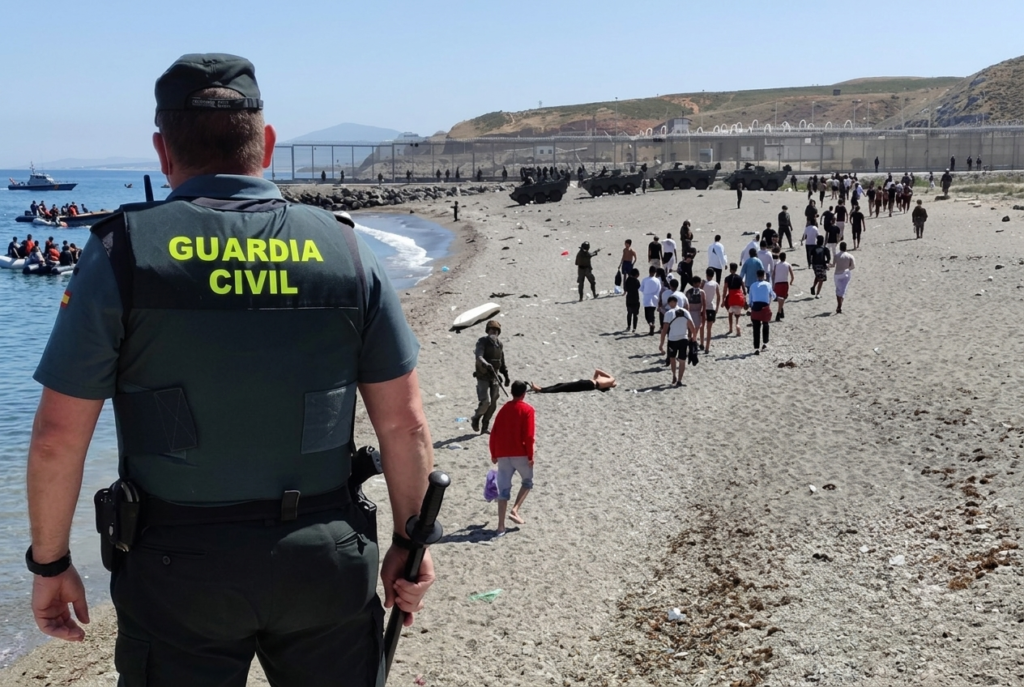
Italy has suspended the application of the Schengen suspension Spain measures governing passport-free travel with Spain following a surge in irregular migration into the Spanish enclave of Ceuta. The decision comes after an estimated 60,000 people entered Ceuta from Morocco within 24 hours, triggering heightened security measures and exposing deep divisions among European governments over migration policy.
The move marks a sharp escalation in tensions between Rome and Madrid. It follows calls by Italian Foreign Minister Antonio Tajani for Spain to be suspended from the Schengen Area, arguing that Madrid had failed to effectively control irregular migration.
Spain reacted by summoning Italy’s ambassador. Spanish Foreign Minister José Manuel Albares rejected Tajani’s criticism, describing the remarks as incompatible with the solidarity expected between European partners. Albares also dismissed suggestions that Spain’s recent judicial decision on migrant regularization had contributed to the events in Ceuta, insisting the two issues were unrelated.
Tajani defended his position, saying uncontrolled irregular migration represents a threat to European security. He argued that Spain’s migration policies risk encouraging human trafficking networks and justified stronger measures to protect the European Union’s external borders.
The diplomatic dispute unfolded as Spanish authorities faced one of the largest migration attempts in Ceuta in recent years. Thousands of people gathered near the border with the Moroccan city of Fnideq after messages circulated on social media encouraging irregular crossings into the Spanish territory.
Moroccan security forces deployed extensively to prevent unauthorized crossings. Authorities dispersed large crowds before they reached the border and arrested several people suspected of promoting illegal migration through online platforms.
Spain also reinforced security around Ceuta by deploying military personnel to support the Civil Guard. Prime Minister Pedro Sánchez and Interior Minister Fernando Grande-Marlaska were expected to visit the enclave to supervise the government’s response to the crisis.
The Schengen Area, created in 1995, allows passport-free travel across most participating European countries. Although member states can temporarily restore border controls during exceptional situations such as security threats or migration emergencies, such decisions remain politically sensitive because they affect one of the European Union’s core principles of free movement.
Italy’s decision suggests that the Ceuta migration crisis has expanded beyond a border management challenge into a broader diplomatic confrontation within the European Union. The dispute could influence future cooperation on migration policy, border management, and the functioning of the Schengen system.