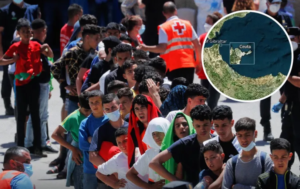
Sanchez calls Ceuta border crisis attack on Spain’s territorial integrity

Spanish Prime Minister Pedro Sanchez described the Ceuta border crisis as an attack on Spain’s territorial integrity, pledging that all migrants who entered the Spanish enclave irregularly would be returned to their countries of origin.
Sanchez said Morocco would cooperate with Spain’s efforts to manage the situation and support measures aimed at restoring control along the border. His remarks came as his government faced mounting political pressure at home and growing concern from European partners over the unprecedented scale of the crossings.
The Spanish government reported that more than 49,000 people entered Ceuta illegally within 24 hours. More recent figures indicated that the total number of crossings had reached at least 60,000, making it one of the largest migration surges ever recorded at the enclave.
The crisis sparked strong reactions across Europe. Spain’s right-wing Vox party described the events as an “invasion” and sharply criticized the government’s response. Italy warned it could seek Spain’s suspension from the European Union’s Schengen area, while France announced tighter border checks along its frontier with Spain to contain any secondary migration movements.
Madrid and Rabat also reaffirmed their commitment to strengthening security along Ceuta’s border fence in an effort to halt further mass crossings. Moroccan security forces intensified operations in the area, deploying water cannon trucks to push back groups attempting to reach the enclave.
Videos circulating online showed clashes between migrants and security forces, while several vehicles were set on fire during the unrest, highlighting the growing tensions surrounding the crisis.
Morocco’s government has not issued an official public statement on the events. However, a source quoted by Europa Press attributed the surge to criminal networks that exploit vulnerable migrants and encourage irregular crossings.
Reports also suggested that a July 8 ruling by Spain’s Supreme Court may have contributed to the increase in sea crossings. The decision opposed the practice of immediate “hot returns” for migrants arriving by sea, a development some analysts believe may have encouraged more people to attempt the journey.