


Marburg Researchers Find Aloe in 2,700-Year-Old Egyptian Mummy Skull
University of Marburg researchers report the first molecular evidence of aloe in Egyptian embalming materials and in historical “mumia” remedies.
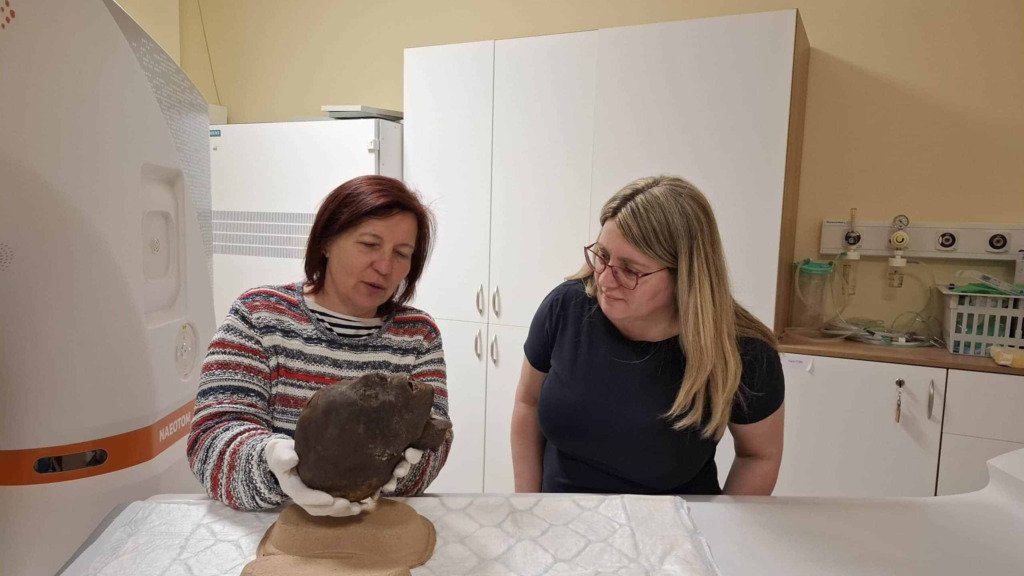
Illustrative image
Scientists at the University of Marburg in Germany have identified aloe as a previously unknown ingredient in ancient Egyptian embalming, after detecting plant-based traces linked to it inside the skull of a mummy dated to about 2,700 years ago.
Similar residues turned up in “Mumia vera Aegyptiaca”, or “true Egyptian mummy”, a remedy made from mummies themselves that apothecaries sold for centuries as a cure-all for a range of illnesses.
The researchers analysed 24 archaeological and historical objects held by several institutions. Among them were an embalmed Egyptian skull from the 8th century BC and an 18th-century sample of mumia kept at the pharmacy museum in Heidelberg.
Their findings, published in the Proceedings of the National Academy of Sciences, offer the first molecular evidence that materials associated with embalming contained components taken directly from the aloe plant. Ingredients already documented include conifer resins and pitches, oils, fats, beeswax and bitumen, as well as rarer plant materials such as dammar and elemi resins.
Tania Pomerinzi, a co-author of the study and director of the Institute for the History of Pharmacy and Medicine at the University of Marburg, said the presence of aloe in mumia is highly significant, since many scholars had assumed that medieval authors drew their mumia recipes from biblical texts.
The medical trade in mummy-based remedies likely began with a 12th-century translation error. Persian pharmacists used a black resinous substance called “mumia” to treat wounds, and medieval translators working into Latin confused it with the dark materials used in Egyptian embalming. That mix-up fed a wide trade in ground mummy remains, sold for centuries as a universal remedy and sometimes as an aphrodisiac.
 BYD’s Yangwang U9 Xtreme wrecked on a closed track before 500 km/h attempt
 Nador: Marchica Med plans 585 million dirham DoubleTree resort on lagoon
 Boualem Sansal in Rabat: Morocco is “an outstanding country in every field”
 Amine Harit: Marseille Revival Puts Atlas Lions Return Back on the Table
 Fozi Lekjaa: World Cup 2030 to create over 840,000 jobs, tax breaks set for FIFA



Comments (0)