Wafasalaf marks 40 years with strategic vision for Morocco’s financial future
Wafasalaf, one of Morocco’s leading consumer finance companies, commemorated four decades of operations with a high-profile institutional gala bringing together shareholders, institutional partners, collaborators, and stakeholders from across its broader ecosystem. Held in Casablanca on May 20, 2026, the event was organized around a central theme: the enduring commitment the company has built across multiple generations of Moroccan families. Far from a simple anniversary celebration, the evening served as a platform to reflect on seismic shifts reshaping how Moroccans consume, borrow, and engage with financial services, and to unveil an ambitious strategic roadmap targeting the year 2030.
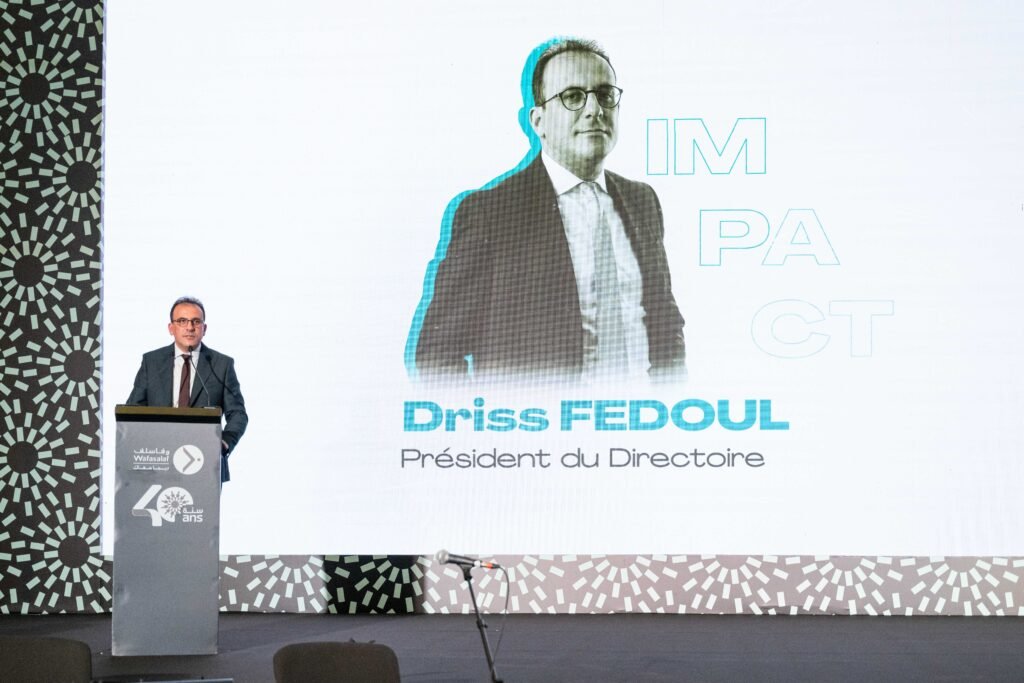
Placed under the banner of “40 years of history… between yesterday, today, and tomorrow,” the ceremony paid tribute to the relationships and trust the company has nurtured over decades with its clients, partners, and employees. Driss Fedoul, President of the Wafasalaf Management Board, addressed attendees with a statement that captured both retrospection and determination. “For 40 years, Wafasalaf has accompanied the economic, social, and societal transformations alongside Moroccans,” he said. “Today, our ambition is to go even further by building a new-generation actor, one that is innovative, responsible, and a creator of new uses.” The declaration was widely read as a signal that Wafasalaf intends not merely to adapt to Morocco’s evolving financial landscape, but to actively shape it.
A central element of the evening was the unveiling of key findings from the “Wafasalaf Observatoire de la consommation,” an internal research initiative dedicated to tracking how Moroccan consumption habits have evolved over the past four decades. The study drew on longitudinal data to map structural changes in how citizens manage budgets, access credit, and relate to financial institutions. Among its headline conclusions, the observatory found a growing consumer demand for budget control and flexibility, reflecting a preference for financial products that offer customization rather than rigid structures. The study also documented a sharp acceleration in digital usage across all age brackets, a trend that has fundamentally altered the interface between financial service providers and their clients. In parallel, the data pointed to the rise of new mobility models and more environmentally conscious consumption patterns, as Moroccan consumers increasingly weigh sustainability alongside cost and convenience. Notably, despite the digitization of many services, the observatory found that the desire for human accompaniment in financial journeys remains strong, suggesting that customers still value personal guidance even as they embrace online tools.
These findings provided the empirical foundation for Wafasalaf’s four-pillar strategic vision for the period leading up to 2030. The first pillar positions the company as a “universal actor,” meaning it aims to extend its historically household-focused lending base to new client segments. This expansion targets merchants, artisans, independent professionals, and emerging economic actors, while simultaneously deepening the company’s footprint in mobility-related financial services. The second pillar casts Wafasalaf as an “actor of transitions,” signaling direct engagement with Morocco’s green economy. The company has committed to playing an active role in circular economy development and sustainable mobility financing, with a specific and measurable goal: ensuring that 20 percent of all vehicles financed by 2030 meet eco-friendly criteria. The third pillar centers on digital and technological innovation, with accelerated investment in buy-now-pay-later solutions, omnichannel strategies, and enhanced customer experience driven by artificial intelligence and data analytics. The company aims to leverage these tools to improve client journeys, support faster decision-making, and maintain rigorous risk control. The fourth pillar, which Wafasalaf describes as the “human actor” dimension, may be the most philosophically striking of the four. It commits the company to what it calls a “100% digital and 100% human” model, a deliberate rejection of the false choice between technological efficiency and interpersonal proximity. This approach rests on investment in employee competencies, a culture of inclusion, and reinforced social engagement.
Wafasalaf’s decision to present this roadmap publicly, at a milestone anniversary, reflects a broader trend among Moroccan financial institutions seeking to anchor their credibility in long-term social commitments as much as commercial performance. The company’s ability to sustain its household lending base while diversifying into green finance, digital payments, and professional segments will be closely watched by analysts and peers alike. Fedoul closed the evening on a note that balanced institutional pride with forward momentum: “This evening celebrates the bonds that have brought us together for 40 years, but also the future that we will continue to build together.”