Morocco expects MAD 9.21 billion in oil and gas exploration through 2031
Oil and gas exploration in Morocco should draw MAD 9.21 billion by 2031, 91% from private firms, the Ministry of Economy and Finance says in a budget report.
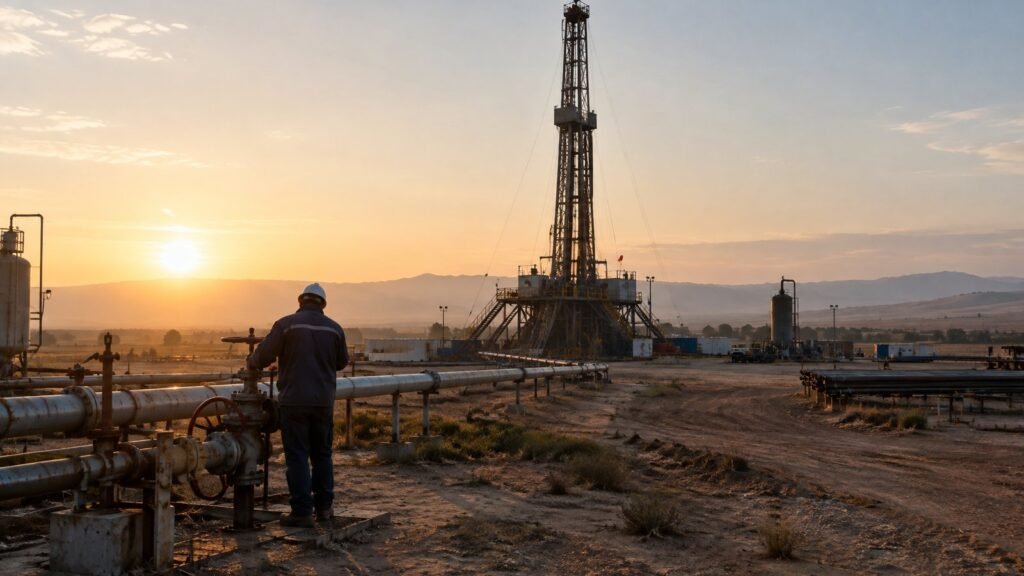
Illustrative image
Morocco expects oil and gas exploration to attract MAD 9.21 billion, roughly one billion dollars, over the five years to 2031. The figure comes from the Ministry of Economy and Finance, in its report on the performance of state-owned enterprises accompanying the 2027 finance bill now before Parliament.
Private companies, both foreign and Moroccan, are expected to provide 91% of that investment. The remainder falls to the National Office of Hydrocarbons and Mines (ONHYM), the public company tasked with prospecting for minerals, oil and gas.
The spending is meant to assess the Kingdom’s hydrocarbon potential and locate reserves that could be exploited commercially, a step that could eventually ease reliance on imported energy. Domestic oil output remains very weak, and the country imports to meet its needs, even though foreign firms have led exploration work for years.
11 companies, 40 permits
At the end of last year, 11 companies were exploring for hydrocarbons across an area of 107,000 square kilometres in Morocco, according to the ministry’s data. Their activity covered 10 onshore and 30 offshore permits.
Dependence on imported fuel leaves the Kingdom exposed to swings in international prices. The outcome of ongoing exploration will shape its future ability to diversify supply and reduce its energy bill.
Gharb basin output falls
Morocco produces natural gas in limited quantities from onshore fields, chiefly in the Gharb basin, while offshore resources are still being explored. Some existing fields have entered a gradual decline.
ONHYM’s share of natural gas production stood at about 20.14 million cubic metres last year, down 21% on the year before. The report attributes the drop to the steady depletion of Gharb basin reserves and the absence of new wells. Condensate deliveries also fell, by around 10%, to 1,729.76 tonnes.
Several gas fields are close to commercial production this year, among them the Tendrara field in the east of the country, operated by Managem, the Kingdom’s largest mining company.
Imports via the Maghreb-Europe pipeline
Morocco currently buys liquefied natural gas on international markets, has it regasified in Spain and brings it home through the Maghreb-Europe Gas Pipeline. Annual consumption is estimated at about one billion cubic metres, used mainly by steelworks, the phosphate industry and power plants.
Volumes carried through the pipeline rose 7.9% in 2025, to about 890.1 million cubic metres, the report shows.
Beyond hydrocarbons, ONHYM plans a mining exploration programme running to 2028 with around 50 projects: 27 funded from its own resources and 23 in partnership with other operators. It also intends to step up research on precious and strategic metals and on natural hydrogen.
African Atlantic pipeline
Alongside domestic exploration, Morocco is counting on the African Atlantic Gas Pipeline, which would link Nigeria to the Kingdom through several West African countries. The project stretches about 6,800 kilometres, with a target capacity of 30 billion cubic metres a year and an estimated cost of nearly 25 billion dollars.
The pipeline is expected to supply African countries before connecting to the Maghreb-Europe Gas Pipeline, opening a route to Morocco and European markets. According to the Ministry of Economy and Finance, the project took a major step in July with the signing of the intergovernmental agreement among the countries involved. Development is set to proceed in successive phases, with first gas deliveries planned by 2031.