
CNDH: All Gdeim Izik Prisoners Ended Hunger Strike by October 15
The National Human Rights Council says all Gdeim Izik prisoners on hunger strike ended it by Oct. 15, after visits to prisons in four cities.
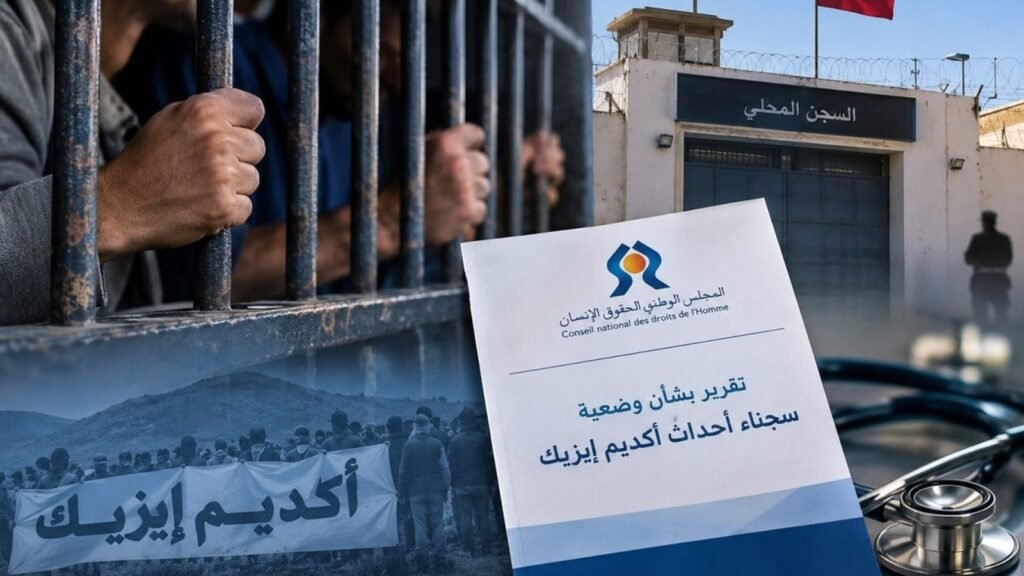
Photo: National Council for Human Rights
All Gdeim Izik prisoners who had declared a hunger strike ended it between Sept. 30 and Oct. 15, 2026, Morocco’s National Human Rights Council (CNDH) said in a report published on Wednesday, October 28.
The report details what the council’s teams found during their visits to the prisoners, how their health was monitored, and how the prison administration responded to their demands. Most of those demands concerned transfers to prisons closer to where their families live.
Visits to Four Prisons
The council’s president sent multidisciplinary teams to prisons in Kenitra, Tiflet 2, Marrakech “Loudaya” and Benguerir. A first round of visits took place on Sept. 29, followed by follow-up visits on Oct. 14 and 15.
The teams followed a practical guide on handling hunger strikes in prisons. The CNDH drew up the guide together with the General Delegation for Prison Administration and Reintegration (DGAPR), the Presidency of the Public Prosecutor’s Office, the Ministry of Health and the International Committee of the Red Cross.
The prisoners were interviewed confidentially, according to the report. Doctors from the council’s teams examined each of them individually and respected medical confidentiality. The teams also met prison doctors and reviewed the detainees’ medical files.
Council teams explained to the prisoners the risks a hunger strike posed to their health. They also mediated with the relevant authorities so that some of the demands could be met.
Transfers Refused, Phone Calls Suspended
The DGAPR told the prisoners it could not grant transfers to the prisons they had chosen, since those facilities did not match the length of their sentences and were reserved for other categories of inmates.
The prison administration also explained why some prisoners had lost phone privileges, saying they had used the service for purposes other than family contact, which breaches the prisons’ internal rules.
Kenitra and Tiflet 2
At Kenitra central prison, Ahmad Al-Subai, Muhammad Al-Bashir Boutenkiza and Hassan Al-Zawi began a hunger strike on Sept. 23 and informed the prison management in writing. They were protesting the refusal of their requests to move closer to their families.
The three were placed in the prison’s clinic. During the Sept. 29 visit, they said some personal belongings had not been returned to them after the move. The prison director ordered the belongings returned immediately once the council intervened. The three also said their phone calls had been suspended since the strike began.
Hassan Al-Zawi refused family visits, including from his wife, so that his relatives would not have to travel between Laayoune and Kenitra, the report notes. He said he had already told the prison administration this.
At Tiflet 2 local prison, Mohamed Lamine Haddi said he was not on hunger strike, a statement the prison director confirmed. He repeated his request to be moved to a prison near his family in Laayoune, saying he speaks to his family by phone three times a week and receives regular medical follow-up.
Abdallah Abbahah, held at the same prison, refused to meet the team on Sept. 29. The team said he was agitated and would not respond to its attempts to talk with him. By the second visit on Oct. 14, the director said he had been moved to a hospital in Khemisset and then to Moulay Youssef hospital in Rabat, where the team visited him.
Bachir Khadda was transferred to Laayoune 2 local prison on Sept. 25 because he met the placement criteria: less than four years of his sentence remained. He told the team he was not on hunger strike.
Health Findings
Al-Neama Al-Asfari and Hassan Dah, held at Marrakech “Loudaya” and Benguerir local prison, also started a hunger strike on Sept. 23 to demand transfers closer to their families.
The council found Ahmad Al-Subai and Hassan Al-Zawi in normal general condition when examined, with a few mild symptoms. Al-Neama Al-Asfari and Hassan Dah were stable. All of them received the medical follow-up required under hunger-strike procedures, except Muhammad Al-Bashir Boutenkiza, who refused to be examined.
Al-Neama Al-Asfari suspended his strike in a Sept. 30 letter to the Delegate General for Prison Administration and Reintegration. Five prisoners ended their strike on Oct. 14, and the last one stopped the following day. Some prisoners told the teams their detention conditions were normal and raised no specific complaints about them.