
Ceuta death toll rises as recovered bodies reach at least 60
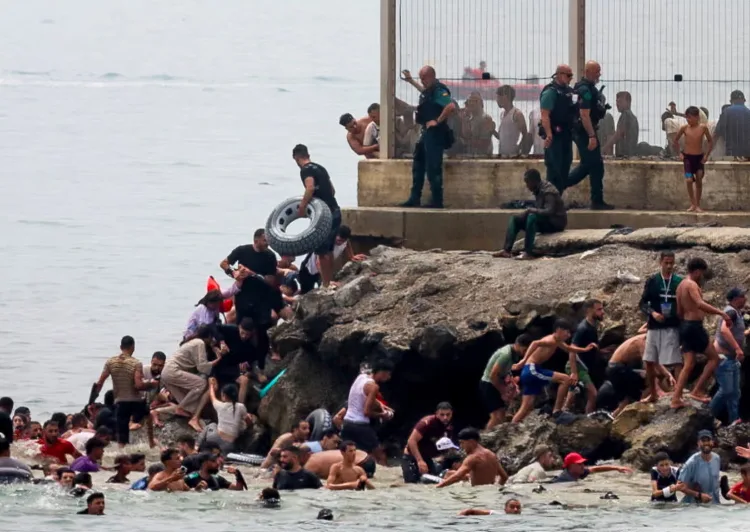
Spanish authorities have recovered at least 60 bodies along the coast of Ceuta following the recent mass attempts to reach the Spanish enclave by sea. The Ceuta death toll has continued to rise as rescue teams search the waters near the Tarajal border breakwater for additional victims.
According to the Spanish news agency EFE, citing security sources, most of the recovered bodies were found at sea. The latest figures bring the number of migrants who have died this year while attempting to swim to Ceuta to at least 92.
Search operations remain underway as authorities continue looking for people believed to have disappeared during the large-scale crossings that unfolded over recent days. Local authorities estimate that more than 60,000 people entered Ceuta in a single day during the peak of the crisis, placing unprecedented pressure on security and emergency services.
In response, Morocco and Spain agreed to return all migrants who entered the enclave irregularly. The two countries also committed to reviewing existing migration measures while describing their bilateral cooperation on migration management as a model of coordination. Both governments reinforced troop deployments and tightened border controls after the influx overwhelmed security forces.
The Spanish Ministry of the Interior has also installed new barriers at the Tarajal border breakwater, including a 500-meter pneumatic floating barrier designed to limit further crossings, according to EFE.
On the Moroccan side of the border, authorities arrested at least 70 people suspected of involvement in violent incidents during clashes with police in Fnideq, also known as Castillejos.
The mass crossings attracted widespread international attention after videos circulated across social media and news platforms. The footage prompted calls from some observers for an investigation into the events, while others urged stronger policies aimed at creating opportunities for young people to discourage dangerous migration attempts.
Moroccan and Spanish officials have argued that criminal networks played a central role in the crisis by spreading false information and exploiting vulnerable migrants to encourage irregular crossings.
Spanish authorities also reported that at least 69,500 irregular migrants left the enclave of Ceuta for Morocco during the previous 30 hours as authorities worked to restore order following the unprecedented influx.