Morocco approves imports of live Brazilian buffalo for slaughter
Brazil’s agriculture ministry says the Kingdom has approved imports of live Brazilian buffalo for slaughter, opening a new channel for red meat supply.
Illustrative image
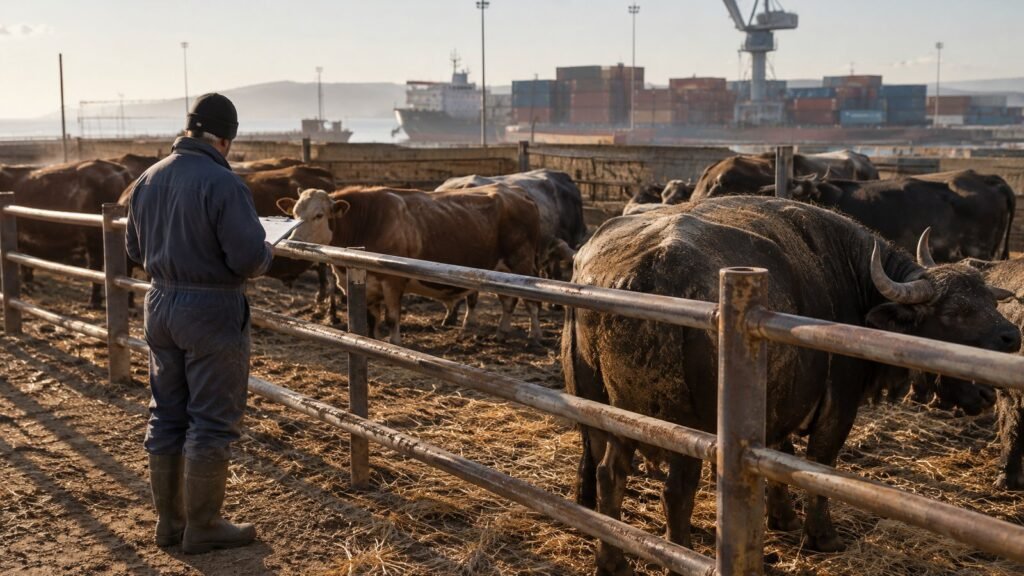
The Kingdom has given Brazil the green light to ship live buffalo of Brazilian origin intended for slaughter. The Brazilian Ministry of Agriculture and Livestock announced the decision in a statement.
The ministry said the Moroccan authorities had formally informed Brasília of the move. The approval figured among several new or reopened markets for Brazilian agricultural and animal products.
Other markets opened to Brazil
Argentina cleared imports of Crotalaria seeds, the same statement said, while Peru accepted green bean seeds and horse hides. Egypt authorised ornamental farm birds, and Kenya agreed to take palatability enhancers for animal feed containing no ruminant proteins. Singapore approved cattle sera produced in Brazil.
Brazilian beef shipments down
Figures from Brazil’s beef exporters’ association, ABIEC, show Morocco bought 419 tonnes of Brazilian beef between January and the end of September this year. That compares with more than 4,800 tonnes in 2025 and 1,558 tonnes in 2024.
The Moroccan Federation of Livestock Sector Operators has said that foreign livestock purchases currently depend entirely on Brazil, describing it as the main and sole supplier. The federation added that imports from European countries remain suspended by decision of the Moroccan government because of lumpy skin disease spreading among European herds.
37 companies importing cattle
Morocco’s Ministry of Agriculture, Maritime Fisheries and Food Sovereignty said on Friday that 37 companies took part in importing cattle for slaughter this year. Brazil supplied more than 90 percent of all head imported, under measures designed to keep national markets supplied with red meat and help stabilise prices.
“The monthly import rate reached around 24,000 head of cattle, with variation between months.”
More than 44,000 head arrived during June and July, the ministry’s press release said, against roughly 17,000 in August and September. Requests rose in October after imports were opened from Portugal, a market the ministry noted is geographically close to Morocco.