Benghazi: DGED and Libyan Intelligence Co-Host Counter-Terrorism Meeting
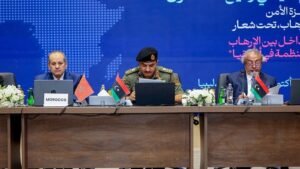
Morocco’s DGED and Libya’s intelligence service co-hosted a Benghazi counter-terrorism meeting with 40 delegations, Saddam Haftar said in his address.
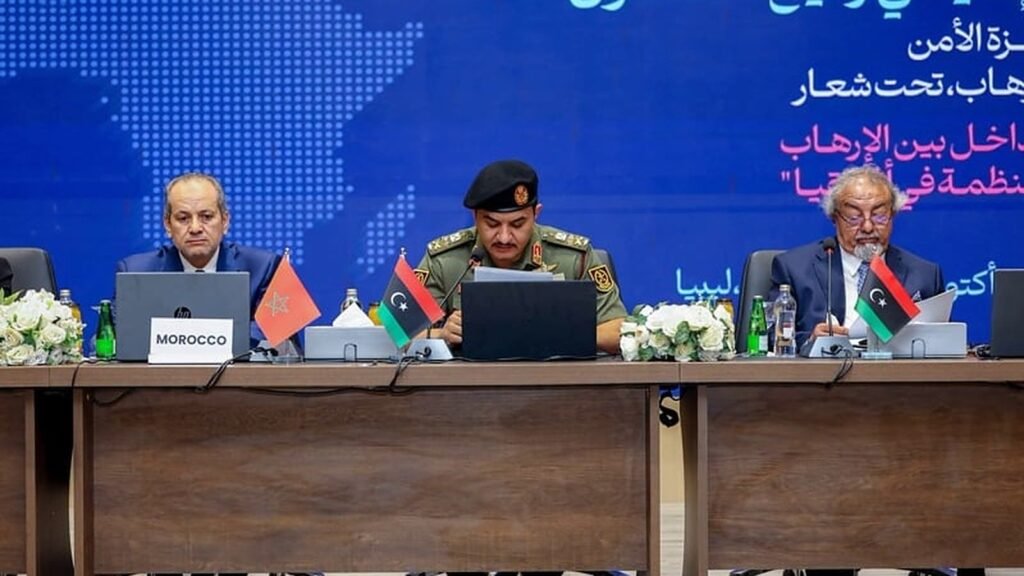
Photo: General Command of the Libyan Armed Forces
Security and counter-terrorism chiefs from across the region gathered in Benghazi, in eastern Libya, for a high-level meeting co-organised by Morocco’s General Directorate for Studies and Documentation (DGED) and the Libyan Intelligence Service.
DGED Director Yaseen Al-Mansouri attended alongside Lieutenant General Hussein Al-Aayeb, head of Libyan intelligence, and Lieutenant General Saddam Haftar, Deputy Commander-in-Chief of the Libyan Arab Armed Forces.
Forty delegations take part, UN represented
Held under the theme “Countering the nexus between terrorism and organised crime in Africa”, the meeting was organised in cooperation with the United Nations through the Marrakech regional platform. The UN’s counter-terrorism chief took part, alongside 40 security delegations from various countries.
Participants discussed ways to strengthen security and intelligence coordination and to build joint cooperation against transnational threats.
Haftar praises cooperation with Morocco
In his address, Haftar voiced support for the Libyan Intelligence Service, for the development of its capabilities and for widening its international partnerships. He commended its “fruitful cooperation” with Moroccan intelligence in organising the event.
“The growing overlap between terrorism and organised crime, and the cross-border challenges it creates, calls for an integrated security vision based on intelligence coordination, information sharing and anticipating threats before they occur, so as to preserve the security and stability of states.”
Haftar said that hosting the gathering in Benghazi, a city that saw battles and sacrifices against terrorism, marked its shift from a front line into a venue for coordinating international efforts, and reflected Libya’s role in regional security. He stressed the Libyan armed forces’ commitment to protecting national security and contributing to stability in their African neighbourhood, describing the security of states as “a shared responsibility”.
He added that intelligence work is a cornerstone of national security and a guarantee of state sovereignty and higher interests.
Analyst points to Moroccan expertise
Idris Ahmed, a Libyan political analyst who follows Maghreb affairs, said that Benghazi’s hosting of international meetings followed the role played by the Libyan Arab Armed Forces in restoring security in the city and across large parts of Libya.
He described cooperation between Moroccan and Libyan security services as strategically important, allowing Libya to draw on the experience of Moroccan security institutions in fighting crime, particularly terrorism. Closer coordination and the exchange of field information, he said, would strengthen the regional security system.
According to Ahmed, Morocco’s accumulated expertise in detecting and dismantling terrorist plots stands as a distinctive model on the African continent and beyond, which gives added value to cooperation with the Kingdom.