


ONCF Bets on Al Boraq and Marrakech Line on Eve of Throne Day
The National Railways Office (ONCF) expects record passenger numbers and is pressing ahead with extending the high-speed line to Marrakech ahead of the 2030 World Cup.
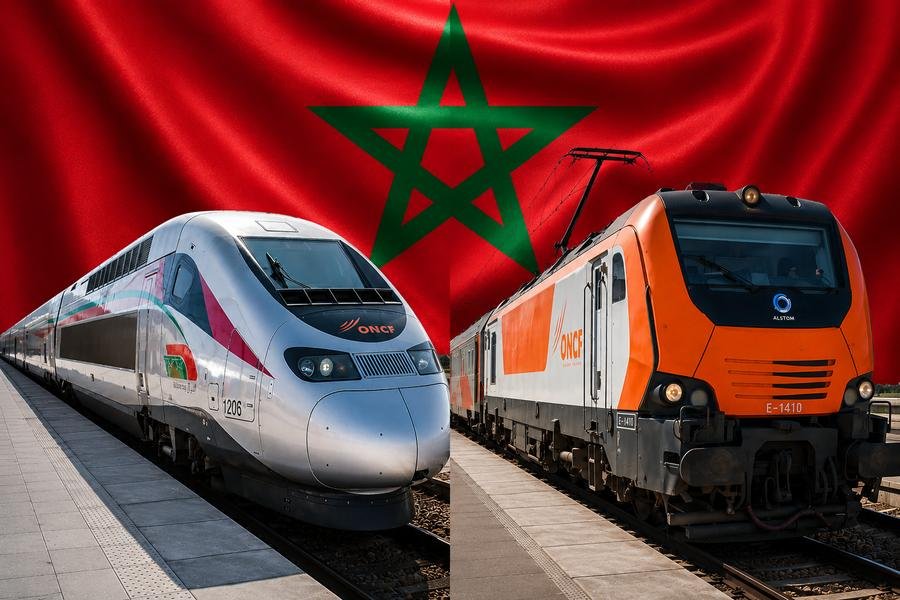
Illustrative image
The National Railways Office (ONCF) expects to hit new records in rail passenger numbers, driven by the investments it is pouring into renewing and expanding the network. The outlook comes on the eve of the 27th anniversary of Throne Day, which falls on Thursday, July 30, 2026, and commemorates the accession of His Majesty King Mohammed VI to the throne of his glorious ancestors in 1999.
The national occasion offers a yearly opportunity to take stock of the Kingdom’s major projects, among which rail transport holds a prominent place. Since the start of the new reign, the ONCF has become an instrument for implementing the Royal vision for infrastructure and sustainable transport.
A network linking the regions
The national rail network stretches over thousands of kilometres and carries millions of passengers each year. That scale has established the train as a means of transport Moroccans rely on for intercity travel, thanks to the time it saves and the comfortable, safe travel conditions it offers.
Connecting cities and regions has been the ONCF’s primary mission since its creation, before its role expanded to take in broader economic and social dimensions.
Al Boraq leads the way
Al Boraq is the most striking symbol of this transformation, as Morocco is the first African country to operate a high-speed train. Its trains cover the distance between Tangier and Casablanca, via Rabat, in under two hours and thirty minutes, with a top speed of 320 kilometres per hour.
The line has helped boost tourism and attract investment, and has made it easier for executives and skilled professionals to travel between the major cities along its route.
Towards Marrakech and the 2030 World Cup
The ONCF is currently working on major projects to extend the network and increase its capacity, as part of a vision running to 2040 set out in the national rail strategy. The flagship project is the southward extension of the high-speed line from Kenitra to Marrakech, over a distance of around 430 kilometres, a project launched by HM the King.
The project is expected to be completed in the coming years, as the Kingdom prepares to co-host the 2030 FIFA World Cup with Spain and Portugal. The new line should significantly cut travel time from Tangier to Marrakech and strengthen rail links to Mohammed V International Airport.
The World Cup is seen as a milestone for accelerating investment in transport, infrastructure, tourism and urban development.
The ONCF’s activities are not limited to passengers: it also provides freight and logistics support services to industrial sectors, including automotive, energy and manufacturing. This role is especially significant in a country that has become Africa’s leading car producer, with a production capacity of nearly 700,000 vehicles a year and a local integration rate of around 70 percent.
At the same time, the ONCF is pursuing training programmes for its staff and modernising its train fleet and stations. On the occasion of Throne Day, it renewed its commitment to continuing the modernisation drive under the leadership of the Sovereign, while the Kenitra–Marrakech line remains scheduled to enter service before the 2030 World Cup.
 Morocco: Government Council raises direct social aid floor to MAD 600 in 2027
 Short-Stature Football World Cup Set for Rabat and Kénitra From Nov. 20
 Asilah: MekkiL Association runs medical caravan in Sahel Chamali douars
 Agadir to host IWA water systems conference, a first in Africa, in December
 Casablanca video art festival: Epson backs FIAV for a sixth straight year

Comments (0)