



Farm labour crisis deepens as harvest pay hits 500 dirhams a day
Moroccan farms cannot find enough workers even at record daily wages of 350 to 500 dirhams, as a labour shortage that began as a seasonal problem turns into a structural crisis threatening harvests and export competitiveness.

Young green crops growing in rows in a cultivated field
Moroccan farms are struggling to find enough workers even at record daily wages, as a labour shortage that began as a seasonal problem around harvest time turns into a structural crisis threatening production and export competitiveness. The problem is most acute in the large farming regions such as Souss-Massa, where professionals report great difficulty attracting workers despite the higher pay on offer.
Official figures from the High Commission for Planning show the scale of the shift. Agriculture, forestry and fishing lost a net 145,000 jobs in the third quarter of 2026, a fall of 5.6 per cent, the steepest loss of any sector. The figures, published on 3 November 2026, cover July to September and come from the commission’s new Labour Force Survey.
Daily wages in some areas during the current olive harvest have reached record levels of between 350 and 400 dirhams, and in some cases 500 dirhams a day, according to a report published on 29 November 2026. Yet even those rates have not filled the gap, leaving producers racing against time to bring in the harvest on schedule and avoid crop losses.
The contrast with recent seasons is stark. In the olive groves of Taounate, Kalaat Sraghna and Ouezzane, pickers earned day wages of about 200 dirhams last season, already two to three times what they earned a few campaigns earlier. A wage of 500 dirhams is therefore two and a half times what the same work paid a year ago, and still the workers are not coming.
A rural exodus, not a pay dispute
Professionals in Souss-Massa have raised the alarm in official meetings with government officials, calling for a precise diagnosis of why young people are turning away from farm work. They point to a striking paradox: unemployment remains high and many young people are looking for work, yet large and medium-sized farms cannot find the labour they need.
Demographic and social factors overlap in explaining the phenomenon. Farm work has lost its appeal to other sectors such as construction and services in the cities. Many rural young people feel that work in the fields lacks stability and dignity, and prefer to migrate in search of opportunities that offer a regular income all year round, not only during harvest seasons.
Migration abroad plays a central role in draining Moroccan farm skills, especially as Spanish farms continue to attract Moroccan men and women to work in their fields. That international competition exposes a gap in contract conditions, working conditions and social protection, making destinations abroad more attractive to experienced hands.
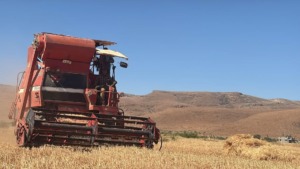
Trade union sources cited in the 29 November report said Moroccan agriculture still depends excessively on manual labour, with mechanisation not exceeding 5 per cent in many areas. That almost total reliance on physical effort, especially in mountain areas and subsistence farming, makes the sector fragile in the face of any change in the availability of local labour.
The national jobs picture behind the farm crisis
The farm job losses dominate a weak national picture. The number of people in income-generating employment fell by a net 173,000 in the third quarter, or 1.6 per cent, to 10.47 million. Rural areas accounted for most of the decline, losing a net 148,000 jobs compared with 25,000 in urban areas. Services shed 96,000 jobs and construction lost 3,000, while industry was the only sector to grow, adding 69,000 jobs, up 4.8 per cent.
The strict unemployment rate rose from 9.5 per cent in the second quarter to 10.5 per cent in the third, with 1.224 million people unemployed. Youth unemployment reached 30.5 per cent, and the composite rate of labour underutilisation reached 19.6 per cent nationwide, affecting 2.4 million people. Nearly half of young people aged 15 to 24 face unmet employment needs.
The High Commission for Planning itself urges caution in reading the quarterly figures. It stressed that a net change between two quarters does not by itself show structural destruction of jobs, since seasonal and cyclical factors move the numbers, and the end of the harvest season is one of them. The new survey, covering 135,000 households a year, replaces the old National Employment Survey and is not directly comparable with it.
Even with that caution, the longer trend points the same way. Between 2021 and 2025, Morocco created an average net 170,200 jobs a year in non-agricultural sectors, while agriculture recorded an average annual loss of 105,400 jobs. The countryside is losing workers year after year, not only quarter after quarter.
What producers are asking for
Professionals in the sector are calling for a review of the legal framework governing farm work, in particular the provisions of the Labour Code, to allow greater flexibility in seasonal contracts. The aim is to balance employers’ needs during peak periods with guaranteeing workers’ rights and providing the social protection needed to draw them back to the fields.
Experts warn that the continued drain of young people threatens to dismantle the economic and social fabric of rural Morocco. Losing villages’ young energy affects not only agricultural production, but empties rural areas of their inhabitants and turns the edges of cities into new belts of deprivation lacking basic services.
The Moroccan production model now faces a real test of balancing its export ambitions with the reality of the local labour market. Without radical solutions including better working conditions, generalised social protection and mechanisation, the sector will remain exposed to successive shocks that could undermine gains built over decades.
Addressing the crisis requires an integrated vision that goes beyond patchwork solutions linked only to raising daily wages. What is needed, the 29 November report argues, is a national strategy that restores the farming profession as a sustainable activity guaranteeing social and material stability for its workers, so that young people stay in their villages and contribute to local development.
For now, the question remains whether public policy can contain the farm employment crisis before it is too late. The sector that forms the backbone of the Moroccan economy finds itself having to transform into a more attractive and modern model, keeping pace with the rapid social changes the country is experiencing. The olive harvest now under way, with pickers paid up to 500 dirhams a day and still in short supply, is the clearest measure of how far that transformation still has to go.







Comments (0)