


Energy imports push Morocco’s trade gap to MAD 323.9 billion
Morocco’s trade deficit widened by 25.4 per cent to MAD 323.9 billion in the first nine months of 2026, as imports grew far faster than exports and the country’s energy bill jumped by more than a third, the Finance Ministry’s latest economic report shows.
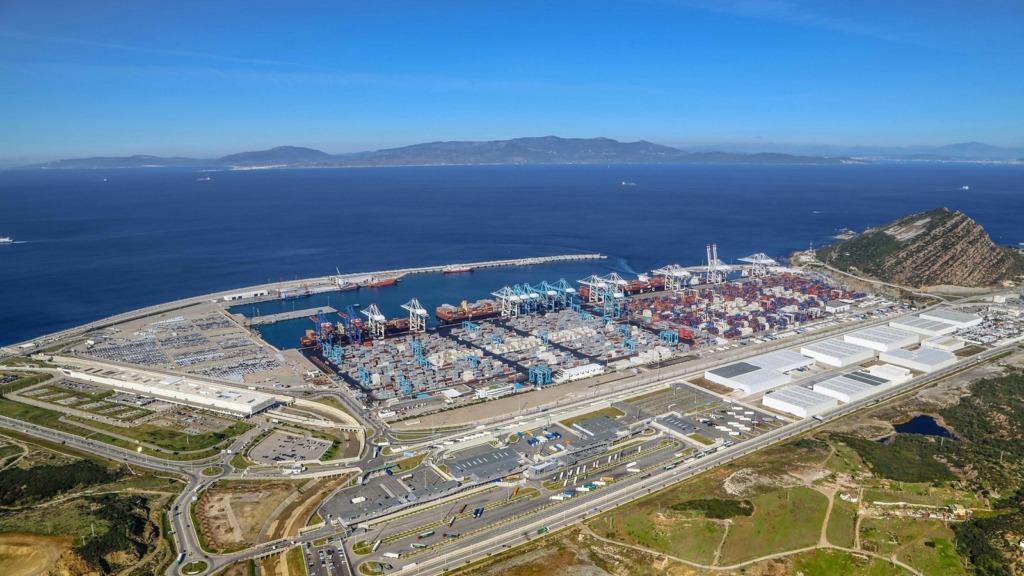
An aerial view of the Tanger Med container port in Morocco
By the end of September 2026, Morocco was buying far more from the rest of the world than it was selling to it. The shortfall between imports and exports reached MAD 323.9 billion, about 32.32 billion dollars, after widening by 25.4 per cent in the first nine months of the year. The figures come from the Finance Ministry’s November economic report, prepared by the Finance Ministry’s research arm, the DEPF. Behind the headline number sit two very different stories: a surge in what the country pays for energy and raw materials, and a much healthier picture in tourism, farming and public finances.
Goods worth MAD 708 billion entered Morocco between January and September, 17 per cent more than in the same period of 2025. Sales abroad rose too, but far more slowly, by 10.7 per cent to MAD 384.1 billion. That left exports paying for only 54.2 per cent of imports, 3.1 percentage points less than a year earlier. In plain terms, each dirham earned abroad now covers barely half a dirham of what Morocco buys from abroad.
Fuel explains a large part of the deterioration. The bill for imported energy climbed 37 per cent to MAD 111.6 billion, taking its share of all imports from 13.5 per cent to 15.8 per cent in a single year. Diesel and fuel oil cost 51 per cent more than a year earlier, and almost all of that increase was price rather than volume: fuel prices were up 47.5 per cent, while the quantity brought in rose only 2.4 per cent. Petrol imports cost 45.4 per cent more, and spending on petroleum oils and lubricants rose 54.2 per cent.
Raw materials told a similar story. Their import bill jumped 60.9 per cent to MAD 52.1 billion, driven by purchases of raw and unrefined sulphur that rose 175.8 per cent. What these numbers show is that the pressure on Morocco’s trade balance comes less from how much the country imports than from how expensive the energy and inputs it cannot do without have become.
Cars lead the export side, while phosphate output slides
Vehicles remain the backbone of Moroccan exports. Carmakers sold MAD 132.1 billion worth of vehicles and parts abroad in the first nine months of the year, 14.3 per cent more than a year earlier, and cars now make up 34.4 per cent of everything Morocco exports. Food and farm produce brought in MAD 72.4 billion, up 10.7 per cent, while aircraft parts earned MAD 26.2 billion, a rise of 22.3 per cent. Moroccan factories are selling more overseas, but not fast enough to match the import bill.
Phosphate, the country’s historic export, moved in the opposite direction. Output of raw phosphate dropped 17.4 per cent over the nine months, and output of phosphate derivatives fell 18.6 per cent. Earnings from phosphate exports nevertheless held steady at MAD 74.7 billion, a fraction higher than last year, up 0.2 per cent, because prices stayed firm even as volumes fell away.
Farmers, by contrast, face a far better season than last year. Reservoirs stood at 66.2 per cent full on 17 November, more than twice the 31.1 per cent seen a year earlier on the same day. For the 2026-2027 season, the authorities plan to supply the home market with close to 500,000 tonnes of phosphate fertiliser and to extend direct seeding across 540,000 hectares. A programme of supplementary irrigation for cereals is also under way, with a target of one million hectares by 2030.
Power is another weak spot. Morocco bought 30.7 per cent more electricity from abroad through September, while its own electricity sales abroad dropped 47.9 per cent. Home-grown generation rose only 2.8 per cent, against 5.9 per cent a year earlier, while demand climbed 8.9 per cent. Consumption is growing far faster than domestic supply, and imports are filling the gap.
Visitors and money from abroad cushion the blow
Tourism is doing much of the heavy lifting. Between January and October, arrivals reached 17.4 million, 5 per cent more than in the same stretch of 2025. Hotel nights were up 7.4 per cent by September, and what visitors spent climbed 12.1 per cent to MAD 115.3 billion. Money sent home by Moroccans living abroad rose 11.3 per cent to MAD 103.1 billion over the same period.
Put together, visitor spending and remittances paid for 67.4 per cent of the trade shortfall, down from 75.7 per cent a year earlier. The cushion is still large, but it is getting thinner, because the deficit is growing faster than the two sources of foreign currency that have long financed it. That matters for ordinary households: a wider external gap eventually puts pressure on the dirham, on the price of imported goods and on the cost of living.
Jobs, however, have barely improved. A new labour force survey from the High Commission for Planning counted 28 million Moroccans aged 15 and over between July and September 2026, of whom 11.7 million were in the labour force. About 10.5 million people were in paid work, giving an employment rate of 37.4 per cent. Men were far more likely to be in work than women: 59.9 per cent of men held a job, against only 15 per cent of women. Unemployment stood at 10.5 per cent, 0.2 points higher than a year earlier, and reached 16.7 per cent among women.
The budget improves while lending picks up
Public finances moved in the opposite direction to the trade balance. By the end of October, the budget deficit had shrunk 22.5 per cent to MAD 46.7 billion, MAD 13.6 billion less than last year. State revenues rose 9.2 per cent, an extra MAD 30.6 billion, while spending increased 4.3 per cent, or MAD 17.1 billion.
Foreign investors are still putting money into Morocco. Investment inflows reached MAD 53.4 billion through September, up 21.8 per cent, and net foreign investment jumped 58.4 per cent to MAD 35.2 billion. Banks are lending more freely too: credit grew 12.2 per cent, against 4.5 per cent a year earlier, with loans to companies up 11.7 per cent and household borrowing up 3.5 per cent. Businesses, in other words, are borrowing to invest and expand, even as the stock market struggles.
Investors in Casablanca have had a harder year. The market’s main index, the MASI, dropped 6.7 per cent in October alone and has now lost 12.2 per cent since December 2025. The MASI 20, which follows the exchange’s 20 most traded stocks, is down 19.4 per cent over the same ten months.
Two lessons emerge from the report. On one side, the economy keeps growing and attracting foreign money, with record visitor numbers, rising investment and fuller reservoirs. On the other, the external balance is getting worse, because Morocco pays far more for the fuel and raw materials it must import than it earns from the cars, food and aircraft parts it sells abroad. Whether that gap closes will depend on export industries keeping their momentum, on reducing dependence on imported energy, and on tourism and remittances keeping pace with a deficit that has grown by a quarter in a single year.






Comments (0)