


UK and EU agree Brexit reset deal
The United Kingdom and the European Union agreed a post-Brexit reset deal in Brussels on Friday, 20 November 2026, concluding negotiations on food trade, carbon markets and a youth mobility scheme.
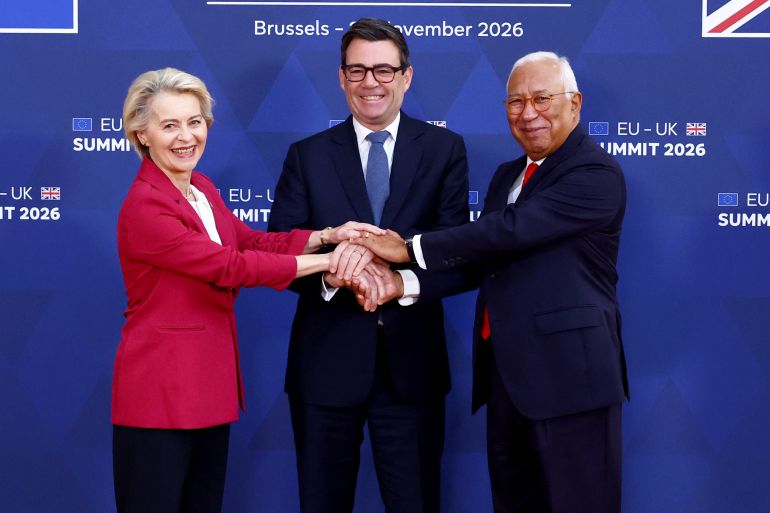
The UK-EU summit in Brussels where the reset deal was agreed
The UK EU Brexit reset deal was agreed at the second joint summit between Britain and the European Union since Brexit, held in Brussels on Friday. Negotiations were concluded on three agreements: a common area for food and agricultural standards, a link between the two carbon trading systems, and a youth experience scheme.
Prime Minister Andy Burnham stood alongside European Commission President Ursula von der Leyen and European Council President António Costa to present the package, which Burnham called a landmark agreement. London says the changes could expand the British economy by up to 0.5 per cent over two decades, worth up to £17 billion a year.
Young people stand at the centre of the package. The youth experience scheme will let 100,000 people from each side, all under 30, live in the other’s territory for up to three years, to work, study, travel, take up au-pair placements or volunteer.
UK EU Brexit reset deal: food, carbon and young people
Food and drink trade gets the biggest practical change. Under the sanitary and phytosanitary agreement, most movements of animals, animal products, plants and plant products between Great Britain, the Crown Dependencies and the EU will no longer need the certificates or controls required today. Britain will follow EU food safety and animal health rules more closely in return, and the same benefits will extend to movements between Great Britain and Northern Ireland through the Windsor Framework.
London puts the value of the food deal at £5.1 billion a year, based on the cost of existing trade barriers such as inspection fees. Costly veterinary paperwork that can run to £200 per certificate will go for most shipments, and the agreement is due to apply from 1 March 2028.
Linking the two emissions trading systems will let each side recognise the other’s carbon allowances and exempt goods from each other’s carbon border taxes. London values the carbon link at as much as £3.8 billion a year by 2040, and it should shield British exports worth £6.5 billion from the bloc’s carbon border taxes.
One question remains open. University tuition fees for EU students in Britain were not settled, and the two sides have given themselves six months to reach an agreement, with the EU seeking equal fees for European students. Britain joins the Erasmus+ programme in 2027 in the meantime.
Critics were quick to attack the package at home, with opponents calling it a betrayal of the Brexit vote and warning that aligning with EU rules would cost Britain control over its own standards. Burnham has said the reset is probably the limit of what can be achieved in this parliament, while keeping open the prospect of a closer relationship in future.






Comments (0)