Uber expands ride hailing in Agadir and Tangier
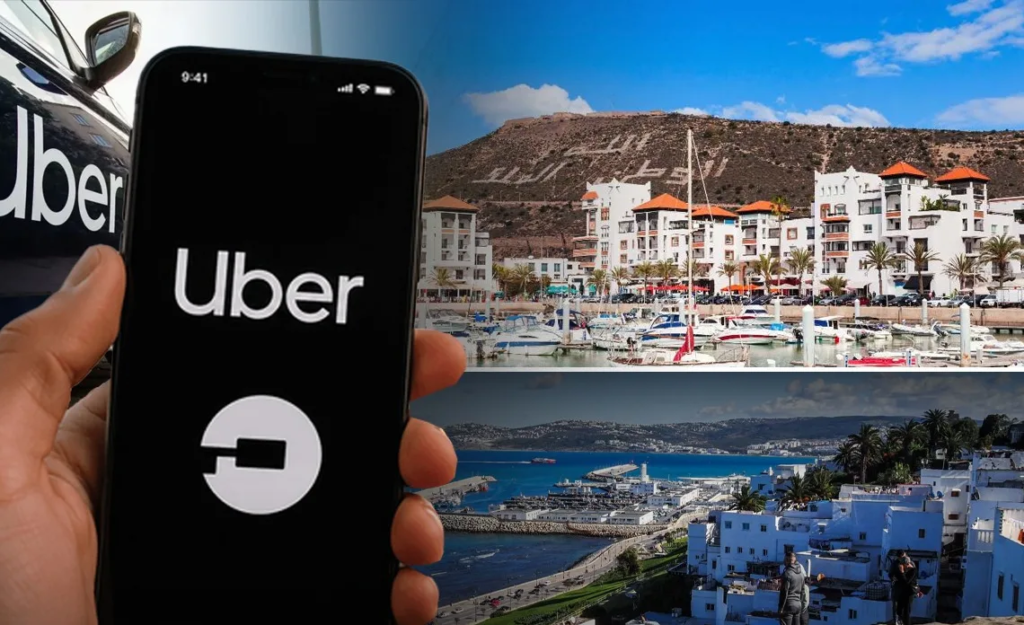
Uber has expanded its ride hailing service to Agadir and Tangier while strengthening operations in Casablanca and Rabat, marking a new phase in the company’s return to Morocco. The move follows Uber’s reentry into the Moroccan market in November 2025 after an eight year absence.
The expansion allows users in Agadir and Tangier to book rides through the Uber app using UberX and UberXL services. Customers also have access to features already available in other Moroccan cities, including trip sharing, multiple stops, scheduled rides, digital payments, and 24 hour support.
The Uber Morocco expansion comes as the country experiences strong growth in tourism. Morocco welcomed 19.8 million visitors in 2025, an increase of 14 percent compared with the previous year. Tourism revenues reached MAD 138 billion. During the first five months of 2026, the country received 7.7 million tourists, up 7 percent year on year. Morocco aims to attract 26 million visitors by 2030, when it will co host the FIFA World Cup.
Fayçal Ihrai, general manager of Uber Morocco, described the launch in Agadir and Tangier as an important milestone in the company’s long term strategy. He said Uber intends to expand responsibly while improving mobility options for residents and visitors and creating additional income opportunities for drivers.
Speaking to Médias24, Ihrai said the company had seen encouraging results since its return to Morocco. He pointed to strong demand from both residents and tourists seeking reliable and easy to use transport services. According to him, thousands of driver partners have joined the platform since November and thousands of users have benefited from improved mobility.
Uber positions its service as a complement to existing transport options rather than a replacement. Ihrai said different mobility solutions can coexist and serve varying customer needs. He also called for cooperation among transport stakeholders as demand for app based services continues to increase.
The company selected Agadir and Tangier based on three main factors. These included demand driven by tourism, economic activity, and daily travel needs; the strategic importance of the cities in Morocco’s development plans; and the operational conditions needed to build a reliable network with licensed transport partners.
Uber also sees potential in addressing youth unemployment. With urban unemployment among people under 25 remaining close to 35 percent, the company argues that its platform can provide flexible earning opportunities for independent drivers. Ihrai also highlighted Uber’s global partnership with Accor through the ALL loyalty program, which has already been introduced in Morocco.
For the moment, Uber remains focused on passenger transport. The company has no immediate plans to introduce additional services such as food delivery or parcel delivery in the Moroccan market.
Founded in 2010, Uber has facilitated more than 68 billion trips globally. The company has not disclosed the number of driver partners operating in Agadir and Tangier or specific market share targets.
The expansion takes place in a sector that remains without a dedicated legal framework in Morocco. Ride hailing platforms including Uber, inDrive, Yango, and Bolt operate in major cities despite the absence of formal legal recognition.
The regulatory uncertainty has contributed to tensions with traditional taxi operators, who argue that app based services create unfair competition. In some instances, disputes have escalated into confrontations. In October 2025, the Ministry of Transport and Logistics announced that it would stop issuing licenses for services operating through mobile applications, citing the lack of legal authorization.
Uber has attempted to address regulatory concerns by limiting participation on its platform to licensed transport operators. However, the broader issue remains unresolved.
Government officials have acknowledged the growing presence of ride hailing services. In January 2025, Interior Minister Abdelouafi Laftit stated that authorities could neither formally integrate ride hailing vehicles nor ignore their existence. By December, he indicated that Morocco would eventually adopt transport applications, a statement widely interpreted as a sign that legalization efforts are moving forward.
As demand for digital mobility services continues to rise, pressure is increasing on policymakers to establish a regulatory framework capable of organizing the sector and balancing the interests of transport operators, drivers, and passengers.