UAE and Ghana raise fuel prices as oil market tensions persist
Consumers in the United Arab Emirates and Ghana will pay more for fuel from Friday after both countries increased pump prices in response to rising global crude oil costs. The fuel prices increase follows renewed geopolitical tensions linked to the United States-Iran conflict and continued disruption around the Strait of Hormuz, which have pushed international oil markets higher.
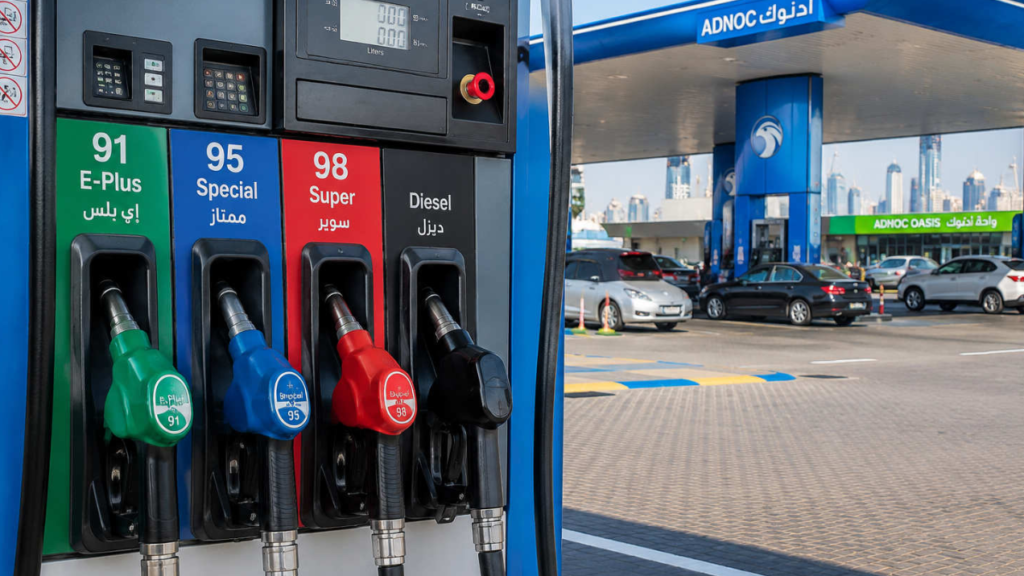
The United Arab Emirates announced higher fuel prices for August. Super 98 gasoline will rise by 5.88% to AED 3.60 per liter from AED 3.40 in July. Special 95 will increase by 6.08% to AED 3.49 per liter, while E-Plus 91 will climb 6.23% to AED 3.41 per liter. Diesel will be sold at AED 3.80 per liter, up 5.56% from the previous month.
The latest adjustment marks the second consecutive monthly increase after a temporary decline in July that followed a ceasefire agreement between Washington and Tehran. That pause proved short-lived as hostilities resumed and Yemen’s Houthi movement imposed what it described as a maritime embargo on Saudi Arabia in the Red Sea. The renewed instability helped lift Brent crude above $100 per barrel for the first time since May before prices eased.
Ghana is also preparing for sharper increases during the August 1 to August 15 pricing window. The Chamber of Oil Marketing Companies expects gasoline prices to rise by 7.58% to about GH¢15.23 per liter. Diesel is projected to increase by 12.50% to GH¢17.45 per liter, while liquefied petroleum gas is expected to gain 4.13% to GH¢16.40 per kilogram.
The National Petroleum Authority of Ghana has also raised its minimum pricing thresholds ahead of the new pricing period. The minimum diesel price has been set at GH¢16.97 per liter, while gasoline has been fixed at GH¢14.53 per liter.
According to the Chamber of Oil Marketing Companies, the increases were driven by a 23.25% jump in the average crude oil price during the review period, with the benchmark rising from $71.90 to $88.62 per barrel. A 1.41% depreciation of the Ghanaian cedi against the US dollar also contributed to the higher domestic fuel costs.
The pricing decisions in both countries reflect the impact of continued geopolitical uncertainty on global energy markets. Iran’s rejection of a proposal for shared oversight of the Strait of Hormuz backed by Oman, renewed attacks on oil tankers, and ongoing restrictions on maritime traffic have kept pressure on crude oil prices. Brent crude settled at $89.03 per barrel on Thursday.
Fraser McKay, head of upstream analysis at Wood Mackenzie, said the recent surge in oil prices reflects geopolitical tensions rather than stronger underlying demand. Analysts also warned that a prolonged period of elevated oil prices could increase global inflation by raising transportation and food costs.