Spain praises Morocco as migration cooperation cuts irregular arrivals
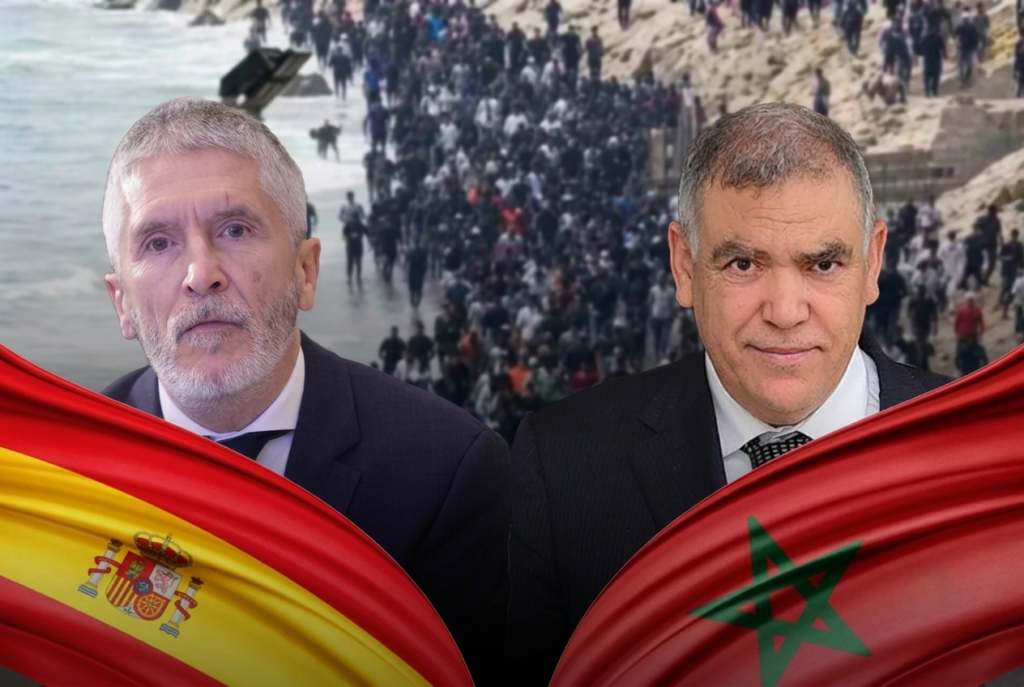
Spain has praised Morocco for the role its security services played in responding to recent mass attempts to cross into the Spanish enclave of Ceuta, highlighting bilateral cooperation as a key factor in reducing irregular migration.
The Spanish Interior Ministry described cooperation with Morocco as exemplary and said coordination between the two countries continues to strengthen their broader partnership on migration management and border security.
Spanish Interior Minister Fernando Grande-Marlaska is expected to travel to Ceuta following the latest migration pressure after local authorities called for an emergency response. Spanish officials said the minister thanked Morocco for its efforts to prevent thousands of attempted irregular crossings in recent days.
Madrid and Rabat also agreed to return migrants who entered Ceuta irregularly. Both governments reaffirmed their commitment to reinforcing bilateral cooperation and reviewing procedures governing the return of people who crossed into the enclave without authorization.
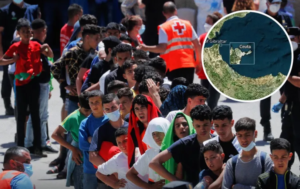
The latest developments followed the circulation of videos showing large groups of migrants, including thousands of Moroccans and nationals from other countries, attempting to enter Ceuta.
Spanish authorities also condemned human trafficking networks that they say exploit legal decisions to encourage undocumented migration, particularly among young people. According to Spanish news agency EFE, Grande-Marlaska has remained in regular contact with Moroccan Interior Minister Abdelouafi Laftit throughout the situation.
Morocco has long been regarded by Spain as one of its main partners in addressing irregular migration. Spanish officials have repeatedly credited Moroccan security services with helping manage migration routes linking North Africa and Europe.
The impact of that cooperation became particularly visible in 2025. Spain recorded 36,775 irregular arrivals during the year, a decline of 42.6 percent compared with 64,019 arrivals in 2024. The reduction followed a period of closer coordination between Madrid and Rabat after the diplomatic tensions that emerged in 2021.
Relations deteriorated after Spain admitted Polisario Front leader Ibrahim Ghali for medical treatment without prior consultation with Morocco. Rabat viewed the decision as a breach of trust, leading to one of the most serious diplomatic disputes between the two countries in recent years.
The crisis intensified after another wave of mass migration toward Ceuta and Melilla, when some Spanish political figures and media outlets accused Morocco of using migration as political pressure.
Spain later moved to restore relations by replacing Foreign Minister Arancha González Laya and reopening diplomatic dialogue with Morocco. The process culminated in 2022 when Madrid endorsed Morocco’s Autonomy Plan as the most serious, realistic, and credible basis for resolving the Western Sahara dispute.
The political rapprochement also translated into stronger cooperation on migration control. Morocco expanded maritime surveillance and reinforced coastal patrols, measures widely viewed as instrumental in reducing departures along the Atlantic route, one of the world’s deadliest migration corridors.
Several international reports have since highlighted Morocco’s expanding role in migration management. A 2025 report by the Mixed Migration Centre concluded that Morocco significantly strengthened enforcement measures along migration routes to Europe, preventing tens of thousands of irregular crossings since early 2023.
The study, titled Beyond Restrictions: How Migration and Smuggling Adapt to Changing Policies Across the Mediterranean, the Atlantic and the English Channel, argued that Morocco’s geographic position has enabled it to negotiate stronger migration partnerships with both Spain and the European Union.
The report also noted that Morocco’s dual role as both a transit and destination country has increased its strategic importance in managing migration between Africa and mainland Europe.
Cooperation has also expanded at the European level. In July 2022, the European Union launched an Anti-Smuggling Operational Partnership with Morocco aimed at combating migrant smuggling networks, addressing irregular migration, and improving efforts to save lives. The initiative complements broader EU support valued at €1.4 billion through 2027 to support reforms and strengthen Morocco’s resilience.
Spanish officials have repeatedly argued that Europe should continue expanding strategic cooperation with Morocco on migration and security.
Prime Minister Pedro Sánchez reiterated that position during a February 2026 interview with CNN, stating that close coordination with Rabat had very significantly reduced irregular arrivals in Spain. He described Morocco as an essential strategic partner in regional migration management.
Migration cooperation has unfolded alongside growing integration of Moroccan nationals into Spanish society. Moroccan citizens represent the second-largest nationality participating in Spain’s extraordinary immigration regularization process. Spanish authorities report receiving 1,174,978 regularization applications, with Moroccans accounting for more than 13.3 percent of all submissions.
Moroccan nationals also remain the largest foreign workforce affiliated with Spain’s social security system. As of April 2026, 404,402 Moroccan workers were registered among the country’s 3.24 million foreign social security contributors.