
Sometimes ten years of work prepare the year that changes everything
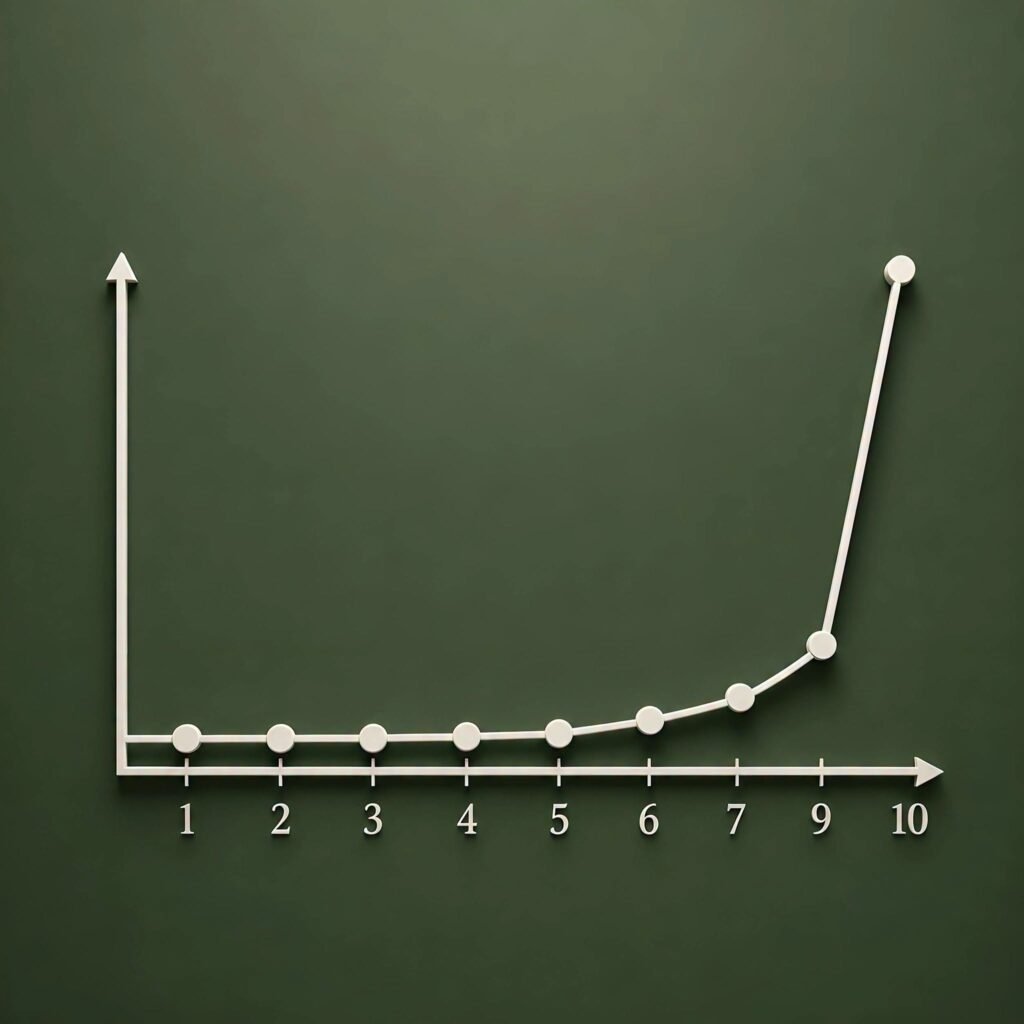
A major change can appear sudden even when it follows years of preparation. A new job, a successful project or a long-awaited opportunity may become visible within months, while the skills, experience and decisions behind it were built over a much longer period. This long preparation can explain why some trajectories seem to accelerate without warning.
From the outside, the transformation often looks fast. Someone gets the position they wanted. A project finds its audience. An activity begins producing results. A skill developed over time suddenly becomes decisive.
For the person involved, however, the change may represent years of effort, learning and adjustments.
This gap between what becomes visible and what was built earlier helps explain why some careers and projects appear to change direction so quickly. The result emerges at a specific moment, but the conditions that made it possible may have developed years before.
Progress is not always immediately visible
Long-term goals rarely depend on a single action. They require an accumulation of skills, experience and decisions.
Someone changing careers may spend years learning, gaining experience and accepting opportunities that do not yet match the final objective. Several attempts may also lead to changes in direction and a clearer understanding of what works.
During this period, progress can be difficult to measure.
People tend to value visible results. A new position, higher income, recognition or a successful project provides an obvious sign of change. A stronger skill, a mistake that is no longer repeated or a better understanding of a professional field is harder to see.
Yet these less visible changes can prepare someone for a future opportunity.
Research on long-term goal pursuit indicates that sustained effort can matter when objectives require prolonged work. It does not guarantee success. Circumstances, resources, opportunities and the ability to adjust actions also influence outcomes.
Time alone does not turn a project into a success. It can, however, allow knowledge and skills to accumulate until they become more valuable when circumstances change.
The decisive year can begin long before it arrives
An opportunity may emerge within weeks even though the preparation required to take advantage of it developed over several years.
This creates a common paradox. The visible change can be sudden while the preparation remains gradual.
A professional experience may seem secondary when it happens and become useful years later. An unsuccessful attempt may reveal what does not work. A period of learning may remain invisible until a situation requires precisely the skill developed during that time.
Career paths are rarely perfectly linear.
They include detours whose value may only become clear later. Once success arrives, it is tempting to describe the journey as a direct sequence of steps leading to the final result. Real decisions are often less orderly. People act with the information available at the time. Some choices work. Others require a change of direction.
Adaptation therefore matters alongside persistence. Continuing does not necessarily mean repeating the same action for years. It can mean maintaining an objective while changing the method used to pursue it.
This distinction also changes how periods without visible results can be understood. They are not necessarily empty years before success begins. They can be periods in which skills, habits and knowledge develop.
Moving forward without waiting for everything to change
A goal that lies several years ahead can become difficult to pursue when all satisfaction is postponed until the end.
If the only expected reward is a future result, each intermediate stage can seem insufficient. Motivation then becomes dependent on an outcome that remains uncertain.
Research on motivation also points to the importance of benefits experienced during an activity. Learning can bring satisfaction through greater understanding. Working on a project can develop a useful skill. Professional activity can create a sense of progress before financial results or recognition appear.
This matters because several years of work should not be viewed only as a waiting period.
Someone who spends years learning is changing what they can do. They identify their limits. They discover which methods work and which do not. They may eventually become able to take an opportunity that would have been beyond their reach several years earlier.
The change can therefore appear sudden because the preparation was not visible.
The absence of immediate results does not necessarily mean the absence of progress. A trajectory can evolve for a long period without producing an obvious external sign.
Time does not guarantee success
It would be misleading to suggest that every difficulty eventually produces a reward.
Some people work for years without reaching the result they expected. Some careers take a different direction. Some projects have to be abandoned. Economic, social and professional circumstances can alter a trajectory.
Persistence alone is not enough. What also matters is the ability to learn from experience.
An attempt can show that a method does not work. An experience can reveal a skill that needs development. A change of direction can clarify what someone is actually seeking. A period that seemed unproductive can lead to a decision that changes what comes next.
This does not mean that every difficulty had a hidden purpose. Not every experience leads to success. Not every year of work prepares a breakthrough.
The point is simpler. The final result does not always reveal the amount of work that came before it.
When a change arrives after a long preparation period, attention usually focuses on the moment when results increase, a project gains visibility or a career takes a new direction. The earlier years receive less attention even though they may have helped make the change possible.
An opportunity can appear within weeks. The ability to seize it may have taken years to build.
The moment when everything seems to accelerate is therefore not necessarily when everything begins. It may simply be the moment when years of preparation become visible.