Morocco’s 2030 World Cup investment plans face health spending scrutiny
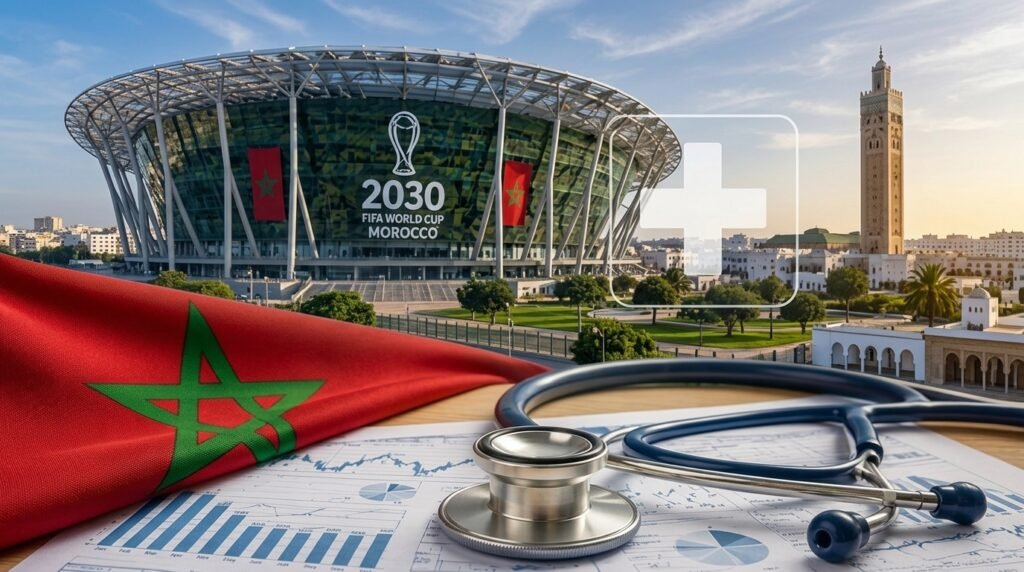
Morocco’s investment in infrastructure and preparations for the 2030 World Cup is supporting the country’s modernization and international profile. But the Bertelsmann Stiftung has raised questions about public spending priorities as Morocco continues to face social needs in health and education. The assessment appears in the foundation’s BTI 2026 Morocco Country Report.
The German foundation acknowledges Morocco’s progress in infrastructure development and economic diversification. It points to the expansion of renewable energy and tourism as areas of development. At the same time, it identifies persistent challenges linked to unemployment, inequality and household purchasing power.
The report is particularly critical of how investment is distributed. It argues that major infrastructure projects, including high-speed rail, require substantial resources while sectors such as health and education remain insufficiently funded. This has prompted the foundation to question whether current public spending priorities adequately reflect the country’s social needs.
The 2030 World Cup is central to this assessment. Morocco will co-host the tournament with Spain and Portugal. According to the report, the event could accelerate infrastructure development, attract investment and strengthen the Kingdom’s international appeal. However, spending on sports facilities could also compete with social priorities that the report considers more urgent.
The issue is especially relevant to Morocco’s health sector, where the government is pursuing a broad reform of the healthcare system. The process includes the expansion of medical coverage, the rollout of territorial health groups, the modernization of healthcare facilities and efforts to strengthen human resources. These reforms require significant investment at a time when major infrastructure projects are also absorbing public resources.
The Bertelsmann Stiftung therefore calls for greater attention to the ability of large-scale projects to generate benefits that reach a broad share of the population. The question extends beyond the infrastructure itself and concerns whether investment linked to major international events can also contribute to improvements in essential public services.
The foundation places this criticism within a broader assessment of Morocco’s development trajectory. It identifies a gap between the rapid modernization of infrastructure and the persistence of social vulnerabilities. In its view, stronger international visibility should be accompanied by improvements that are clearly felt in people’s economic and social conditions.
For Morocco, the debate comes as preparations for 2030 continue to shape investment decisions. The BTI report does not dismiss the potential economic benefits of the World Cup. Instead, it draws attention to the balance between international ambitions and domestic social needs, particularly in health and education.