Morocco creative economy gains momentum ahead of 2030 goals

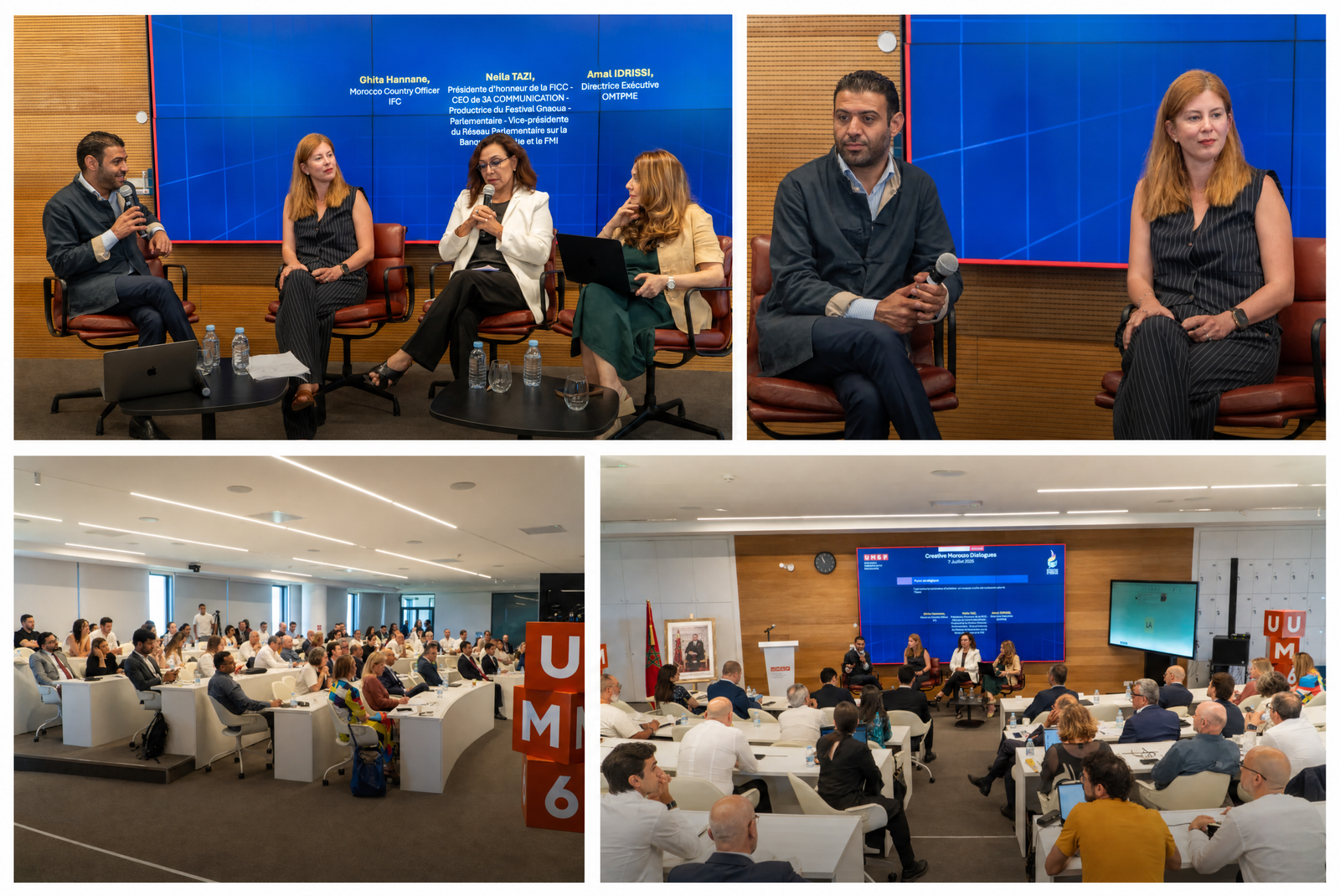
Morocco’s creative economy moved to the center of national development discussions as policymakers, researchers, industry leaders, and institutional representatives gathered in Rabat for the Creative Morocco Dialogues, an event focused on expanding the role of cultural and creative industries in the country’s economic future.
Hosted by Mohammed VI Polytechnic University (UM6P) and the Federation of Cultural and Creative Industries (FICC), the meeting examined how Morocco can strengthen sectors such as music, cinema, design, architecture, fashion, publishing, gaming, crafts, digital content, performing arts, and cultural heritage. Participants argued that these industries should become a strategic pillar of national growth as the country prepares for major international events, including the 2030 FIFA World Cup, which Morocco will co-host with Spain and Portugal.
Speakers stressed that cultural and creative industries are no longer limited to artistic expression. They increasingly contribute to job creation, investment attraction, tourism development, innovation, and the preservation of national identity. International organizations, including UNESCO, have identified the sector as an important driver of sustainable economic growth.
Khalid Baddou, Chief Institutional Affairs Officer at UM6P, said the event aimed to encourage a national conversation about the contribution of cultural and creative industries to Morocco’s future. He noted that preparations for 2030 should extend beyond infrastructure projects and include efforts to showcase Morocco’s cultural heritage, creativity, and identity to international visitors.
Baddou said culture should be integrated into the country’s long-term roadmap and added that UM6P intends to support the sector through research, innovation, academic expertise, and entrepreneurship initiatives.
UNESCO also expressed support for Morocco’s growing focus on the creative economy. Hélène Guiol, Chief of Education at UNESCO’s Regional Office for the Maghreb, said the organization views Morocco’s commitment to cultural and creative industries as a strategic opportunity. She noted that UNESCO has produced studies on the sector and is prepared to support initiatives related to education, training, and cultural heritage preservation.
New figures presented during the event highlighted the sector’s economic significance. Ghita Hannane, Morocco Country Officer at the International Finance Corporation (IFC), shared findings from a study conducted in partnership with Moroccan institutions. According to the research, cultural and creative industries contribute 2.4% of Morocco’s gross domestic product and support approximately 100,000 jobs.
Hannane said the data confirms the sector’s tangible contribution to the national economy and demonstrates its capacity to generate additional growth through targeted reforms and investment.
Participants also emphasized the role of the creative economy in addressing wider development challenges, particularly youth employment and regional economic expansion. They argued that creative industries can stimulate local economies by promoting tourism, supporting traditional crafts, and creating opportunities for emerging talent across different regions.
Neila Tazi, Honorary President of the Federation of Cultural and Creative Industries, described the sector as one of Morocco’s strongest opportunities for future growth. She said cultural and creative industries can contribute significantly to employment, tourism, and territorial development, especially in smaller cities.
Tazi noted that public institutions and private stakeholders increasingly recognize culture as an essential component of Morocco’s development model. She said culture had often been overlooked in public policy debates but is now gaining recognition as a key element in national, regional, and local development strategies.
She also pointed to Morocco’s cultural diversity as both a heritage asset and an economic resource capable of strengthening the country’s international appeal and competitiveness.
The event concluded with the signing of a partnership agreement between UM6P and the FICC. The accord establishes a long-term framework for cooperation aimed at reinforcing Morocco’s cultural and creative industries.
Under the agreement, UM6P will provide expertise in research, innovation, technology, and entrepreneurship, while the FICC will mobilize stakeholders from across the creative industries ecosystem. The partnership is expected to support future projects, strengthen collaboration between institutions and industry actors, and contribute to the long-term development and organization of the sector.