Five Moroccan regions account for nearly three quarters of household spending
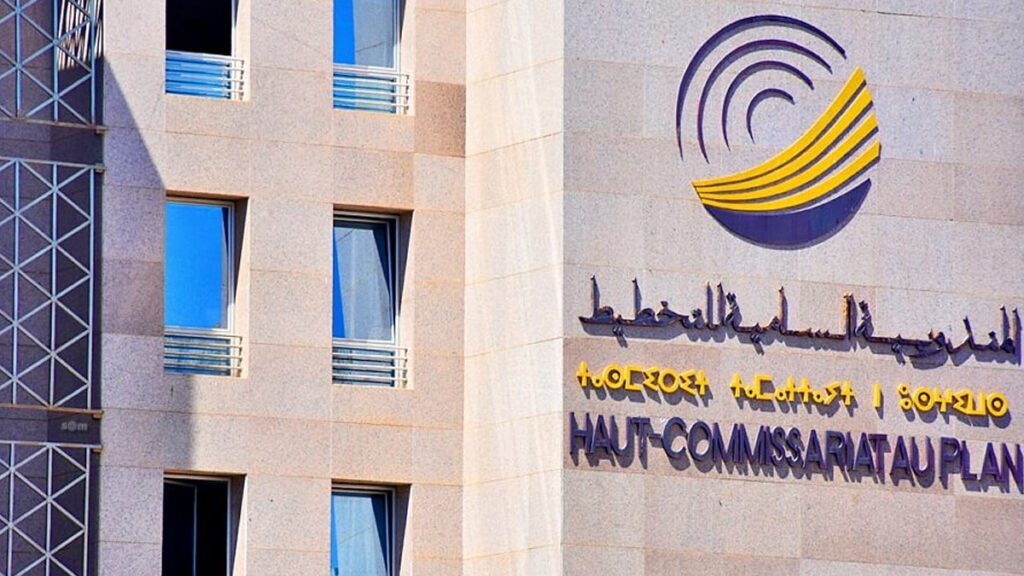
Morocco’s economic activity remains heavily concentrated in a handful of regions, according to newly released regional accounts for 2024 from the High Commission for Planning (HCP). The figures show that five regions alone captured 74.4% of the country’s total household final consumption expenditure, highlighting persistent territorial imbalances and the growing weight of the Kingdom’s main economic centers.
Household final consumption expenditure reached 944.1 billion dirhams in 2024. The Casablanca-Settat region maintained its dominant position, accounting for 25.3% of national household spending. It was followed by Rabat-Salé-Kénitra with 14.8%, Tanger-Tétouan-Al Hoceima with 11.6%, Fès-Meknès with 11.4%, and Marrakech-Safi with 11.3%.
Together, these five regions concentrated nearly three quarters of all household consumption spending in Morocco. The remaining seven regions contributed 25.6% of the national total, with shares ranging from 0.8% in Dakhla-Oued Eddahab to 7.2% in Souss-Massa.
The findings provide further evidence of the central role played by major urban and economic hubs in driving domestic demand. Casablanca-Settat continues to stand out as the country’s principal economic engine, benefiting from a high concentration of businesses, industrial activity, services, infrastructure, and population.
Growing regional disparities
The HCP data also point to a widening gap between regions in terms of household consumption levels. In 2024, the average absolute difference between regional household spending and the national regional average reached 51.5 billion dirhams, compared with 48.5 billion dirhams a year earlier.
This increase reflects a stronger concentration of purchasing power and consumption activity in the country’s most dynamic regions. The trend comes at a time when Morocco continues to pursue regional development policies aimed at reducing territorial inequalities and promoting more balanced economic growth across the Kingdom.
Economists often view household consumption as a key indicator of economic vitality because it reflects income levels, employment opportunities, urbanization, and access to services. Higher spending concentrations generally signal stronger economic ecosystems, but they can also reveal uneven development patterns between territories.
Per capita spending highlights contrasts
At the national level, household final consumption expenditure per capita stood at 25,664 dirhams in 2024.
Six regions exceeded this national average. Dakhla-Oued Eddahab recorded the highest level at 34,515 dirhams per person, followed by Casablanca-Settat with 31,173 dirhams. The Oriental region reached 27,805 dirhams, while Rabat-Salé-Kénitra posted 27,250 dirhams and Tanger-Tétouan-Al Hoceima recorded 27,210 dirhams. Laâyoune-Sakia El Hamra also slightly surpassed the national average with 25,696 dirhams per inhabitant.
These figures suggest that some less populated regions can display relatively high consumption levels on a per capita basis, even if their overall contribution to national spending remains limited.
A widening gap in household purchasing patterns
The report also reveals a rise in the dispersion of household spending per capita across Morocco. The average absolute gap increased from 3,423 dirhams in 2023 to 3,609 dirhams in 2024.
The growing divergence indicates that household purchasing patterns are becoming increasingly uneven between regions. While major metropolitan areas continue to attract investment, jobs, and consumer activity, other territories face greater challenges in achieving comparable levels of economic dynamism.
As Morocco advances large-scale infrastructure projects, industrial expansion, and investment strategies linked to economic transformation and international competitiveness, regional consumption trends are likely to remain a closely watched indicator. The latest HCP figures underline both the strength of the country’s leading economic centers and the continuing challenge of achieving more balanced territorial development.