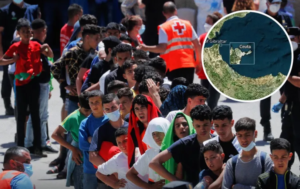
Ceuta migrant crossings reach an estimated 60,000 as death toll rises to 34

The Ceuta migrant crossings crisis intensified after Spanish authorities estimated that around 60,000 people entered or attempted to enter the Spanish enclave from northern Morocco within a single day. The unprecedented movement of migrants by both sea and land has placed significant pressure on local authorities while the reported death toll has risen to 34.
Ceuta President Juan Jesus Vivas described the situation as “absolutely unsustainable,” warning that the enclave is facing one of the most severe migration emergencies in its recent history.
Thousands of people gathered along Morocco’s northern coastline in an effort to reach the Spanish territory. While some climbed or jumped over border fences, many others attempted the dangerous journey by swimming across the sea.
Images and videos circulating from the area showed families undertaking hazardous crossings together. Elderly people were seen being carried on relatives’ backs, while parents entered the water carrying young children and babies as they tried to reach Ceuta.
Spanish Prime Minister Pedro Sánchez condemned the events during a visit to Ceuta, describing the mass crossings as a violation of Spain’s territorial integrity.
Spanish authorities attributed the surge in crossings to human trafficking networks, accusing criminal organizations of misleading young people into undertaking dangerous journeys that have resulted in numerous deaths.
Reports also indicated that many migrants later returned voluntarily from Ceuta to Morocco after crossing into the enclave.
Spain said it is strengthening its response to manage the crisis while highlighting Morocco’s cooperation in handling the situation. The Spanish government praised bilateral coordination on migration management, describing cooperation between the two countries as exemplary.
Madrid and Rabat have also agreed to facilitate the return of migrants who entered Ceuta. The agreement comes despite an earlier ruling by Spain’s Supreme Court stating that migrants arriving by sea should not be subject to immediate “hot returns.”