



Ouahbi: Divorce Requests Are Not Divorces, Justice Minister Tells Parliament
Justice Minister Abdellatif Ouahbi told the House of Representatives that 154,000 divorce requests do not mean 154,000 final divorce rulings.
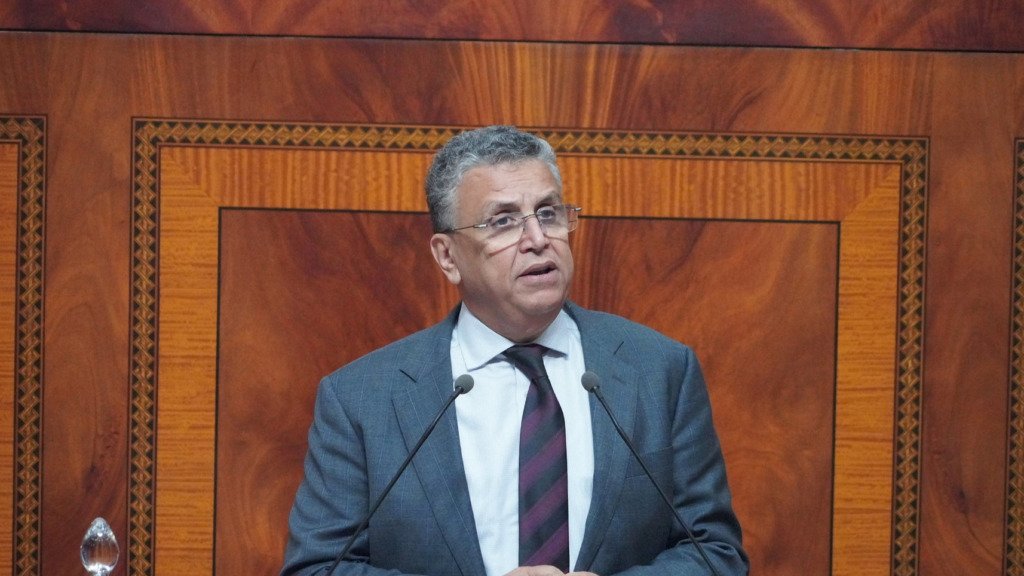
Photo: Ministry of Justice Morocco
Justice Minister Abdellatif Ouahbi called for a rethink of how divorce in Morocco is discussed and counted. Speaking before the House of Representatives on Monday, November 2, he said the widely cited figures describe court filings, not completed divorces.
The figure of 154,000 divorce requests, he said during the weekly oral questions session, refers to cases brought before the courts. Many of them never reach a final ruling: families step in, couples abandon the procedure, or the legal steps are simply left unfinished.
Call for unified statistics
The minister criticised the gap between divorce figures produced by the High Commission for Planning and those of the judiciary. With several bodies publishing numbers calculated in different ways, he said, shared counting rules are needed so the data is accurate and comparable.
Filing for divorce and obtaining a court judgment are two distinct stages, Ouahbi argued, and should not be treated as a single indicator. Family disputes have their own particularities, he added, and some end in reconciliation with the marriage continuing.
Mediation to councils and offices
According to the minister, the ministry relies on an institutional approach to these cases, including mediation and other measures aimed at limiting separations. He acknowledged that judges struggle to carry out in-depth family mediation because of heavy caseloads and limited time.
Ouahbi said the ministry plans to entrust mediation in divorce cases to local scientific councils and to set up independent mediation offices to resolve disputes between spouses.
On the legal framework, he noted that Morocco still operates under the 2004 Family Code. The government has not yet presented the final version of the expected amendments, and he expressed hope that the bill would be referred to Parliament within the next two months.
Defence of divorced women
Responding to MPs’ questions on rising divorce rates, the minister asked whether divorce should be seen as negative or positive, and questioned why women alone are often blamed for the breakdown of a marriage while men are cleared of responsibility. Marriage, he said, is a shared responsibility.
He linked women’s growing willingness to seek separation to changes in their economic and social situation, as more women work and gain financial independence. In the past, he said, many hesitated out of fear of economic and social consequences and pressure from family and tradition.
If women are recognised as free to choose marriage, Ouahbi argued, that should be matched by recognition of their right to decide on divorce. He recalled a time when a woman could spend twenty years going from court to court seeking a divorce without obtaining one, saying the situation has since changed.
“Divorce is not a choice but an imposed reality.”
The minister said divorced women should not face belittlement or negative judgments, since each case has its own circumstances, and called for society to deal with social reality as it is rather than blaming one party for the end of a marriage.
 BYD’s Yangwang U9 Xtreme wrecked on a closed track before 500 km/h attempt
 Nador: Marchica Med plans 585 million dirham DoubleTree resort on lagoon
 Boualem Sansal in Rabat: Morocco is “an outstanding country in every field”
 Touria Laalioui-Mbarek wins Paris-Brest Grand Prix with a Moroccan twist
 Rabat: Mansouri sets up interministerial committee to monitor prices



Comments (0)