Morocco GMT restoration set for September as government ends GMT+1
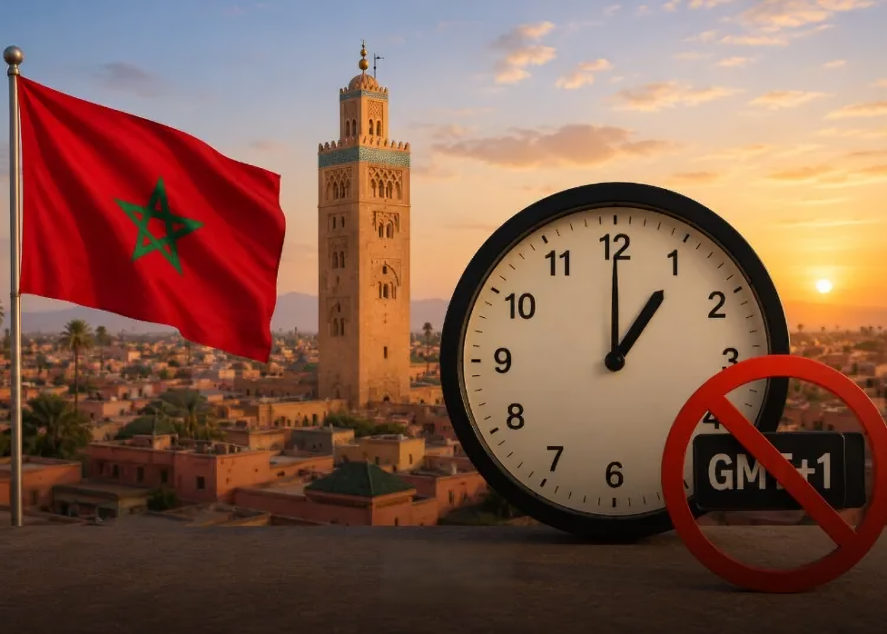
Morocco will return permanently to Greenwich Mean Time on September 20 after the government approved a decree ending the GMT+1 system that has been in place since 2018. The decision repeals the legal framework that established the additional hour as the country’s permanent time standard and restores the official time defined under a 1967 royal decree.
Government spokesperson Mustapha Baitas announced the measure after a Council of Government meeting, describing it as a final and legally binding decision. He said the government responded to long-standing public demands and confirmed that the change will take effect on September 20, when clocks will be turned back by one hour at 2 a.m.
The Morocco GMT restoration follows years of criticism from citizens, labor organizations, business groups, and political actors. Opponents of GMT+1 argued that the policy disrupted sleep schedules, affected student performance, and forced many children to travel to school before sunrise. Concerns also focused on workplace productivity and the broader impact on daily life.
Public opposition intensified through petitions and advocacy campaigns. One widely supported petition collected about 350,000 signatures, far above the threshold required to trigger parliamentary consideration. Campaigners claimed the time system negatively affected physical and mental well-being while creating challenges for workers and families.
The debate gradually moved into Morocco’s institutional framework. Activists organized nationwide efforts to gather support and sought formal evaluations of the policy through consultative bodies. Several organizations representing businesses and workers also called for a review of the system.
The timing of the announcement has drawn political attention. Morocco is scheduled to hold parliamentary elections on September 23, only three days after the return to GMT. As the issue gained importance among voters, several political parties incorporated the demand into their platforms.
The Moroccan Liberal Party pledged to abolish GMT+1 if elected, while the Justice and Development Party later adopted the same position despite having overseen the original introduction of the policy in 2018. Following the government’s announcement, the party argued that its advocacy contributed to the decision.
Critics contend that implementing the Morocco GMT restoration shortly before the election reflects political calculations designed to reduce a sensitive campaign issue. Supporters of the measure maintain that it represents a response to widespread public concerns and restores a time system that many Moroccans consider more compatible with their daily routines.