
Achoura in Morocco blends faith, fasting and family traditions
Morocco is observing Achoura today, the 10th day of Muharram, a date that holds deep religious significance in the Islamic calendar. This year, the Achoura Morocco celebration falls on June 26 after the Ministry of Habous and Islamic Affairs confirmed the beginning of the Hijri year 1448 on June 17.
For many Moroccans, Achoura Morocco is primarily a spiritual occasion centered on worship, gratitude, repentance, and remembrance. While cultural customs remain visible across the country, the religious dimension continues to define the meaning of the day for millions of believers.
In Sunni Islam, Achoura is linked to the story of Prophet Musa, known as Moses, and the deliverance of the Children of Israel from Pharaoh. According to a narration found in Sahih al-Bukhari, Prophet Muhammad encountered Jewish communities in Medina fasting on the day in gratitude for that event. He stated that Muslims had a closer connection to Moses and observed the fast as well.
Although fasting on Achoura is not mandatory, it remains one of the most valued voluntary acts of worship in Islam. A narration in Sahih Muslim states that fasting on this day serves as expiation for the sins of the previous year. Islamic scholars commonly recommend fasting on the ninth and tenth days of Muharram, or the tenth and eleventh, to distinguish Muslim practice and extend devotion.
The observance also takes place during Muharram, one of the four sacred months in Islam. Alongside Dhul Qi’dah, Dhul Hijjah, and Rajab, Muharram is regarded as a period that encourages greater piety, self-discipline, and reflection. The beginning of the Islamic year often prompts believers to strengthen their faith through prayer, charity, and ethical conduct.
Across Morocco, these values are reflected in mosque sermons, charitable activities, and family gatherings. Many households use the occasion to donate to those in need, reconnect with relatives, and pass religious teachings to younger generations.
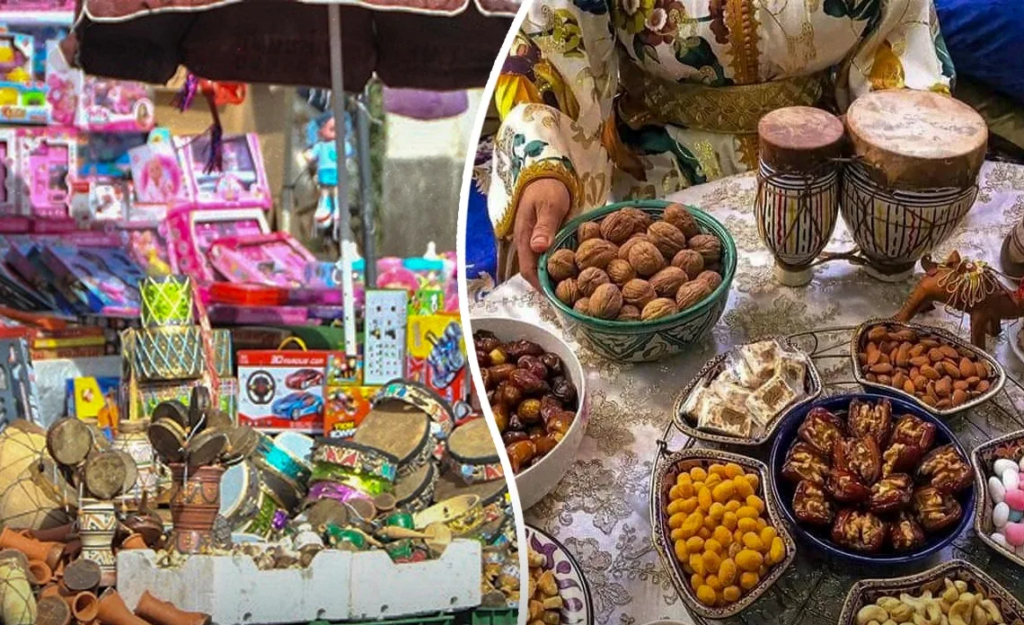
Beyond its spiritual role, Achoura Morocco is associated with several cultural traditions. Families frequently purchase toys, small gifts, drums, and traditional musical instruments for children. Homes are stocked with nuts, dried fruits, and sweets that have long been connected to the celebration.
In some regions, communities continue older customs that include evening gatherings and recreational water activities. These traditions differ from one area to another, reflecting Morocco’s rich cultural diversity while preserving a shared sense of community.
Despite the festive atmosphere, the religious message remains central. The cultural customs add a sense of celebration, but the day’s enduring importance lies in its emphasis on faith, gratitude, remembrance, and spiritual renewal.