Colombia signals diplomatic reset as president-elect embraces closer ties with Morocco
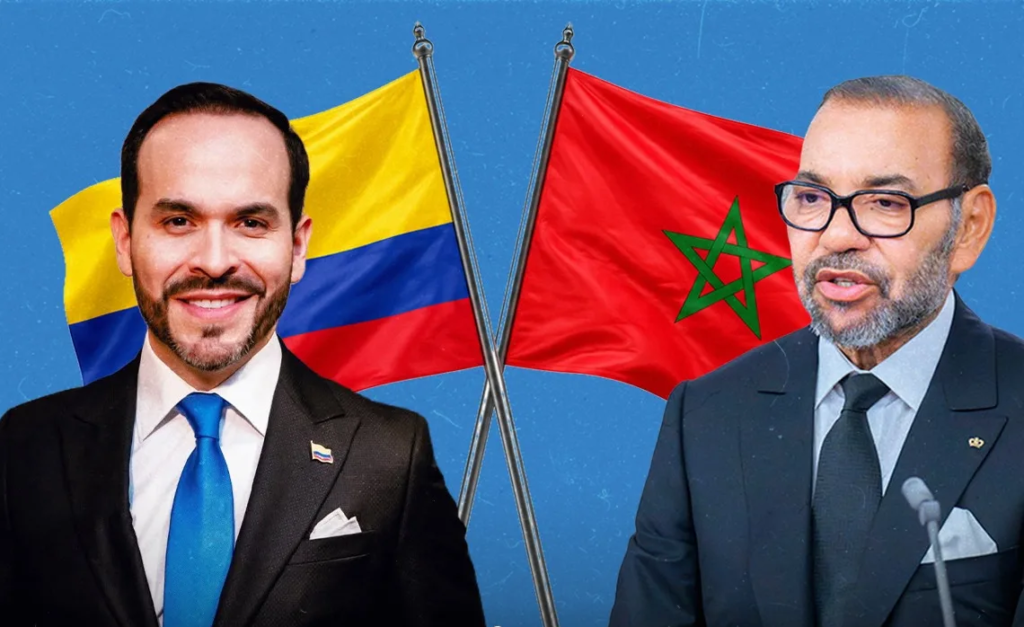
Colombia’s president-elect Abelardo De La Espriella has moved swiftly to signal a major shift in his country’s foreign policy toward Morocco, indicating that Bogotá may be preparing to strengthen bilateral relations with Rabat while reassessing positions adopted under the outgoing administration of President Gustavo Petro.
Just days after securing victory in a closely contested presidential runoff, De La Espriella’s transition team elevated a congratulatory message from His Majesty King Mohammed VI into a broader declaration of diplomatic intent. The exchange has been widely interpreted as the first indication of a new chapter in relations between the two countries, one built around economic cooperation, strategic partnerships, and a shared emphasis on national sovereignty.
A rapid diplomatic opening
Before officially taking office, De La Espriella’s administration began outlining an ambitious vision for Morocco-Colombia relations. His transition office described HM King Mohammed VI’s message as one of the most significant international communications received since the election, underscoring the importance Bogotá assigns to the relationship.
The royal message went beyond customary diplomatic congratulations. It highlighted Morocco’s willingness to inject fresh momentum into bilateral ties and expand cooperation across areas of mutual interest.
HM King Mohammed VI expressed his desire to strengthen friendship and collaboration between the two nations while emphasizing constructive dialogue and mutual respect for national sovereignty. The Colombian response mirrored this language, suggesting a notable degree of alignment on principles that have become central to Morocco’s foreign policy.
Sovereignty emerges as a key pillar
The concept of national sovereignty occupied a central place in both messages.
For Morocco, sovereignty is closely linked to its position on the Sahara issue, which remains one of the kingdom’s most important diplomatic priorities. Observers note that the incoming Colombian administration’s decision to publicly adopt similar terminology represents a significant departure from the rhetoric associated with the current government.
Political analysts view the repeated references to sovereignty as more than diplomatic courtesy. They reflect an effort to establish a common framework for future cooperation and signal a potential realignment of Colombia’s approach to sensitive international issues.
Expanding economic and strategic cooperation
De La Espriella’s team outlined a broad agenda for future engagement with Morocco.
Among the areas identified for enhanced cooperation are:
- Trade and investment.
- Food security initiatives.
- Port infrastructure development.
- Maritime and Atlantic connectivity.
- Diplomatic cooperation between Latin America, Africa, and the Arab world.
- Strategic economic partnerships.
The proposed agenda reflects Morocco’s growing role as a gateway between Africa, Europe, and the Middle East, as well as Colombia’s interest in diversifying its international partnerships.
The emphasis on connectivity and logistics also aligns with broader global trends, as countries increasingly seek resilient trade routes and stronger South-South cooperation frameworks.
A potential shift on the Sahara issue
The diplomatic significance of the rapprochement extends beyond bilateral relations.
Colombia currently holds a non-permanent seat on the United Nations Security Council through 2027, giving it influence on key international issues, including discussions related to the Moroccan Sahara.
Under President Gustavo Petro, Colombia revived recognition of the self-proclaimed Sahrawi Arab Democratic Republic in 2022, reversing years of closer engagement with Morocco. The move generated controversy within Colombia and faced criticism from a significant number of lawmakers who argued that it disrupted long-standing diplomatic ties.
De La Espriella is expected to adopt a markedly different approach.
His political movement has consistently emphasized pragmatic diplomacy, strategic alliances, and respect for state sovereignty. As a result, many observers anticipate a reassessment of Colombia’s position on the Sahara dossier once the new administration takes office.
The timing is particularly noteworthy given ongoing international developments surrounding the conflict. Over recent years, Morocco’s Autonomy Plan has gained increasing diplomatic support from a growing number of countries, including several major international actors.
Latin America’s evolving landscape
Colombia’s possible repositioning would fit within a broader regional trend.
Several Latin American countries have modified, suspended, downgraded, or withdrawn recognition of the Polisario Front and the self-proclaimed Sahrawi republic over the past two decades. This evolution reflects changing geopolitical priorities, expanding economic partnerships, and shifting diplomatic calculations across the region.
Should Bogotá formally alter its stance, it would represent one of the most significant developments in Latin American diplomacy on the Sahara issue due to Colombia’s political weight and its current position on the UN Security Council.
For Morocco, such a move would further strengthen a diplomatic momentum that has accelerated across Africa, Latin America, the Middle East, and beyond.
A new phase in Morocco-Colombia relations
The exchange between His Majesty King Mohammed VI and President-elect Abelardo De La Espriella marks more than a ceremonial diplomatic gesture. It provides an early glimpse into the priorities of Colombia’s incoming administration and signals a willingness to build a deeper partnership with Morocco.
Whether through trade, investment, strategic connectivity, or diplomatic coordination, both governments appear eager to explore new opportunities for cooperation.
As Colombia prepares for a political transition, the relationship with Morocco is emerging as one of the first areas where the new administration intends to distinguish itself from its predecessor. The coming months will reveal how far this diplomatic recalibration extends, but the initial signals from Bogotá suggest that a significant realignment is already underway.