


From health minister to Wali of Fès-Meknès
Khalid Aït Taleb, the surgeon who led Morocco’s health system through the pandemic, now governs the region where he built his medical career. Appointed Wali of Fès-Meknès on 19 October 2025, he takes charge of 4.5 million people in one of the country’s most historic territories.
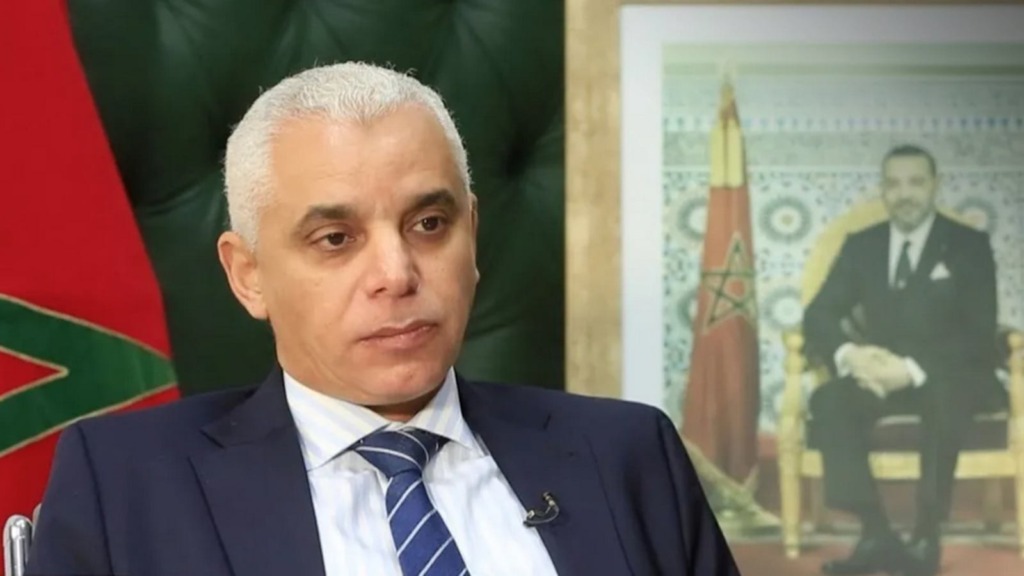
Khalid Aït Taleb, Wali of the Fès-Meknès region and Governor of the Fès prefecture
On Sunday 19 October 2025, King Mohammed VI appointed Khalid Aït Taleb as Wali of Fès-Meknès and Governor of the Fès prefecture, during a Council of Ministers in Rabat. The appointment, made under Article 49 of the Constitution, on a proposal from the Head of Government and on the Interior Minister’s initiative, placed a former health minister at the head of one of Morocco’s largest regions. For Fès, the choice carried a particular resonance: the new wali is not a stranger to the city, but a man who ran its university hospital for a decade before entering government.
Aït Taleb was born in 1966 in Rabat and earned his medical doctorate in Rabat, at the Faculty of Medicine and Pharmacy of Mohammed V University. His first post, in 1989, was as an intern at Rabat’s university hospital, and he went on to qualify as a general surgeon, specialising in visceral surgery. His family roots lie in the Agadir region, in the south of the country, but his professional life took shape in Fès, where he became a professor of medicine and built his reputation as a hospital manager.
At the CHU Hassan II in Fès, Aït Taleb rose through every level of responsibility. He headed the visceral surgery department from 2004 and became the hospital centre’s director general in 2009, a post he held until his first ministerial appointment ten years later. Under his leadership the Fès hospital became one of the country’s leading university hospitals, and his profile grew well beyond the region. In 2016, the country’s university hospital centres chose him to lead their alliance, and he also chaired the board of the Cancer Research Institute and served as regional representative of the Lalla Salma Foundation for the Prevention and Treatment of Cancer.
His move into government came in 2019, when he briefly served as acting secretary general of the health ministry before being appointed Minister of Health on 9 October 2019, in the government led by Saad-Eddine El Othmani. The appointment turned a hospital manager into a national political figure almost overnight, and within months he faced the greatest test of his career: the Covid-19 pandemic, which reached Morocco in March 2020.
A minister shaped by the pandemic
In the health portfolio, he steered the country’s Covid-19 response and ran the nationwide vaccination drive, working hand in hand with the Interior Ministry to carry the effort into every region. The pandemic years made him one of the most visible members of the government, appearing regularly to explain the evolution of the epidemic and the measures taken against it. His background as a practising surgeon and hospital director gave his public interventions a technical authority that few of his colleagues could match, and his handling of the crisis earned him recognition for steady leadership in an exceptionally difficult period.
After the legislative elections of 2021 and the formation of the government led by Aziz Akhannouch, Aït Taleb stepped aside for a fortnight before being brought back. Nabila Rmili, first named to the post, resigned to concentrate on her role as mayor of Casablanca, and Aït Taleb was reappointed Minister of Health and Social Protection on 14 October 2021. He remained in the post for three more years, until 23 October 2024, when a cabinet reshuffle replaced him with Amine Tahraoui. In total, he led the health ministry for almost five years, across two governments, a longevity rare in Moroccan politics.
Those five years coincided with the deepest reform of Moroccan health care in a generation. The framework law on social protection, adopted in 2021, launched the generalisation of compulsory health insurance, known as AMO, which extended cover from 42 per cent of the population before the reform to more than 32 million people, or 88 per cent of the population, by 2025. The scheme for the most vulnerable, AMO-Tadamon, which replaced the former RAMED system, covers close to 11 million people, and the state paid 25.5 billion dirhams in contributions to the National Social Security Fund on their behalf between December 2022 and September 2025. The health ministry’s budget grew in parallel, from 19.7 billion dirhams in 2021 to 32.6 billion in 2025, and is set to reach 42.4 billion in 2026, more than double its 2021 level in five years.
The reform also exposed the scale of the task that remains. Morocco counted 2.05 health professionals per 1,000 inhabitants in 2025, up from 1.75, but still less than half the threshold of 4.45 set by the World Health Organization for universal health coverage. That gap between the ambition of universal cover and the reality of staffing is one of the central challenges of the Moroccan health system, and it is a challenge Aït Taleb knows from the inside, having run both a hospital and the ministry itself.
A region of 4.5 million people
The territory he now governs is one of the heavyweights of Morocco. According to the general census of 2024, the Fès-Meknès region has 4,467,911 inhabitants, against 4.23 million in 2014, an average annual growth of 0.53 per cent, below the national average of 0.85 per cent. It covers 40,075 square kilometres, or 5.7 per cent of the national territory, and is divided into two prefectures, Fès and Meknès, and seven provinces, with 194 communes in total. The prefecture of Fès alone counts 1,256,172 inhabitants and Meknès 942,945, while the city of Fès, with 1,182,963 residents, is the third largest in the country.
Fès is the spiritual and scientific capital of Morocco, home to the University of al-Qarawiyyin, founded in 859, and to a medina listed as a UNESCO World Heritage site, while Meknès is an imperial city with its own UNESCO-listed historic centre. The region’s economy rests on crafts and tourism, on agriculture in the Saïss plain and the Middle Atlas foothills, and on growing industrial zones around Fès and Meknès. It is a territory of great heritage and real economic potential, but also of persistent social needs, particularly in its rural provinces such as Taounate, which counts 612,650 inhabitants spread across 44 rural communes.
Aït Taleb succeeds Mouaad Jamai, who held the post of Wali of Fès-Meknès from October 2024 until June 2025, when he was relieved of his duties. The region was then run on an interim basis for more than four months, until the Council of Ministers of 19 October 2025 closed that chapter. Aït Taleb was received by the King with the other newly appointed walis and governors on 4 November 2025, and he was formally installed in Fès on 7 November 2025 by Interior Minister Abdelouafi Laftit, in a ceremony at the headquarters of the wilaya.
That installation ceremony set the tone of the mandate ahead. The Interior Minister said the appointments came at a new stage in the country’s development, following the Throne Speech of 29 July 2025, in which the King called for accelerating the rise of Morocco and launching a new generation of territorial development programmes with a tangible impact on citizens’ lives. For Fès-Meknès, that means faster delivery of major projects, closer field presence and a direct link between the royal vision and the daily concerns of the region’s inhabitants.
What awaits the new wali
The expectations placed on Aït Taleb are shaped by his own record. He arrives with a double expertise that few walis possess: a decade running a large university hospital in Fès, and five years running a national ministry through a pandemic and a historic reform. The health system of his region will be watched first, because it is the field he knows best and because the gap between coverage on paper and access in practice remains the country’s main health challenge. His experience of the hospital information system and of managing large medical teams is directly relevant to the regional health groups now being set up across the country.
The economic stakes are equally large. The region’s 4.5 million inhabitants, more than 12 per cent of the national population, expect jobs, better urban services and faster investment, in a territory where the rural population still numbers more than 1.6 million people. The new generation of territorial programmes announced in 2025 gives the wali a framework and a mandate, but delivery will be judged locally, project by project, in Fès, in Meknès and in the provinces.
His appointment also illustrates a wider pattern in Moroccan territorial administration: the choice of technocrats with a proven record in a major public service to lead regions where that service is a priority. A surgeon who became a minister, then a wali, Aït Taleb embodies a career built entirely inside public service, from the operating theatre to the hospital director’s office, from the ministry to the wilaya. Whether that trajectory translates into tangible change for Fès-Meknès will be the measure of his mandate, and the city that watched him build its hospital will now watch him govern its region.







Comments (0)