



Girls’ education: Morocco’s call in Geneva
Morocco called in Geneva on Friday for better access to education for girls and stronger legal protection, presenting schooling and the law as the two essential levers to prevent child, early and forced marriage.
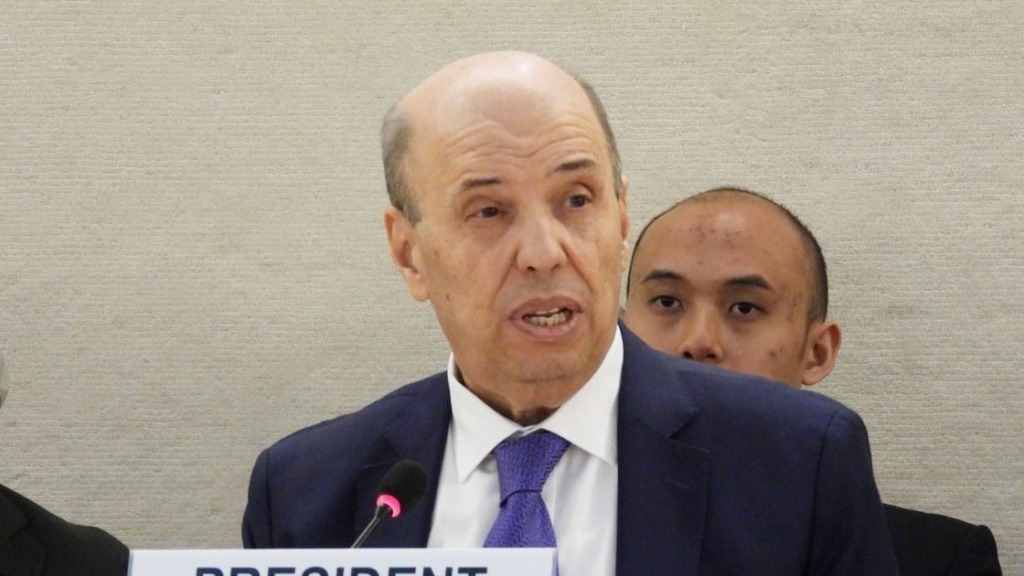
Omar Zniber, Morocco's Permanent Representative to the United Nations Office in Geneva, speaking at a UN meeting
Morocco called in Geneva on Friday for girls’ education, particularly at the secondary level, and stronger legal protection, presenting schooling and the law as the two essential levers to prevent child, early and forced marriage.
The call came from Omar Zniber, Morocco’s Permanent Representative to the United Nations Office in Geneva, speaking at the first observance of the International Day for the Elimination of Child, Early and Forced Marriage, held at the Palais des Nations at the initiative of Sierra Leone, with the support of Morocco and other partner countries and organisations.
Zniber said the right to education becomes a reality when a girl can go to school, stay in school, and complete her education. The meeting, held under the theme of free education as a catalyst for ending child marriage, brought together government representatives, international organisations, civil society groups, young people and survivors.
The Moroccan diplomat recalled his country’s contribution to the initiative launched at the UN General Assembly alongside Sierra Leone, Cabo Verde and Costa Rica, which proclaimed 27 November of each year the International Day for the Elimination of Child, Early and Forced Marriage.
He highlighted the Family Code reform, which raised the legal marriage age for girls from 15 to 18. Judges keep the power to authorise a marriage before that age on an exceptional basis, but the decline in authorisation requests shows encouraging progress, which the ongoing revision of the Family Code should consolidate by strengthening child protection.
Practical measures to remove barriers to girls’ schooling were also presented: school transport, boarding facilities in rural areas, second-chance education programmes and cooperation with UNICEF to prevent school dropouts. During the 2023-2024 school year, more than 624,000 students benefited from school transport, including nearly 327,000 girls.
In Morocco itself, debate continues over the exception that lets family judges authorise underage marriage. The women’s movement is demanding a total and explicit ban, with no exception at all, arguing that a girl’s natural place is at school, not in a marital home. Courts recorded 16,755 authorisation requests for underage marriage in 2024 alone, 16,501 of them for girls, and the justice minister has acknowledged that the issue remains one of the disputed points in the Family Code revision.
United Nations estimates underline the scale of the problem: about 12 million girls marry each year before the age of 18, and around 650 million women and girls alive today were married as children. In the Arab region, one girl in six was married before 18, according to the Economic and Social Commission for Western Asia.
Zniber closed by calling for sustained attention to the issue within the UN Human Rights Council, stressing that every girl must be able to complete her education, fulfil her potential, and freely decide if and when she wishes to marry.







Comments (0)