Morocco advances forest restoration plan with €580 million backing
Morocco’s National Agency for Water and Forests has secured more than €580 million from international partners to support its long term forest strategy, covering around 9 million hectares and focusing on ecosystem restoration, biodiversity protection, climate resilience, and rural development.
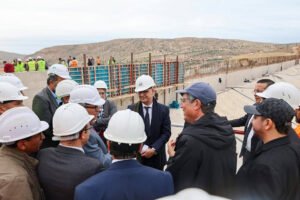
The agency revealed during a high level meeting in Rabat that approximately €175 million, representing about 40% of total commitments, has already been disbursed. The session was chaired by ANEF Director General Abderrahim Houmy and gathered representatives from bilateral and multilateral institutions, including the French Development Agency and the Food and Agriculture Organization.
The meeting also reviewed progress under the “Forests of Morocco 2020-2030” strategy, launched by King Mohammed VI in February 2020. The program covers approximately 9 million hectares of forest land, including 5.8 million hectares of natural forests, and is organized around 17 separate programs.
Before the strategy was introduced, Morocco was losing around 17,000 hectares of forest cover annually due to degradation. Forests were also under pressure from excessive firewood extraction, overgrazing, and climate change.
Funding allocated through the strategy supports ecosystem restoration, biodiversity conservation, watershed management, development of forest based economic activities, and improvements in rural living conditions. ANEF said the approach relies on innovation, partnerships, and collective action to create resilient and productive forests.
Governance and community engagement show progress
According to ANEF, territorial coordination efforts now cover 147 communes, representing 74% of the targeted areas. The agency has recruited and trained 94 development and partnership agents under the “Ghabati Hayati” program, approaching its objective of 108 agents.
The agency has also established 73 forest development bodies and prepared 54 development plans. Around 74% of territorial projects validated with local communities have already been completed.
Community compensation programs have become an important component of the strategy. In 2025, compensation was provided across 530 protected perimeters covering 80,000 hectares, with a total investment of MAD 45 million.
The funding supported livestock feed purchases, agricultural equipment, rural road construction, well drilling projects, school transportation, and solar panel installations. Under the “Ghabati Hayati” initiative, compensation has been delivered for 237,289 hectares, representing 64.7% of the overall target of 366,846 hectares. Full compensation is expected by the end of 2026.
Forestry cooperatives expand economic activity
The forestry cooperative sector has continued to grow, with 310 active cooperatives operating under 273 contracts with ANEF. Together, they include nearly 19,400 members and generate an estimated MAD 15 million in annual revenue.
More than 80% of rosemary production areas are now managed through contractual arrangements. Cooperatives are active in sectors including aromatic and medicinal plants, timber production, nurseries, and aquaculture.
Representatives of international organizations highlighted the progress achieved through the strategy. FAO representative Alexandre Anh Tai Huynh described Morocco’s approach as an innovative model integrating biodiversity conservation, forest protection, and efforts to combat land degradation.
French Development Agency Director Catherine Bonnaud emphasized the importance of the partnership with ANEF and highlighted the strategy’s focus on strengthening ecosystem resilience and adapting forests to climate change.
Technology supports restoration and enforcement efforts
Reforestation remains one of the central objectives of the strategy. ANEF is pursuing a program aimed at restoring 600,000 hectares by 2030, prioritizing mountain regions and native species that are better adapted to climate pressures.
The agency is using mechanized soil preparation, Waterboxx planting systems, and drone based monitoring to support restoration activities.
At the same time, ANEF is promoting ecotourism across its network of 10 national parks, including Ifrane, Toubkal, Souss Massa, and Al Hoceïma.
Enforcement capabilities are also being strengthened through the use of drones, body cameras, and data analysis tools to combat illegal logging, timber trafficking, and poaching. The agency is further advancing the digitalization of its operations to improve forest management in the field.
ANEF also announced plans to broaden international cooperation beyond its traditional partners through South South and triangular cooperation initiatives. The agency said the forest strategy contributes directly to Morocco’s international commitments related to climate change, biodiversity, and desertification.