
Marrakech to receive desalinated water from Safi by July end
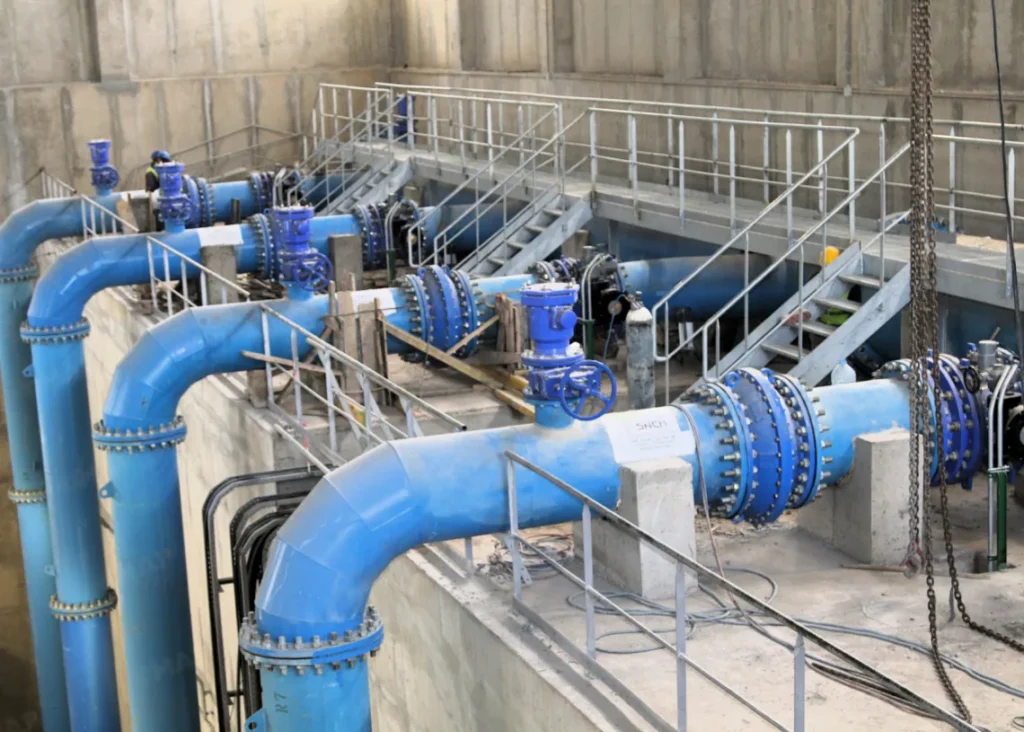
Greater Marrakech will start receiving desalinated seawater from Safi by the end of July. The transfer marks a major water infrastructure project designed to strengthen supply in one of Morocco’s most water-stressed urban regions.
The project is led by the Société Régionale Multiservices Marrakech-Safi and is in its final phase. It will transport around 100 million cubic meters of desalinated water each year from a plant in Safi built by OCP Green Water, a subsidiary of OCP Group, to Marrakech through a 185.3 kilometer steel pipeline system.
The infrastructure costs MAD 4.2 billion and is financed through the state budget and the Ministry of Interior. It is designed to deliver a continuous flow of 3.2 cubic meters per second. Technical trials are expected to begin soon to confirm operational performance before full deployment.
The system includes three pumping stations and a regulation reservoir near Centre 44 Oulad Dlim in the Marrakech prefecture. Water is pumped to the reservoir before moving by gravity through pipelines toward distribution chambers that supply the city network. From there, the system branches into multiple reservoirs serving different zones of Greater Marrakech, including RamRam and Route d’Ourika storage facilities.
Additional storage capacity is being developed to handle incoming volumes, including a new 60,000 cubic meter reservoir under construction. The broader network also includes several medium and smaller reservoirs and a surge tank that supports gravity-fed distribution across the city.
Authorities describe the project as a strategic response to prolonged drought cycles and rising pressure on conventional water sources in the Marrakech-Safi region. The area has faced recurring water stress driven by climate conditions and growing demand from population growth and tourism.
The transfer model reflects a wider national strategy to move water from coastal production zones to inland regions with structural deficits. Similar systems already supply other Moroccan cities such as Settat and Khouribga with desalinated water.
Morocco’s desalination capacity currently stands at 420 million cubic meters per year, with plans to reach 1.7 billion cubic meters according to the Ministry of Equipment and Water. Additional projects are planned, including a major plant in Tiznit and basin interconnection works linking key water systems across the country.
Officials say the Marrakech transfer project was developed using Moroccan expertise and aims to provide a stable water source less exposed to drought conditions, reinforcing long term supply security for the city.