
Deepening water dispute puts Indus treaty under renewed strain
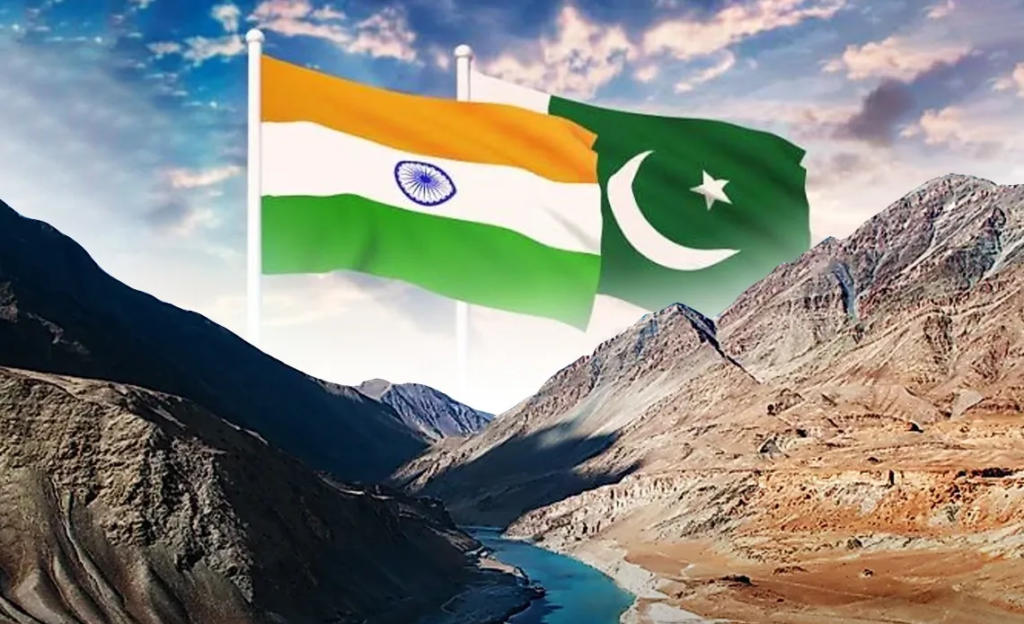
More than six decades after the Indus Waters Treaty was signed, India and Pakistan are once again locked in a dispute over the future of one of the world’s most enduring water sharing agreements. The disagreement centers on India’s decision to place the treaty in abeyance and Pakistan’s insistence that the accord remains legally binding under international law.
The treaty was signed in 1960 with the World Bank acting as a facilitator. It divided the waters of the Indus River system between the two countries. India gained control of the eastern rivers Ravi, Beas, and Sutlej, while Pakistan received rights over the western rivers Indus, Jhelum, and Chenab.
For decades, the agreement survived wars and prolonged political tensions, earning recognition as a successful model of international water cooperation. However, tensions escalated after India placed the treaty in abeyance following the April 2025 terrorist attack in Pahalgam, which New Delhi blamed on Pakistan based militants. Pakistan denied involvement, while India argued that persistent cross border terrorism had fundamentally altered the circumstances under which the treaty was established.
India argues for greater water utilization
Indian officials and experts maintain that the dispute extends beyond water management and touches on broader questions of security and treaty obligations.
Former Indian Indus Commissioner Kushvinder Vohra argues that Pakistan’s water shortages stem primarily from domestic challenges rather than India’s actions. According to him, issues such as inadequate storage capacity, inefficient irrigation systems, groundwater depletion, and governance shortcomings have contributed significantly to Pakistan’s water difficulties.
Former Central Water Commission chairman Atul Jain has also challenged claims of an immediate water crisis in Pakistan. He points to hydrological data showing above average river flows during parts of 2025 and argues that Pakistan continues to lose significant volumes of water due to insufficient storage and distribution infrastructure.
Jain further contends that India has not fully utilized the share of water allocated to it under the treaty. He says India is now seeking to expand the use of water legally available for irrigation, hydropower generation, and development projects.
Pakistan rejects India’s interpretation
Pakistan strongly disputes India’s legal and political arguments.
Former federal law minister and legal expert Ahmer Bilal Soofi argues that the treaty contains no provision allowing either country to suspend it unilaterally. He maintains that India’s decision violates international treaty law and that disagreements should be addressed through the treaty’s established dispute resolution mechanisms.
Pakistani officials continue to insist that the agreement remains legally binding regardless of political or military tensions. They argue that all disputes should be handled through the procedures outlined in the treaty.
Speaking at an international seminar in Islamabad, Deputy Prime Minister and Foreign Minister Ishaq Dar accused India of attempting to weaponize water. Pakistani authorities describe India’s suspension of the treaty as illegal and warn that any disruption to agreed water flows could threaten agriculture and long term water security.
While acknowledging the need to improve infrastructure and water governance, Pakistan maintains that predictable river flows remain essential for millions of farmers who depend on the Indus basin.
Dispute resolution remains a key point of contention
The two countries also differ sharply on how the treaty’s dispute resolution framework should function.
India argues that disagreements should first be handled through the Permanent Indus Commission and then by a neutral expert before reaching arbitration. Indian officials believe bypassing these steps undermines the treaty’s original intent.
Pakistan argues that the treaty clearly allows for neutral experts and international arbitration when necessary. Officials say these mechanisms were specifically designed to resolve disputes peacefully even during periods of political hostility.
The disagreement has gained additional importance because Pakistan has challenged several Indian hydropower projects on western rivers, including the Baglihar and Kishanganga dams.
Indian experts maintain that these projects comply with treaty requirements. They argue that temporary fluctuations in river flows result from routine reservoir operations, sediment management, and seasonal factors rather than deliberate restrictions.
Pakistan remains concerned that additional upstream infrastructure could increase India’s influence over the timing of water releases. Officials warn that even temporary disruptions could affect downstream agriculture in a country heavily dependent on the Indus River system for irrigation.
Growing pressures on both countries
Independent experts note that the Indus basin faces challenges that were not present when the treaty was signed in 1960.
Population growth, climate change, melting Himalayan glaciers, changing rainfall patterns, and rising demand for electricity and irrigation have increased pressure on water resources. These developments have prompted calls in India for parts of the treaty to be updated, while Pakistan fears that reopening the agreement could weaken existing protections over the western rivers.
Despite their differences, experts from both countries broadly agree on several issues. Both acknowledge the growing impact of climate change, the need for infrastructure investment, and the importance of improving irrigation efficiency and groundwater conservation.
For now, however, those shared concerns remain overshadowed by political tensions. India says it is exercising its sovereign rights and making better use of its allocated water resources. Pakistan insists the treaty remains legally binding and warns that weakening one of the world’s longest standing water sharing agreements could create uncertainty for millions of people across the region.
As both governments continue to defend their positions, the future of the Indus Waters Treaty remains uncertain, with implications for regional relations and the long term management of one of South Asia’s most important river systems.