Ceuta residents reject far-right rallies during migration crisis
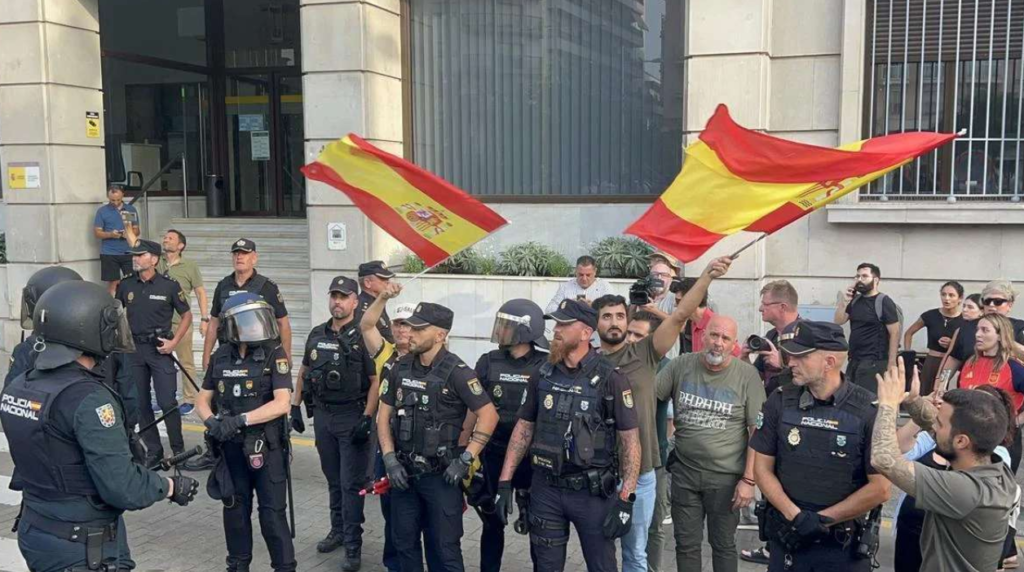
A surge in migrant arrivals to the Spanish enclave of Ceuta has triggered political reactions across Europe. On the ground, however, local residents rejected attempts by far-right groups to capitalize on the situation, staging counterprotests that forced several political activists to leave the city under police escort.
On Saturday evening, Luis “Alvise” Pérez, leader of the Se Acabó La Fiesta party, was escorted by police to Ceuta’s port after protests disrupted a rally in Plaza de los Reyes. Demonstrators, including many residents of Moroccan origin, surrounded the gathering and chanted slogans calling for unity and rejecting division.
Before the rally began, local residents confronted Pérez at a nearby café, accusing him of targeting vulnerable people and using the migration situation to spread hostility. Members of the far-right group Núcleo Nacional faced similar opposition. Spanish National Police escorted around 20 members of the group to the port while protesters surrounded the convoy. Residents followed on motorcycles, sounding their horns as the groups departed.
The events unfolded after tens of thousands of migrants crossed into Ceuta on Thursday, creating one of the largest migration incidents the enclave has faced in recent years. The images quickly spread across Europe and became a focal point for political debate over border security and migration policy.
Far-right leaders across the continent used the crisis to argue that European borders are failing. In France, Marine Le Pen called for tighter border controls, while Jordan Bardella accused Spanish Prime Minister Pedro Sánchez of weakening Europe’s borders through migrant regularization policies. In the United Kingdom, Nigel Farage claimed migrants arriving in Ceuta could eventually reach the English Channel. Italian Prime Minister Giorgia Meloni described the scenes as shocking and said Italy would not remain passive.
The political response also reflected a broader shift among centrist leaders. Unlike during the 2015 migration crisis, several mainstream governments have adopted tougher language on border management. Danish Prime Minister Mette Frederiksen urged European partners to consider suspending Spain from the Schengen area, while German Chancellor Friedrich Merz called on Morocco to immediately readmit migrants staying irregularly.
Sánchez defended his government’s approach, stating that most migrants who entered Ceuta on Thursday had already left the enclave by Saturday. He also argued that larger numbers of irregular migrants continue to enter the European Union through Italy, the Western Balkans and Greece than through Spain.
Migration specialist François Gemenne of HEC Paris said many centrist leaders now feel compelled to demonstrate firmness on migration because losing control of the public narrative could strengthen support for extremist parties.
In Ceuta, however, residents delivered a different message. Their demonstrations focused less on the migrants themselves than on rejecting what they viewed as political attempts to exploit the crisis and deepen divisions within the community.