
Casablanca fruit and vegetable prices decline as red meat remains costly
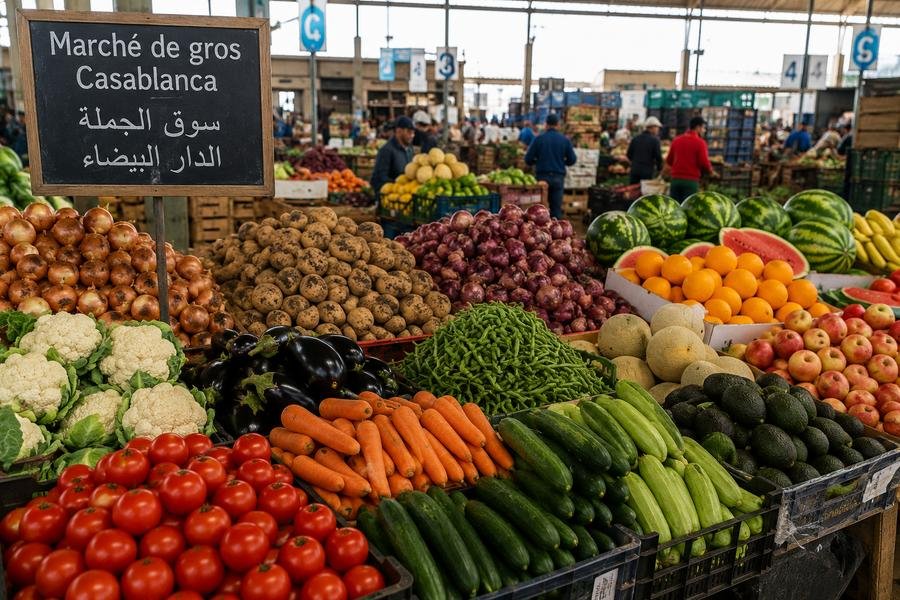
Casablanca fruit and vegetable prices continued to ease after Eid Al Adha, while red meat prices remained elevated due to ongoing supply constraints and strong market demand.
According to the latest weekly report published by Casablanca Prestations, wholesale food prices showed mixed trends across key product categories. The figures are indicative and apply only to the wholesale market, with retail prices varying depending on product quality, origin, transport costs, storage expenses, and commercial margins.
Red meat prices remain under pressure following the resumption of normal market activity after Eid Al Adha. Beef currently trades between 90 and 105 Moroccan dirhams per kilogram, while lamb sells for between 135 and 140 dirhams per kilogram.
The sustained increase reflects continued pressure on the meat market, where supply remains limited and procurement costs continue to weigh on prices.
In contrast, seasonal produce is benefiting from stronger supply conditions. Tomatoes extended their decline, with prices ranging between 2 and 5.5 dirhams per kilogram. Potato prices also fell, trading between 3 and 4.5 dirhams per kilogram.
Fresh onions, carrots, zucchini, and squash recorded lower prices as new harvests entered the market. Industry professionals attribute the trend to a temporary increase in available volumes during the peak production season.
Summer fruits have also become more affordable. Apricot prices dropped significantly and now range between 4 and 10 dirhams per kilogram. Melons and watermelons continued to decline as market availability expanded.
Orange prices also moved lower, while peaches remained stable.
Meanwhile, avocados, locally produced apples, and imported apples maintained the same price levels as the previous week. Local bananas registered a slight decrease.
The weekly Casablanca Prestations bulletin serves as a key indicator for monitoring wholesale market developments and helps both consumers and businesses anticipate price movements. However, retail prices may differ considerably due to distribution costs and commercial markups throughout the supply chain.