Lahcen Haddad urges evidence based debate over Ceuta migration crisis
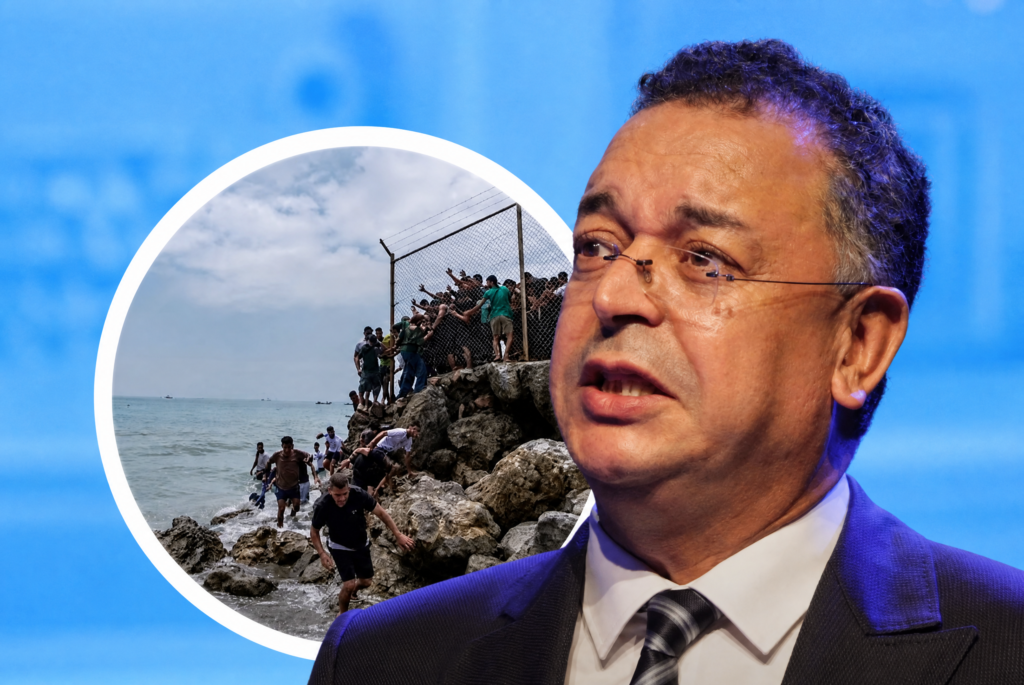
Thousands of people attempted to reach the Spanish enclave of Ceuta on July 30 and 31 after misleading information spread rapidly across social media, triggering an exceptional migration movement. Addressing the Ceuta migration crisis, former Moroccan Tourism Minister, lawmaker, and political analyst Lahcen Haddad called for public debate to be guided by verified facts rather than political speculation.
Haddad expressed solidarity with those who lost their lives, those who remain missing, and their families. He argued that the events should be examined through documented factors, including misinformation, migrant smuggling networks, and the social and economic pressures affecting young people in northern Morocco.
According to Haddad, several interconnected developments contributed to the crisis. He pointed to the widespread misinterpretation of a recent ruling by Spain’s Supreme Court, which stated that migrants intercepted at sea while attempting to reach Ceuta or Melilla cannot be immediately returned under Spain’s pushback procedure. Instead, each case must go through the country’s regular legal return process.
He said migrant smuggling networks exploited the misunderstanding, while social media accelerated the rapid mobilization of thousands of people. Combined with unemployment and difficult living conditions in Fnideq and surrounding areas, these factors created an environment that fueled the mass movement.
Haddad rejected claims that Morocco deliberately orchestrated the crossings to pressure Spain, stating that no verified evidence currently supports such allegations. He stressed the importance of distinguishing documented facts from politically motivated accusations.
He argued that the response by both Moroccan and Spanish authorities demonstrated close cooperation rather than confrontation. Morocco strengthened border security, worked to prevent additional crossings, accepted the return of migrants from Ceuta, and launched operations targeting suspected smuggling organizers.
Spain also reinforced security around the enclave and coordinated the return process. According to Spain’s Interior Ministry, more than 37,500 migrants who entered Ceuta in recent days have already returned to Morocco.
Haddad added that Spain’s decision to avoid premature accusations against Morocco, together with the European Commission’s continued support for bilateral cooperation on migration, weakens claims that the events represented a deliberate act of hybrid warfare by Rabat.
The former minister described the situation as the result of multiple social, economic, and criminal factors rather than a single political cause. He said unemployment, economic exclusion, criminal organizations, and the rapid spread of false information combined to transform frustration into a dangerous mass movement.
At the same time, he argued that the crisis demonstrated the ability of Morocco and Spain to coordinate effectively when confronted with exceptional migration challenges.
Haddad warned against allowing extremist narratives, conspiracy theories, or unsupported accusations to dominate public discussion. Instead, he called for greater attention to the victims, stronger action against migrant smuggling networks, deeper examination of the causes of irregular migration, and preservation of the strategic partnership between Morocco and Spain.
He noted that migration crises often generate immediate political reactions because dramatic images circulate across social media before verified information becomes available. This environment, he said, encourages simplified narratives that overlook the complexity of events.
While emphasizing restraint, Haddad maintained that governments should continue to face legitimate public scrutiny regarding border management, operational decisions, and migration policies. However, he insisted that discussions must clearly separate established facts from unverified allegations.
According to Haddad, the available evidence currently supports a combination of misinformation surrounding the Spanish court ruling, the activities of migrant smuggling networks, severe social and economic pressures in northern Morocco, and an exceptional level of online mobilization. Claims that the Moroccan state deliberately organized the migration movement remain unsupported by available evidence.
The former minister also urged Moroccan authorities to strengthen strategic communication during major crises by providing timely and transparent information, improving access to verified data, engaging more actively with international media and researchers, and explaining Morocco’s role as a country of origin, transit, and destination for migration.
He concluded that transparency and evidence based communication remain the most effective response to misinformation in the digital era.