Morocco approves MAD 248 billion investment plan to accelerate energy transition
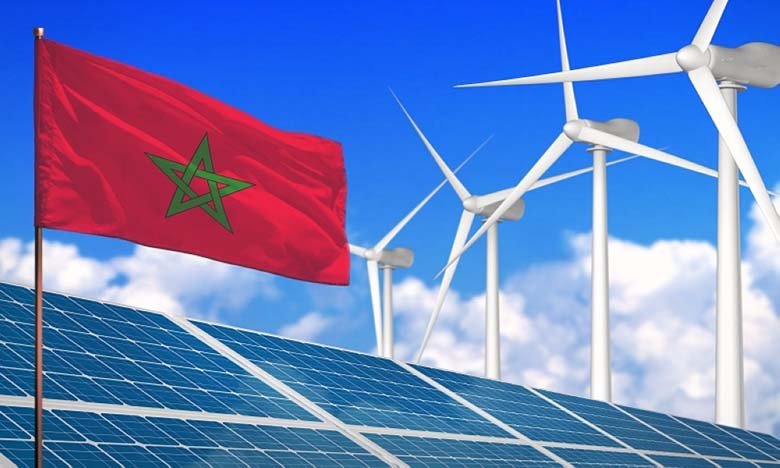
Morocco’s MAD 248 billion investment plan for 2026-2030 has received approval from the board of directors of the National Office of Electricity and Drinking Water (ONEE), marking a major step in the country’s strategy to strengthen energy security, expand renewable power generation, and secure long-term water supplies.
The investment program was approved during a board meeting chaired by Minister of Economy and Finance Nadia Fettah. ONEE Director General Tarik Hamane presented the roadmap, which aims to help Morocco exceed its national target of sourcing more than 52% of installed electricity generation capacity from renewable energy by 2028.
The five-year plan allocates MAD 206 billion to electricity projects and MAD 42.1 billion to drinking water infrastructure, reflecting the government’s parallel focus on energy transition and water resilience.
The electricity program includes a MAD 104 billion investment dedicated to renewable energy projects. These developments are expected to add 11.6 gigawatts of renewable electricity generation capacity alongside 2.6 gigawatts of energy storage. Together, they will account for around 80% of the country’s planned additional electricity generation capacity between 2026 and 2030.
The strategy also includes investments in battery energy storage systems with a combined capacity of 2,230 megawatt-hours, construction of the 360 MW El Menzel pumped-storage hydroelectric facility, and the deployment of a 3,744 MW natural gas flexibility program designed to improve grid stability as renewable generation expands.
Water infrastructure forms the second pillar of the investment plan. Morocco intends to significantly expand desalination capacity dedicated to drinking water, targeting annual production exceeding 1.3 billion cubic meters.
According to ONEE, this capacity would satisfy approximately 63% of national drinking water demand, compared with 13% in 2025 and less than 8% in 2023. New desalination facilities are planned across several regions, including Casablanca, the Oriental region, Tangier, Souss-Massa, and Guelmim-Tan-Tan.
During the meeting, Nadia Fettah said Morocco is facing major energy and water challenges, emphasizing that the investment plan supports the Royal Vision for sustainable development while reinforcing the country’s strategic infrastructure.
Hamane also presented ONEE’s operational results for 2025. He said Morocco’s installed electricity generation capacity has reached 12 gigawatts, with renewable sources accounting for 46.1% of total capacity. Drinking water production capacity has also increased to 7.5 million cubic meters per day.
He added that construction of the Casablanca desalination plant, considered the largest in Africa and among the world’s largest desalination facilities, has completed 81% of its first phase. The first operational stage is expected to produce 200 million cubic meters of water annually, with commissioning scheduled for February 1, 2027.