Doctoral scholarships frozen as Moroccan PhD teaching assistants await answers
Doctoral scholarships for Moroccan PhD teaching assistants have remained frozen for nearly three months, leaving many young researchers without income despite continuing their teaching and research duties. The situation has added to growing concerns surrounding higher education, where doctoral students already face new registration fees and financial uncertainty.
The affected researchers receive the Doctorants moniteurs excellence scholarship, also known as the PhD-Associate Scholarship. The program provides a monthly allowance of 7,000 Moroccan dirhams to support doctoral candidates who combine research with teaching responsibilities, including supervising practical work, monitoring examinations and contributing to academic activities.
According to several scholarship recipients, the administrative process initially followed its normal course. They submitted their annual activity reports, which were reviewed and approved. Students in their second, third and fourth years also received back payments covering previous months, leading many to believe the funding issue had been resolved. However, monthly payments stopped in May without any official explanation.
The lack of communication has fueled uncertainty among recipients. Some believe authorities are reviewing scholarship files, while others suspect budget constraints are responsible for the suspension. None of these explanations has been officially confirmed.
One doctoral student from the multidisciplinary faculty in Nador said the situation is unprecedented. Under the terms of their scholarship contracts, recipients are not allowed to combine their doctoral studies with other paid employment. As a result, many now find themselves without any source of income.
For many beneficiaries, the monthly scholarship is not an additional benefit but their only financial support, allowing them to cover living expenses while dedicating themselves fully to research.
Despite the payment freeze, doctoral teaching assistants say they have continued fulfilling all their academic obligations. They report carrying out practical sessions, tutorials, examination supervision and other teaching assignments without interruption.
Some researchers say they even exceeded the number of teaching hours originally required under their contracts, maintaining their commitment to universities despite the financial difficulties.
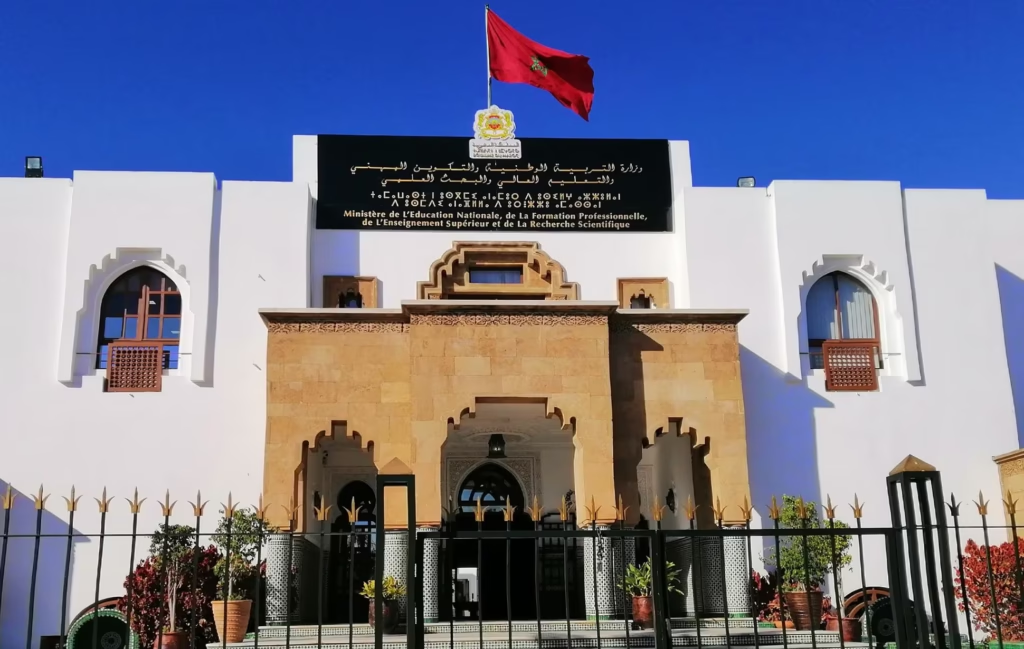
After receiving no official clarification, several doctoral students contacted Morocco’s Ministry of Higher Education directly. According to the researchers, they have yet to receive any response.
The affected students say they are not seeking preferential treatment but rather compliance with existing commitments. They are calling for transparent communication from the authorities and timely scholarship payments so they can continue their research and teaching activities under stable conditions.
The dispute comes as Moroccan universities seek to strengthen research capacity and prepare the next generation of academics. For many doctoral students, the prolonged uncertainty raises broader questions about the country’s ability to retain and support future university researchers.