Africa maritime summit puts African leadership at center stage
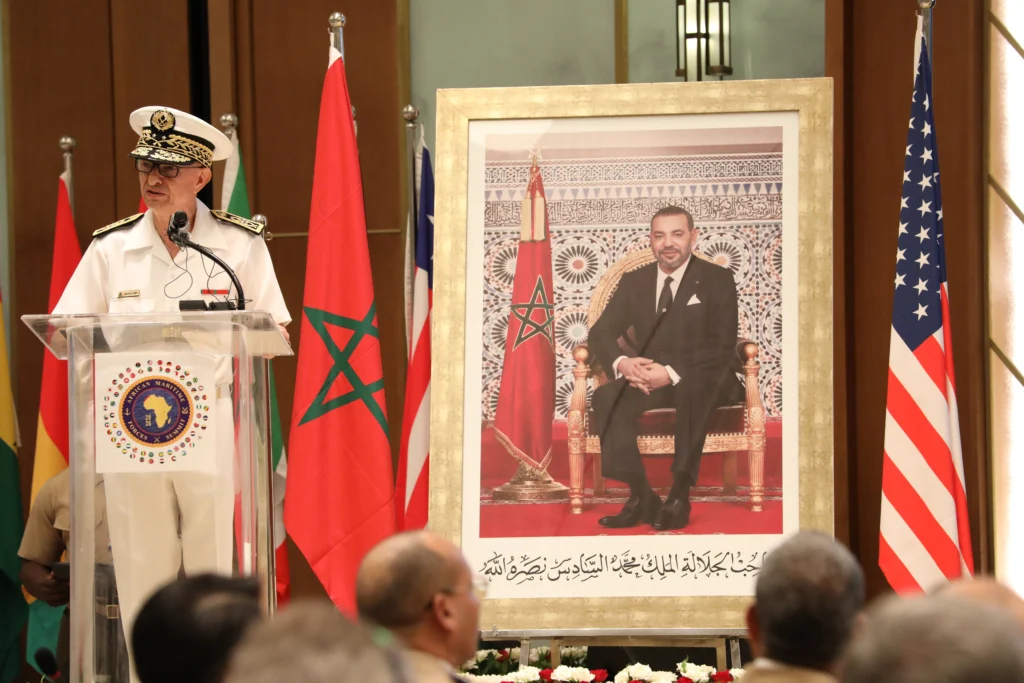
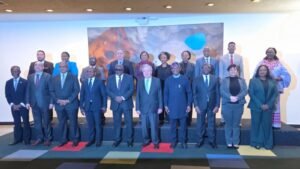
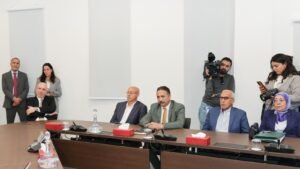
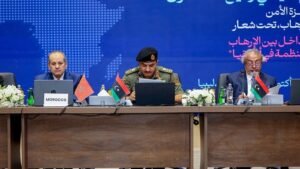
African and international military leaders gathered in Rabat this week for the Africa Maritime Forces Summit 2026, where officials from Morocco and the United States promoted a partnership model focused on strengthening African capacity to address maritime security challenges across the continent.
The summit, running from July 20 to 24 in the Moroccan capital, brings together representatives from more than 40 African countries and nearly 20 partner nations under the theme “Innovation and Partnership to Strengthen Maritime Security.” The event is co hosted by the Royal Moroccan Armed Forces, US Naval Forces Europe and Africa, and US Marine Corps Forces Europe and Africa.
American officials emphasized that African countries should lead efforts to secure their own maritime domains. Ben Ziff, Chargé d’Affaires at the US Embassy in Rabat, described the gathering as an important opportunity to deepen cooperation and strengthen responses to shared security threats.
According to Ziff, challenges affecting African waterways are increasingly regional and transnational, requiring coordinated action among neighboring states and international partners. He stressed that no single country can address these threats alone.
Morocco opened the summit under the High Instructions of His Majesty King Mohammed VI. Rear Admiral Mohamed Tahin, Inspector of the Royal Moroccan Navy, said the event reflects Morocco’s commitment to promoting African cooperation, regional stability, and collective efforts to enhance maritime peace and security.
Shared threats across African waters
Participants highlighted a broad range of maritime challenges, including illegal fishing, trafficking, terrorism, irregular migration, environmental protection, and maritime domain awareness.
Tahin described maritime security as a shared responsibility that depends on dialogue, trust, coordinated action, and effective partnerships among stakeholders.
Major General Daniel L. Shipley, commander of US Marine Corps Forces Europe and Africa, said maritime security directly affects legal trade, food security, regional stability, and coastal communities throughout Africa.
He argued that African nations are best positioned to develop lasting solutions because they understand the challenges firsthand. The role of international partners, he said, is to help build professional and capable forces that can respond effectively when threats cross borders.
Shipley also emphasized the importance of long term cooperation, noting that trust is built through training, education, exercises, and sustained engagement rather than during times of crisis.
A long standing Morocco and US partnership
The summit follows a series of recent defense initiatives between Morocco and the United States and highlights nearly 250 years of relations between the two countries.
Organizers noted that Morocco was the first country to recognize American independence in 1777 when Sultan Mohammed III opened Moroccan ports to American vessels.
The maritime connection was highlighted again this month when the Royal Moroccan Navy frigate RMNS Mohammed VI participated in International Naval Review 250 on the Hudson River alongside more than 35 warships from 15 nations. The Moroccan vessel and Senegal’s patrol ship Niani were the only African warships participating in the multinational formation.
Recent cooperation has also included the signing of a memorandum of understanding between Morocco’s Royal Armed Forces and US Africa Command to establish the Africa Multidomain Training and Experimentation Center in Tan Tan by 2030.
The planned facility will include a multidomain training area, a drone academy, and an innovation and experimentation center designed to support African partners.
Days before the summit, Morocco and the United States also held a counterterrorism dialogue in Washington, where both sides agreed to continue cooperation against terrorist organizations and coordinate efforts related to terrorism financing and security challenges in the Sahel.
Innovation and maritime governance
This year’s summit introduces new interactive sessions built around a simulated illegal fishing incident that evolves throughout the program, allowing participants to assess and adapt their responses as the scenario develops.
The event also includes the Africa Senior Enlisted Leaders Conference, which aims to strengthen professional development among African naval personnel through exchanges of experience and best practices.
Sessions are organized in Arabic, English, French, Portuguese, and Spanish and focus on national policy innovation, regional cooperation, and technological innovation in maritime security.
Beyond security issues, discussions are examining the growing economic importance of Africa’s maritime spaces. Background papers distributed during the summit argue that the continent’s future will depend not only on securing its waters but also on governing them strategically as part of broader economic development.
The papers highlight opportunities linked to the blue economy, including fisheries, shipping, offshore energy, tourism, and port infrastructure. They also stress the need for more integrated maritime governance to overcome institutional fragmentation.
Another contribution presented at the summit argues that modern navies serve not only as military forces but also as instruments of statecraft, helping countries balance cooperation, diplomacy, and deterrence. The authors contend that maritime diplomacy has become a strategic necessity because challenges such as piracy, trafficking, and illegal fishing cannot be effectively addressed by countries acting independently.
Despite the optimism surrounding expanded cooperation, the papers caution that diplomatic initiatives must be supported by operational capabilities if partnerships are to deliver lasting results.