



Morocco opens 15 primary health facilities in bid to narrow disparities
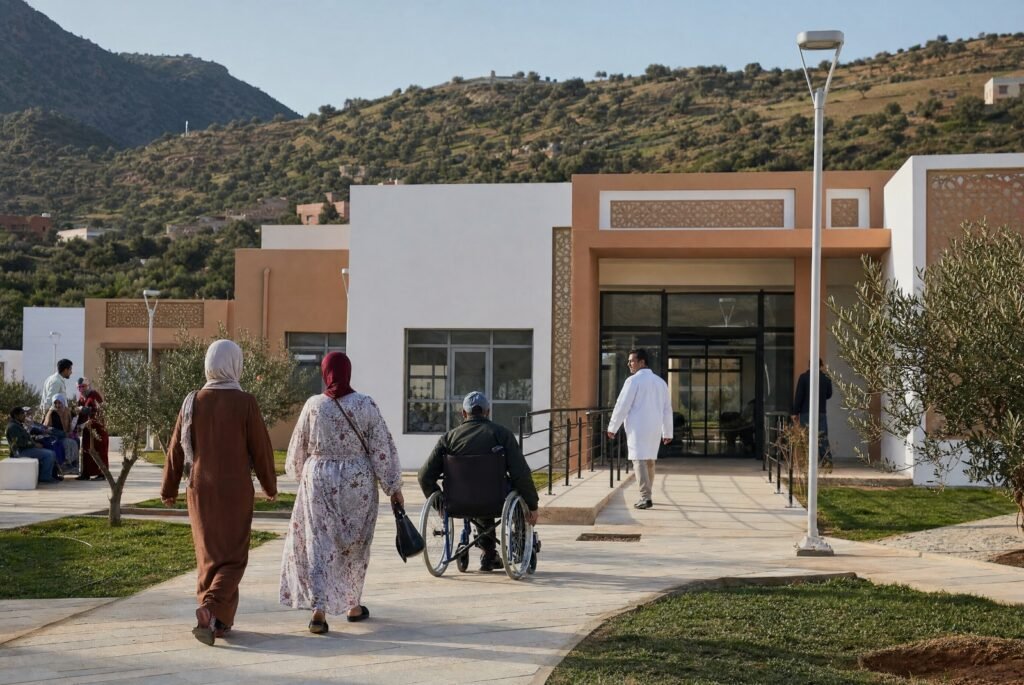
Photo: archive
Fifteen primary healthcare facilities entered service in Morocco on 8 September 2026, following the completion of work to rehabilitate and equip them. The facilities are spread across six regions: Casablanca-Settat, Guelmim-Oued Noun, Beni Mellal-Khenifra, the Oriental, Tanger-Tetouan-Al Hoceima and Marrakech-Safi.
According to figures attributed to the Ministry of Health and Social Protection, the facilities are expected to meet the needs of more than 375,677 people.
The move is part of a broader national programme to upgrade 1,600 primary healthcare facilities, 500 of which are scheduled for 2026.
The challenge, however, is not only about the number of centres that have entered service. The key question is whether this infrastructure can improve actual access to care, given persistent shortages of health personnel and disparities between regions.
Expanding local healthcare services
Primary healthcare facilities typically offer services including general check-ups, nursing care, monitoring of chronic diseases and maternal and child health services, as well as prevention and health awareness.
Strengthening this network is expected to ease pressure on hospitals by handling straightforward cases at the first level of care and referring cases that require specialists or advanced equipment to the appropriate facilities.
This role is particularly important in rural and peri-urban areas, where distance and travel costs can be a barrier to obtaining treatment.
The practical value of building a new facility or rehabilitating an existing one is not limited to having an equipped building. Its effectiveness also depends on the availability of staff, medicines, regular appointments and services actually delivered.
The published data show that the fifteen facilities are spread across six regions, but they do not provide consistent details on the number of doctors and nurses working at each facility or the expected volume of daily services.
As such, the figure of 375,677 cannot be taken as the number of actual beneficiaries; rather, it represents the population these facilities are meant to cover.
A programme exceeding 1,600 facilities
Minister of Health and Social Protection Amine Tahraoui told the House of Councillors that the ministry is implementing a programme to rehabilitate around 1,400 health centres across the Kingdom’s provinces, about two-thirds of them in rural areas.
He added, according to information published on the Kingdom’s official portal, that 1,000 centres had been rehabilitated, while 400 were scheduled for completion by the end of the year.
The next phase involves upgrading an additional 1,600 centres, bringing the total number of targeted facilities to more than 3,000, with new, unified standards adopted for these facilities.
This phased approach shows that the reform relies not only on building new facilities but also on rehabilitating an existing health network.
However, unified standards do not necessarily translate into a uniform level of service unless they are accompanied by a clear mechanism for deploying health staff, supplying equipment, ensuring maintenance and monitoring health indicators across the regions.
Health infrastructure needs human resources
The limits of an approach focused on buildings and equipment become apparent when set against the scale of the shortage of health personnel.
The “National Health Charter” document states that the budget of the Ministry of Health and Social Protection will reach 42.3 billion dirhams in 2026, with 8,000 posts planned in the sector and hospital investment rising by 61 percent.
The plan also includes modernising more than 1,600 primary healthcare facilities and 91 hospitals.
The same figures point towards strengthening human resources, but the distribution of staff is a challenge in its own right, regardless of the number of posts being created.
According to the World Health Organization’s health workforce snapshot for Morocco, the density of doctors, nurses and midwives stands at around 15.5 professionals per 10,000 inhabitants.
A World Bank study on human resources for health in Morocco points to regional disparities in the distribution of doctors. According to data cited in the report, there is one doctor for every 951 people in one region, compared with one doctor for every 3,176 people in another.
These gaps show that expanding health infrastructure alone does not resolve the problem of disparities between regions.
A health centre in a given area may be housed in an equipped building, yet its impact may remain limited if a doctor or nurse is not regularly available there.
Digitalisation as a tool to support healthcare
Digitalisation can help improve the performance of primary healthcare facilities by organising appointments, monitoring chronic diseases, linking centres to hospitals and sharing medical data in accordance with applicable legal rules.
A digital medical record can also reduce duplicate tests, allow doctors to consult a patient’s medical history and support the follow-up of cases requiring continuous monitoring, such as patients with diabetes and high blood pressure.
However, introducing these tools in remote areas depends on basic conditions being met, including internet access, a stable electricity supply, equipment, training and technical support.
Digital health data also raise privacy protection requirements. These include determining who is authorised to access records, how they are stored and patients’ rights to know how their information is used.
Telemedicine and digital records should therefore not be treated as a complete substitute for a doctor or a health facility, but as an aid to improve coordination and mitigate some of the effects of geographical isolation.
Indicators needed to measure the impact of the new facilities
Assessing the impact of the fifteen facilities requires publishing indicators that compare the situation before and after rehabilitation, rather than relying solely on the number of centres or the size of the target population.
Possible indicators include the average number of patients each facility receives per day, waiting times for an appointment, the number of doctors and nurses actually working, and the availability rate of essential medicines.
They also include the number of referrals to hospitals, patient satisfaction levels, the proportion of beneficiaries who are women, children and rural residents, and the number of cases monitored digitally.
For example, the time needed to obtain an appointment could be measured before and after a facility’s rehabilitation, or the number of visits handled at the centre could be compared with the number of cases referred to a distant hospital.
Such data provide a basis for moving beyond talk of bringing care closer to people towards measuring the extent to which this is happening on the ground.
Between expanding the network and measuring results
Official figures confirm that Morocco is working to expand its primary healthcare network, and that 15 facilities have entered service in six regions, serving an estimated population of more than 375,677 people.
A broader programme also aims to upgrade 1,600 facilities in the current phase, with subsequent plans covering an additional 1,600 centres.
These figures alone, however, are not enough to measure the quality of services or their continuity.
What can be confirmed is that the facilities concerned have entered service after being rehabilitated and equipped. Their impact on waiting times, access to doctors, household spending and referral rates, however, requires independent and regular data.
The success of the reform remains tied to three interlinked elements: a nearby, well-equipped facility, a stable health workforce and a digital system that supports coordination and protects data.
Without any one of these elements, opening a centre may remain an achievement in terms of infrastructure and equipment without necessarily translating into a real change in the patient’s experience.
 Short-Stature Football World Cup Set for Rabat and Kénitra From Nov. 20
 Asilah: MekkiL Association runs medical caravan in Sahel Chamali douars
 Morocco: Government Council raises direct social aid floor to MAD 600 in 2027
 Agadir to host IWA water systems conference, a first in Africa, in December
 Tangier-Tétouan-Al Hoceïma: Bank of Africa takes circular economy to SMEs


Comments (0)