



NATO drills rehearse path to nuclear war, Russia warns
Dmitry Polyansky, Russia’s permanent representative to the OSCE, warned in Vienna that NATO military activity near Russia’s borders is bringing the world closer to nuclear war.
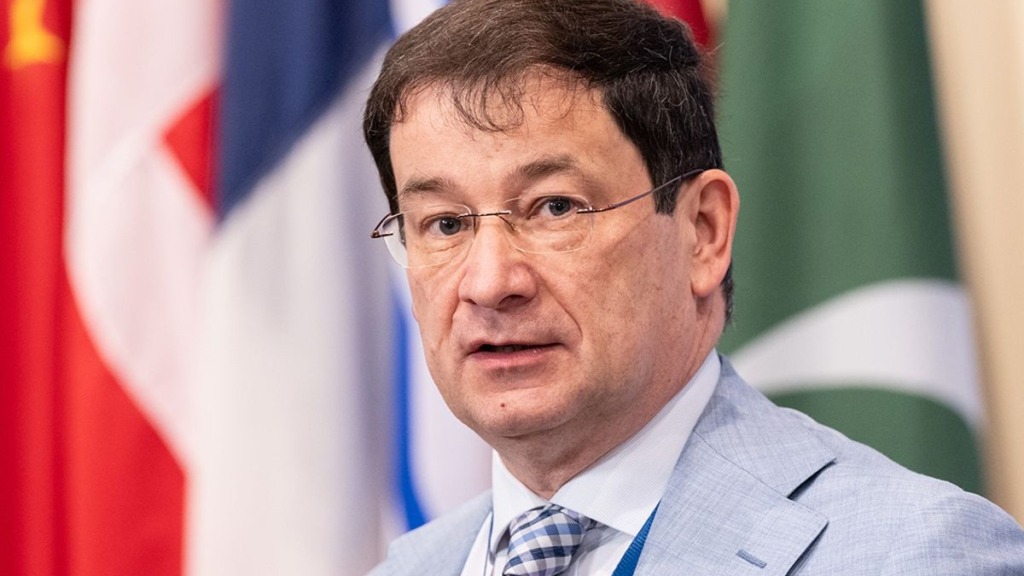
Dmitry Polyansky, Russia's permanent representative to the OSCE
The world is moving closer to nuclear war, Dmitry Polyansky, Russia’s permanent representative to the Organization for Security and Co-operation in Europe, told the OSCE Permanent Council in Vienna on Thursday, November 26. He blamed NATO exercises close to Russia’s borders and the part played by some alliance members in strikes on Russian merchant ships in the Baltic.
Polyansky said the drills now under way around Kaliningrad, the Russian exclave wedged between Poland and Lithuania, were rehearsing its capture from land, sea and air. Freedom Shield 2026, he said, practised forcing open the Suwalki Corridor, the narrow strip of land between Poland and Lithuania that links the Baltic states to the rest of the alliance.
In his account, every move belonged to one plan: Western troops sent to Ukraine, a blockade drawn around Kaliningrad, and a threat held over Belarus. Polyansky said:
“In other words, a direct path to nuclear war with Russia is being rehearsed.”
Lithuania’s armed forces present the German-led manoeuvres, due to end on December 3, as training in readiness, planning and working together. NATO describes itself as a defensive alliance. It gave no reply to Polyansky’s remarks by Thursday evening.
Sparta II and Estonia
The warning followed the fire on board Sparta II, a Russian cargo ship, when drones hit it on Saturday, November 21, in the eastern Gulf of Finland. The vessel was bound for Kaliningrad from St. Petersburg when drones hit it. Its crew got off safely and the ship was towed to St. Petersburg. On Tuesday, President Volodymyr Zelensky of Ukraine said Kyiv had carried out the strike. Norway, a firm backer of Kyiv, called for care with such operations.
Polyansky also blamed Estonia, saying Ukrainian drones had crossed its airspace to hit Russian ships, and calling that complicity in terrorism. Tallinn denies the charge. Prime Minister Kristen Michal said his country would let nobody use its land, sea or skies for attacks, and the foreign ministry said no permission had been given for such flights.
A wider nuclear backdrop
The row comes days after Polish prosecutors reported three Russian missiles coming down in Poland. If one NATO member is attacked, Article 5 treats it as an attack on all of them, so any incident of that kind raises fears that the war in Ukraine could spread.
Moscow widened its nuclear doctrine in November 2024, so it may now weigh using nuclear arms in more situations, among them a conventional attack backed by a nuclear-armed state. The United States and Russia own the two biggest nuclear arsenals on earth. New START, the treaty that capped their deployed strategic weapons, lapsed in February.
Trump presses Putin
The warning reached Vienna as Donald Trump, the United States president, pressed Vladimir Putin of Russia again to ease off military action across Europe. On Truth Social on Thursday, Trump urged Putin to draw back all military action against land across Europe, hoping for a quick deal between Moscow and Kyiv.
Jared Kushner, Trump’s peace envoy, told a podcast interview released on Wednesday that Putin had shown restraint, agreeing not to use nuclear weapons in Ukraine. Kushner said Putin had given American negotiators his word that he had no such intention, and he called the Russian leader a grandmaster of politics who sought better ties with Washington. Nobody has checked those assurances independently.
 Morocco v Bolivia in the short-stature semi-final
 Morocco: Government Council raises direct social aid floor to MAD 600 in 2027
 Morocco reach short-stature World Cup semi-finals
 Lavrov’s plane stops in Casablanca again on its way back from Atlanta to Moscow
 Short-Stature Football World Cup Set for Rabat and Kénitra From Nov. 20



Comments (0)