Frida Kahlo paintings at center of Mexico-Spain cultural dispute
_*]:min-w-0 gap-3 standard-markdown”>
The Gelman Collection was assembled from the 1940s onward by Jacques and Natasha Gelman, Eastern European emigrants who settled in Mexico. The Zambrano family, one of Mexico’s wealthiest business dynasties, acquired the collection in 2023 and subsequently handed management to the Fundación Banco Santander, which rebranded it the “Gelman Santander Collection.” The foundation plans to display the works at the Faro Santander, a new cultural venue designed by architect David Chipperfield in Cantabria, northern Spain.
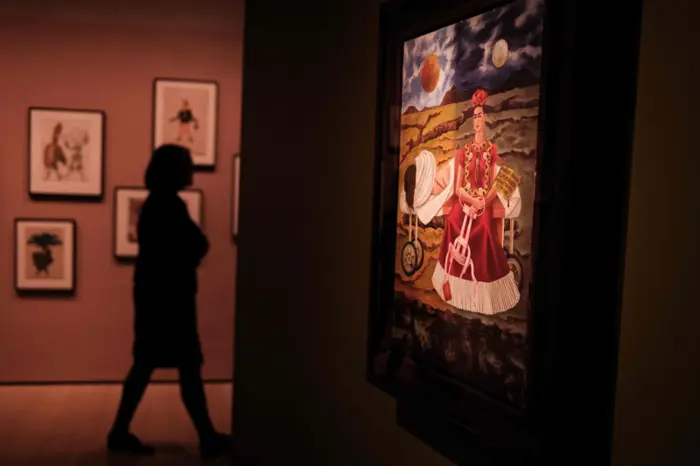
The dispute intensified after Faro Santander director Daniel Vega Pérez de Arlucea told Spanish media that the collection would have a “permanent, but evolving presence” at the facility. An open letter published on e-flux on March 18, signed by historians, curators, and artists, argues the transfer violates Mexican cultural heritage law. Among the contested works are 11 Kahlo paintings, including “Self-Portrait with Monkeys” (1943) and “Diego on My Mind” (1943), which the letter’s authors describe as essential to understanding Kahlo’s artistic development.
Under a presidential decree issued in the early 1980s, Kahlo’s works hold the status of national artistic monuments. Their permanent export is prohibited under Mexican law, even when the works are privately owned. Historian Francisco Berzunza, one of eight lead signatories, told the Guardian that the decree “was designed precisely to lock down private collections,” adding that defenders of the law would continue to press their case.
Mexican President Claudia Sheinbaum defended the arrangement, stating that authorities were acting within the law. Culture Minister Claudia Curiel de Icaza said at a March 30 press conference that the collection “has not been sold and is only temporarily exhibited.” Banco Santander issued a statement saying the agreement “does not involve a permanent removal from Mexico” and that the works would be returned by 2028.
Critics remain skeptical. Reports indicate the Santander agreement runs until 2030 and can be extended by mutual consent, a timeline that contradicts the government’s assurances. The ambiguity has deepened public distrust and sustained pressure from civil society.
In a partial concession, Santander announced this week that the Faro Santander opening would be delayed from June to September at the Mexican government’s request. The move allows the ongoing exhibition at Mexico City’s Museum of Modern Art to continue. Around 70 works from the Gelman Collection have been on public display there since February, marking the first time in nearly two decades that the collection has been accessible to Mexican audiences on home soil.
The postponement does not resolve the underlying dispute. Negotiations between Mexican authorities, the Zambrano family, and Banco Santander continue with no public resolution in sight. Signatories to the open letter are demanding full transparency on the agreement’s terms, a public consultation on the collection’s future, and a formal guarantee that works classified as national monuments will never permanently leave Mexico.
The case has wider implications. It reflects a structural tension between the globalized art market, where collections move according to financial interests, and the legal and ethical obligation to protect cultural heritage as a shared national asset. Its outcome could set a significant precedent for the protection of Latin American artistic heritage against institutional pressures from European financial bodies.